Rubin Museum of Himalayan Art
C2003.52.1
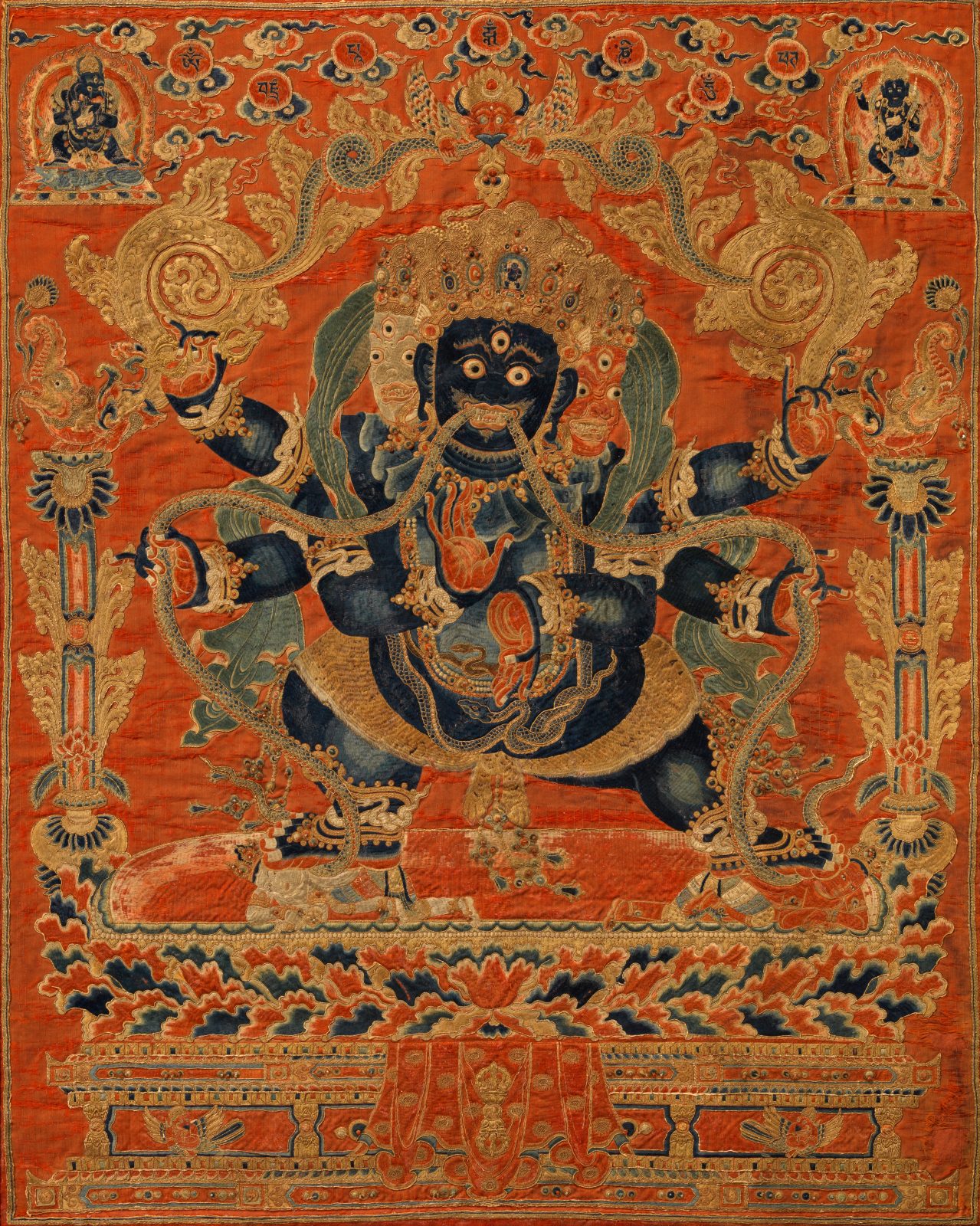
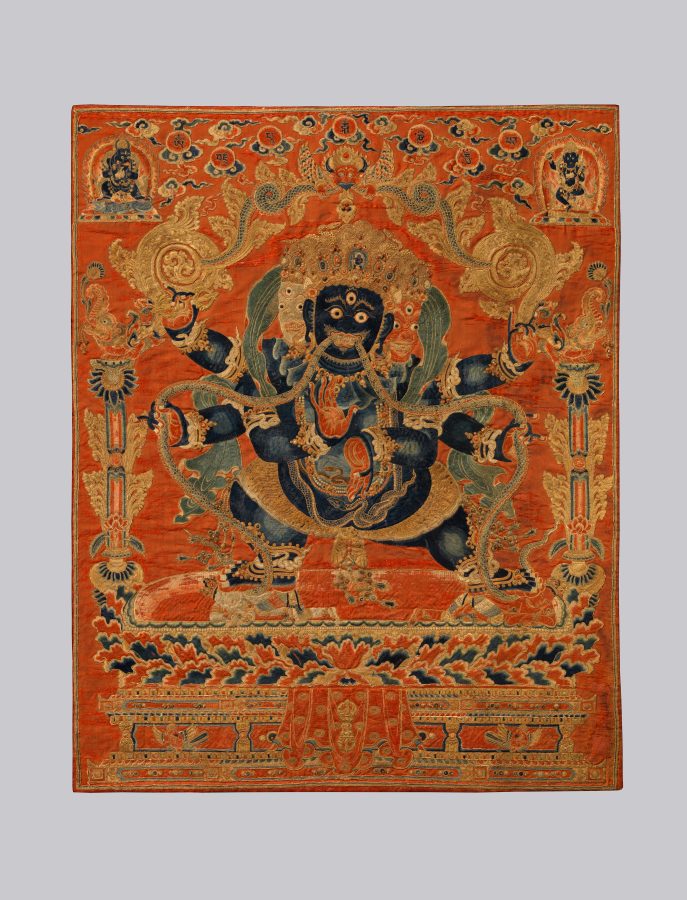
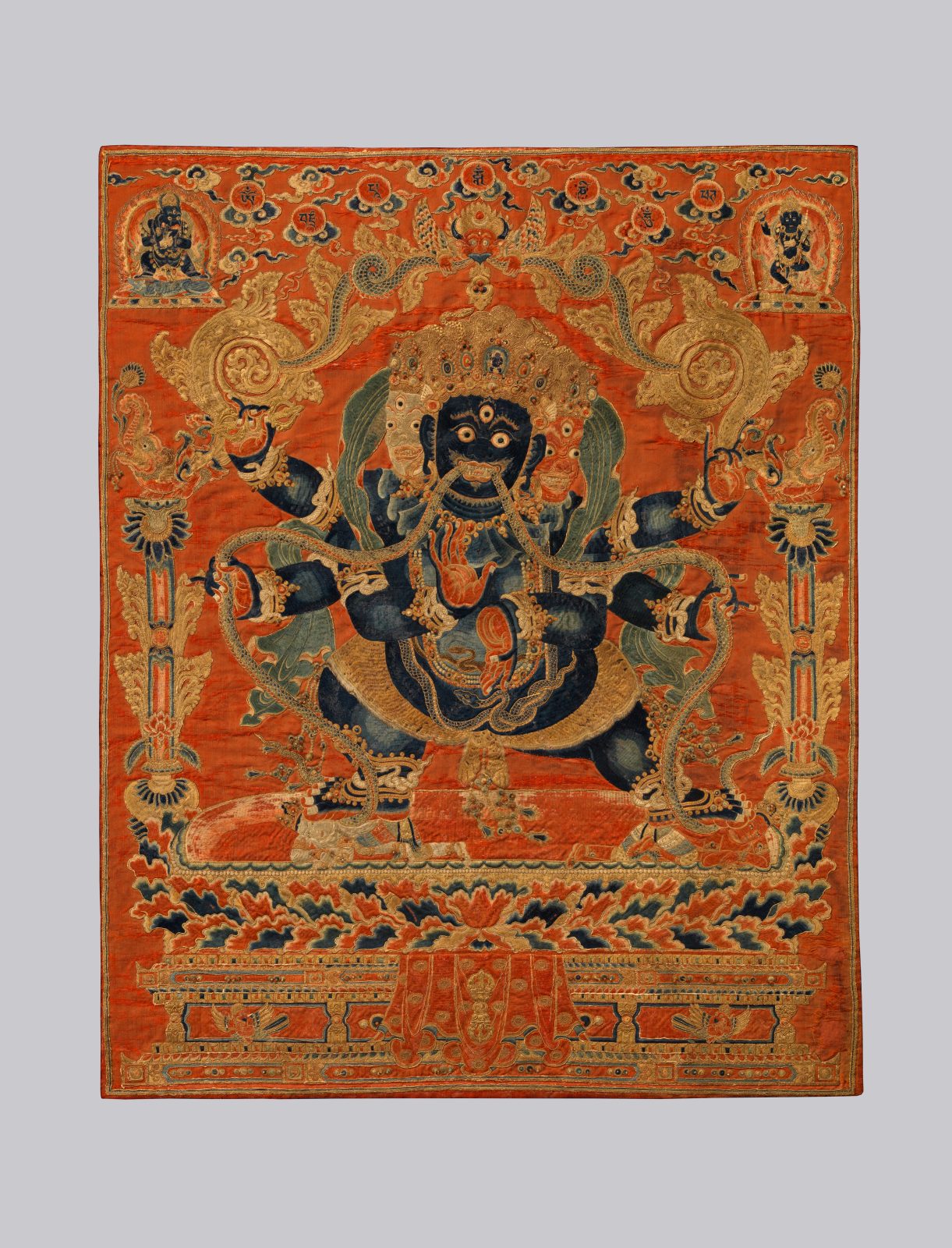
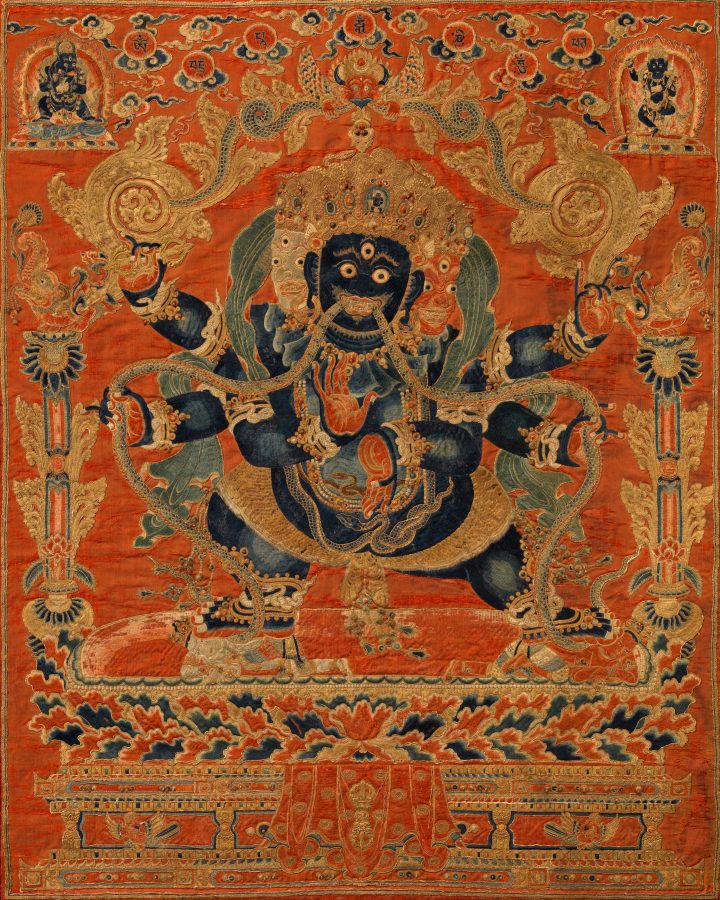
Tibetan Buddhism played a prominent role in the courts of the Mongolian Yuan (1271–1368) and early Chinese Ming (1368–1644) dynasties, resulting in the creation of Tibetan Buddhist art in the imperial ateliers. This depiction of a wrathful form of the deity Vajrapani is a Tibetan composition recreated in the Chinese medium of silk embroidery. Lotus and vase columns featuring mythical birds (garuda), snakes (naga), and water monsters (makara) are typical of fourteenth-century Tibetan works. They appear alongside multicolored billowing triple-lobed clouds with trailing tails typical of Chinese auspicious imagery. These stylized clouds in turn support disks presenting Vajrapani’s mantra in Tibetan script. Small coral beads and seed pearls are stitched into the central deity’s ornaments.
View full collection record
Learn more about Tibetan Buddhist icons produced in silk during the Yuan dynasty.
Learn more about Tibetan Buddhist images produced in the early Ming court.