China
19th century

A vajra is a ritual scepter used in tantric practices and an attribute of tantric masters and deities. It generally symbolizes method, the male aspect of enlightenment.
China
19th century
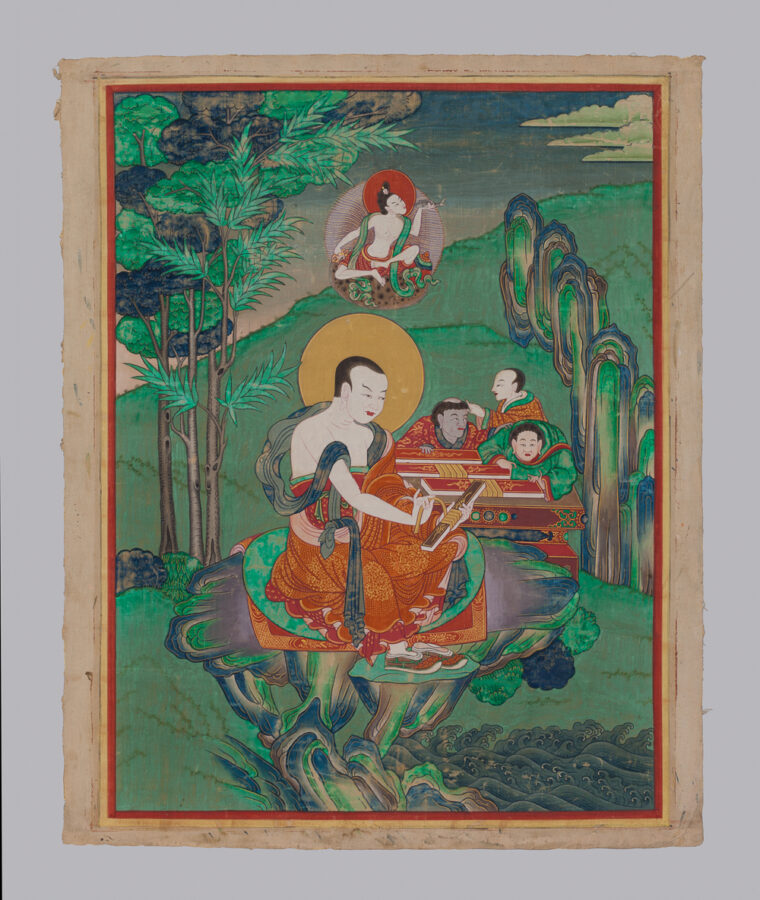
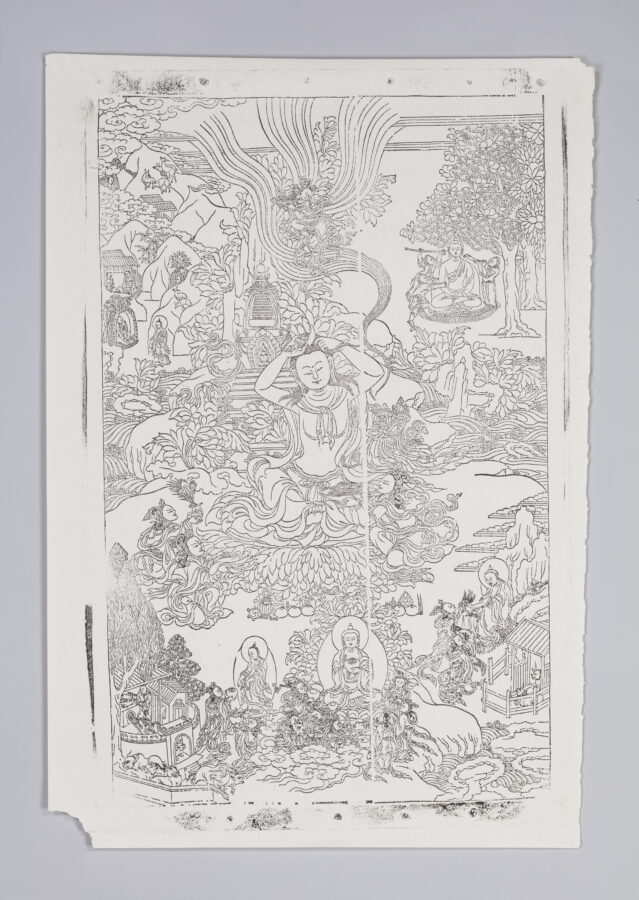
This painting depicts an arhat, one of the principal disciples of Buddha Shakyamuni, dressed in Indian monastic robes, sitting in an idealized landscape of Chinese inspiration. Gopaka is said to live on Mount Bihula surrounded by 1,400 arhats. He can be recognized by the book in his two hands, which he appears to be unwrapping. A group of attendants with long books bound in a Tibetan fashion (pecha) are behind him. In the Tibetan tradition, arhats usually appear together as a group of 16, facing inward and flanking a central Buddha, along with an attendant, patron, and four guardian kings. This painting was therefore likely part of a set of 23 paintings.
Arhats represent the monastic ideal and preservers of the monastic code of conduct (vinaya). Interestingly, the mahasiddha Tilopa floats above in the sky, recognizable by the fish he holds. While the arhats embody the monastic and teachings of the sutras, the mahasiddhas, or “great spiritually accomplished ones,” are exemplars of tantric practice, meditators, and yogis from all castes and professions who were often unorthodox in their behavior. The combination of arhat and mahasiddha shows the different paths encompassed by Tibetan Buddhism.

A vajra is a ritual scepter used in tantric practices and an attribute of tantric masters and deities. It generally symbolizes method, the male aspect of enlightenment.
The passing down of authentic Buddhist teachings from a teacher to a disciple or student, often in the form of a text in a ritualistic context.
A state of “waking up” from illusion and seeing the true nature of reality. Buddha Shakyamuni attained enlightenment while meditating under the bodhi tree. Buddhist teaching explains that the accumulation of merit and wisdom are essential for achieving enlightenment, also known as awakening.
A vehicle for the preservation and transmission of knowledge. The Buddha’s teachings were originally passed down through oral transmission and storytelling, and stories of the Buddha’s past lives are considered an important source of inspiration and guidance.
A state of “waking up” from illusion and seeing the true nature of reality. Buddha Shakyamuni attained awakening while meditating under the bodhi tree. Buddhist teaching explains that the accumulation of merit and wisdom are essential for achieving awakening, also known as enlightenment.
The transmission of teachings from one generation to the next, from teacher to student, traced all the way back to the Buddha without interruption. A complete lineage is essential in Tantric Buddhist practices as it makes the blessings of the teaching more powerful.
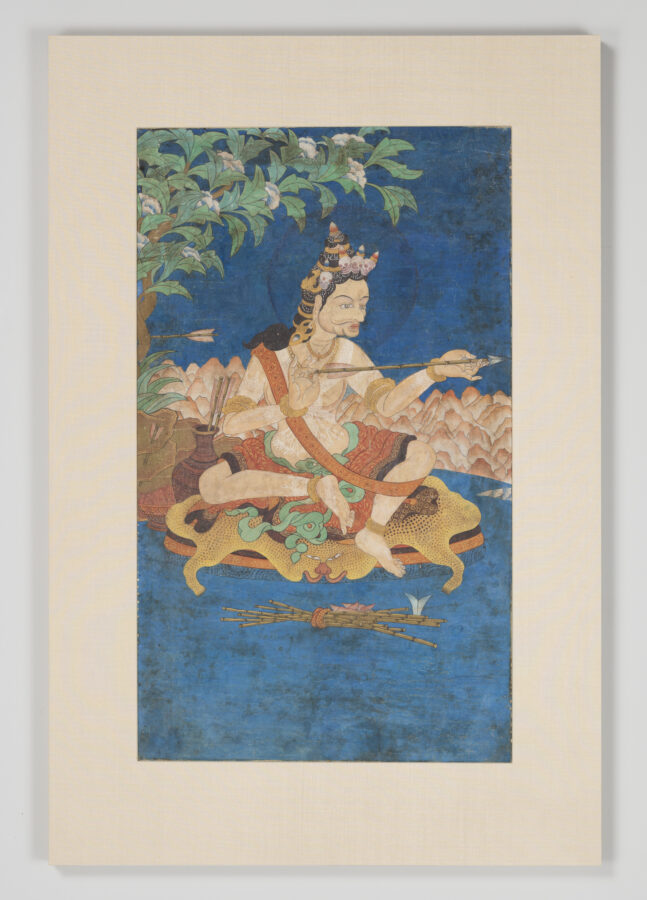
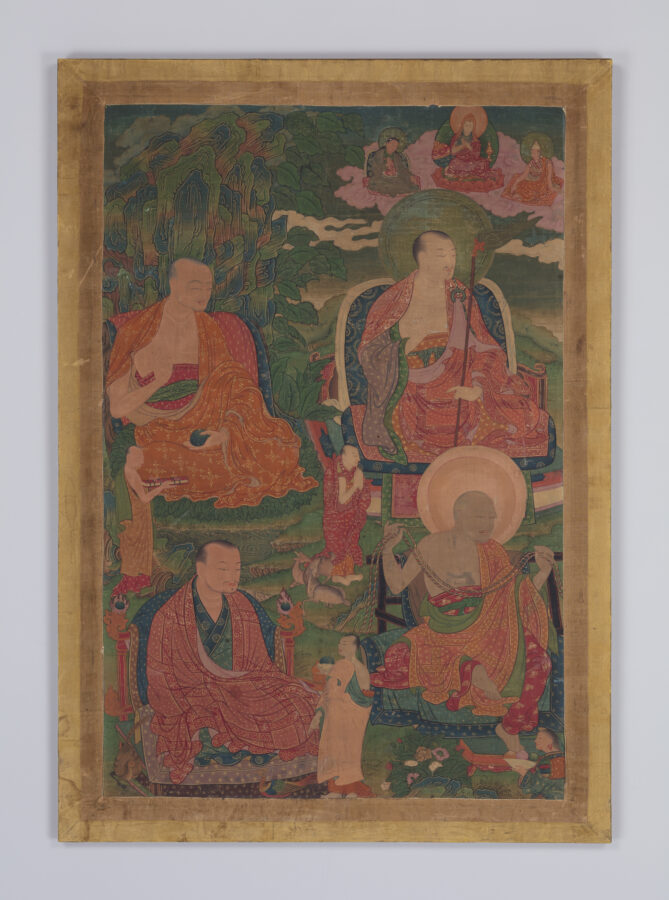
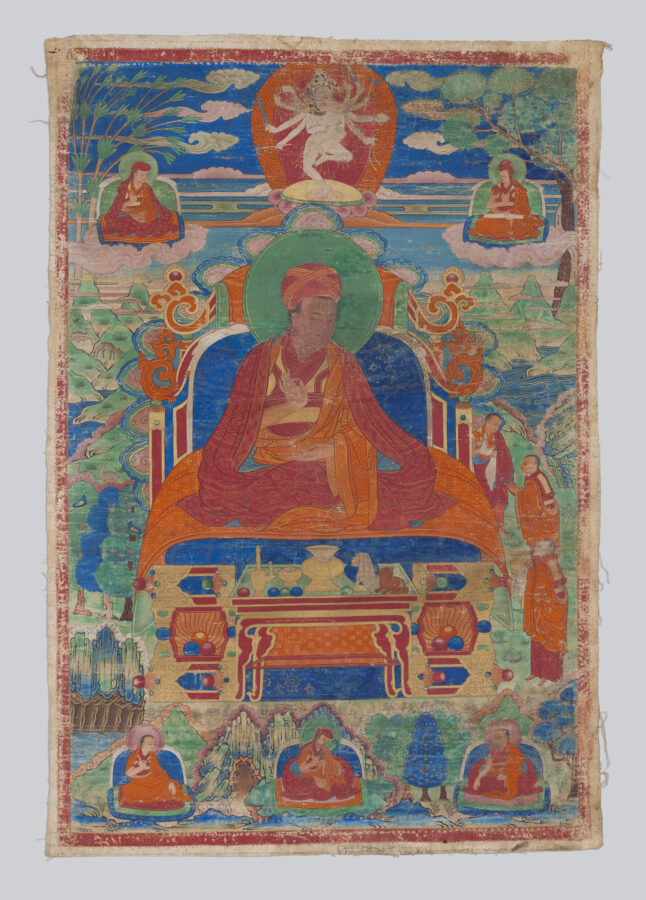
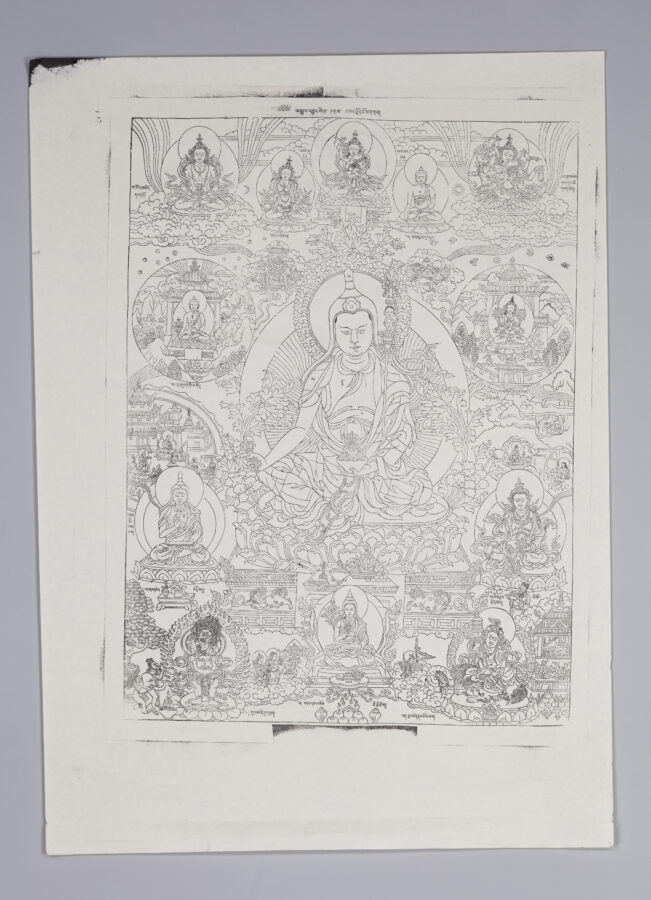
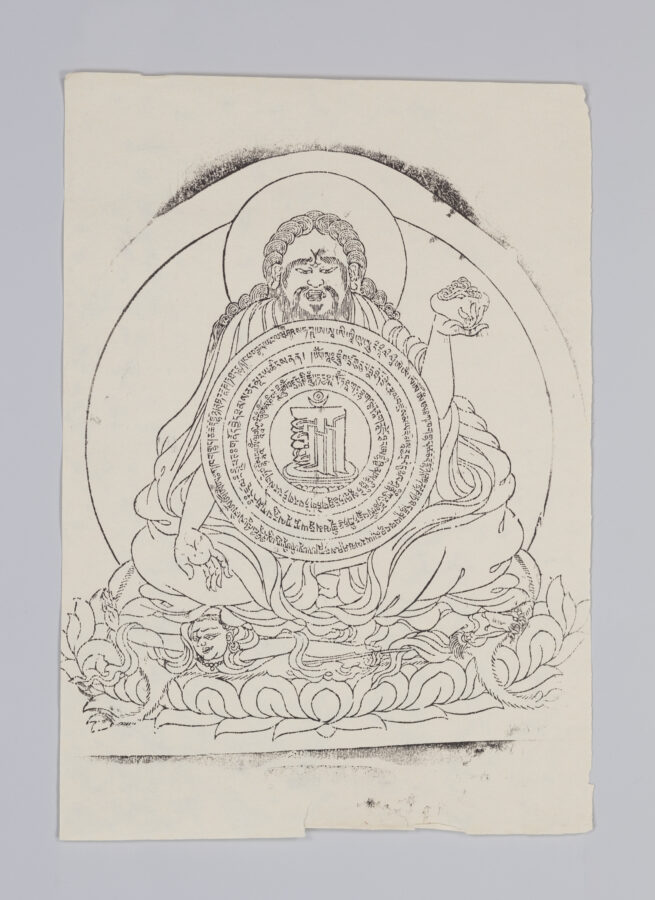
Himalayan art includes portraits of legendary and historical humans, including accomplished religious teachers (lamas), the Buddha’s original disciples (arhats), and spiritually accomplished tantric masters (mahasiddhas).
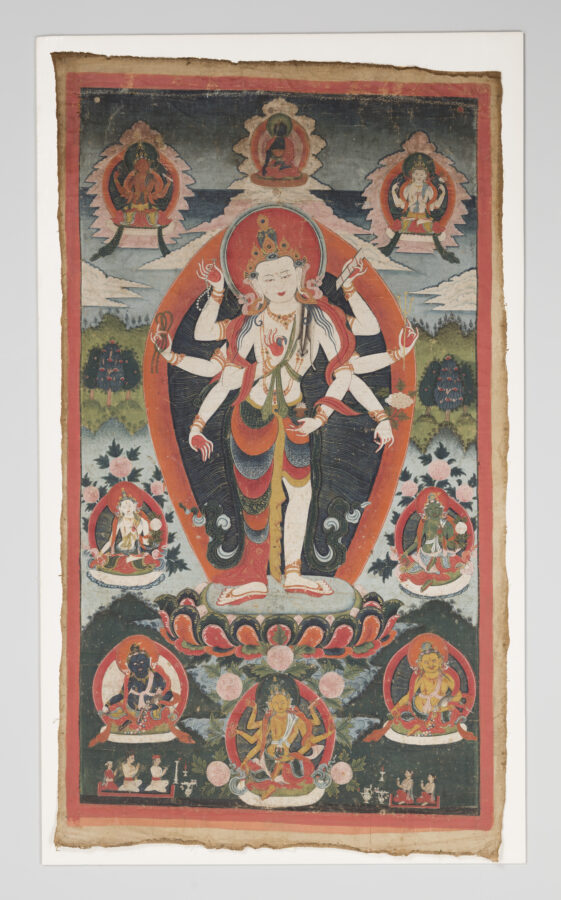
Although Tibetan Buddhism was not practiced broadly in China, the imperial centers, such as Beijing and Mount Wutai, emerged as hubs of Tibetan Buddhist cultural production. The emperors of the Mongol Yuan (1271–1368), Chinese Ming (1368–1644), and Manchu Qing (1644–1911) dynasties harnessed Tibetan Buddhist ideas to consolidate their power.

Get the latest news and stories from the Rubin, plus occasional information on how to support our work.