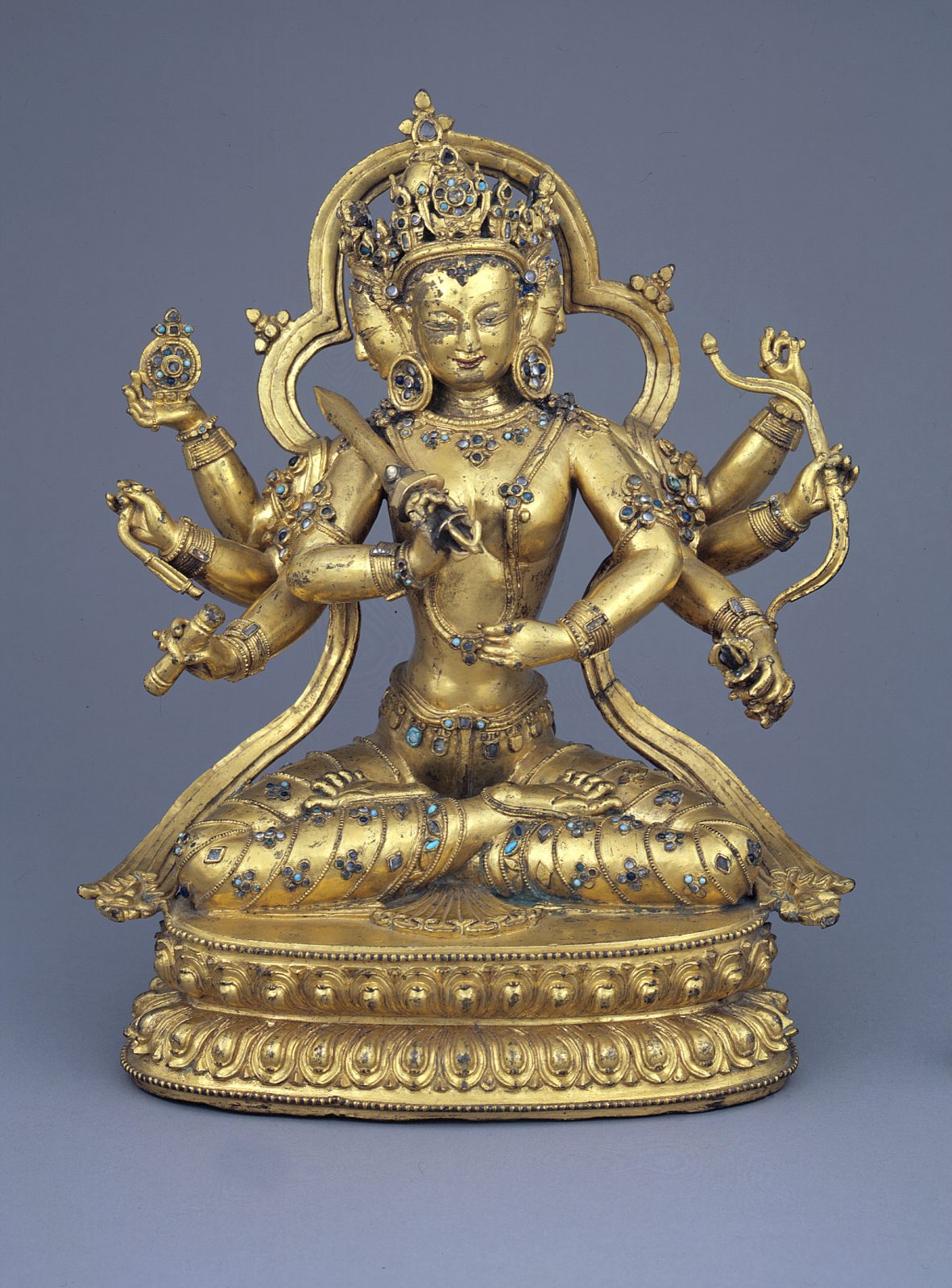
Central Tibet, possibly Densatil Monastery
second half of 14th century































Also known as vajra position, this posture is associated with meditation.
Central Tibet, possibly Densatil Monastery
second half of 14th century
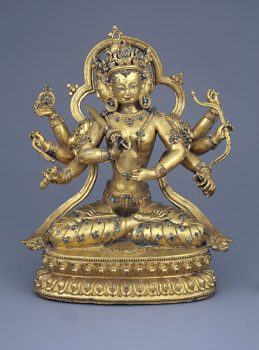
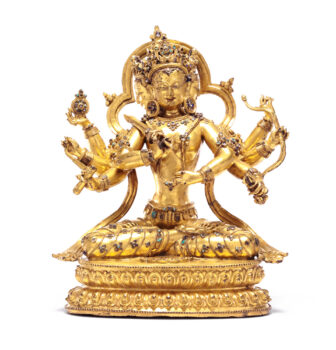
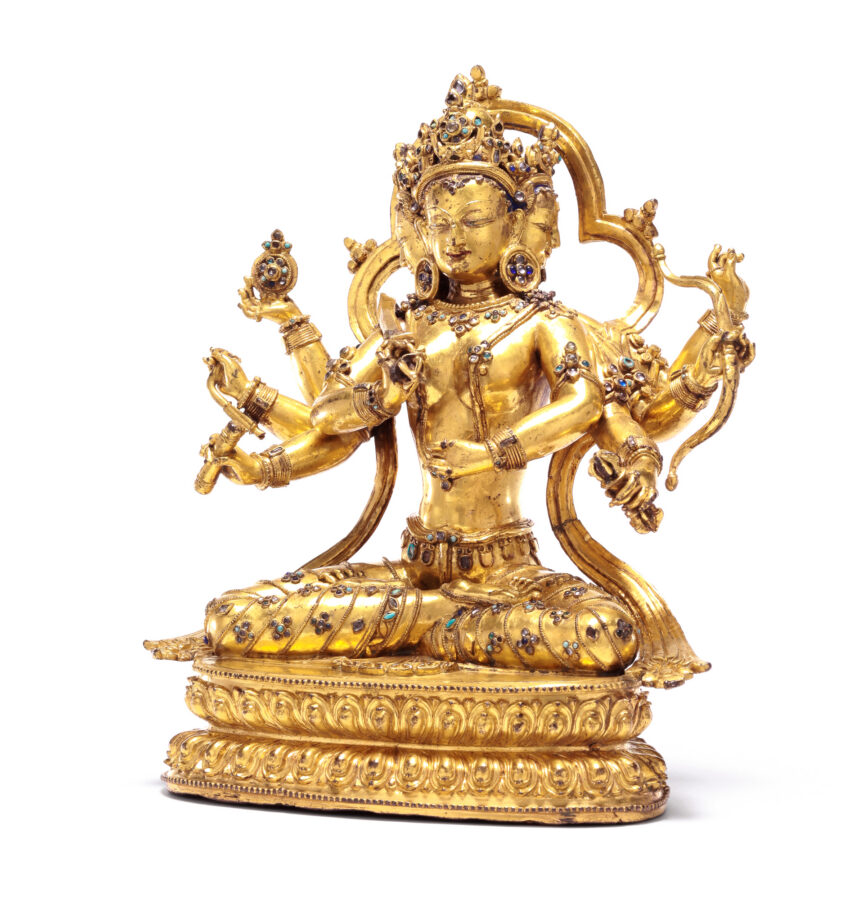
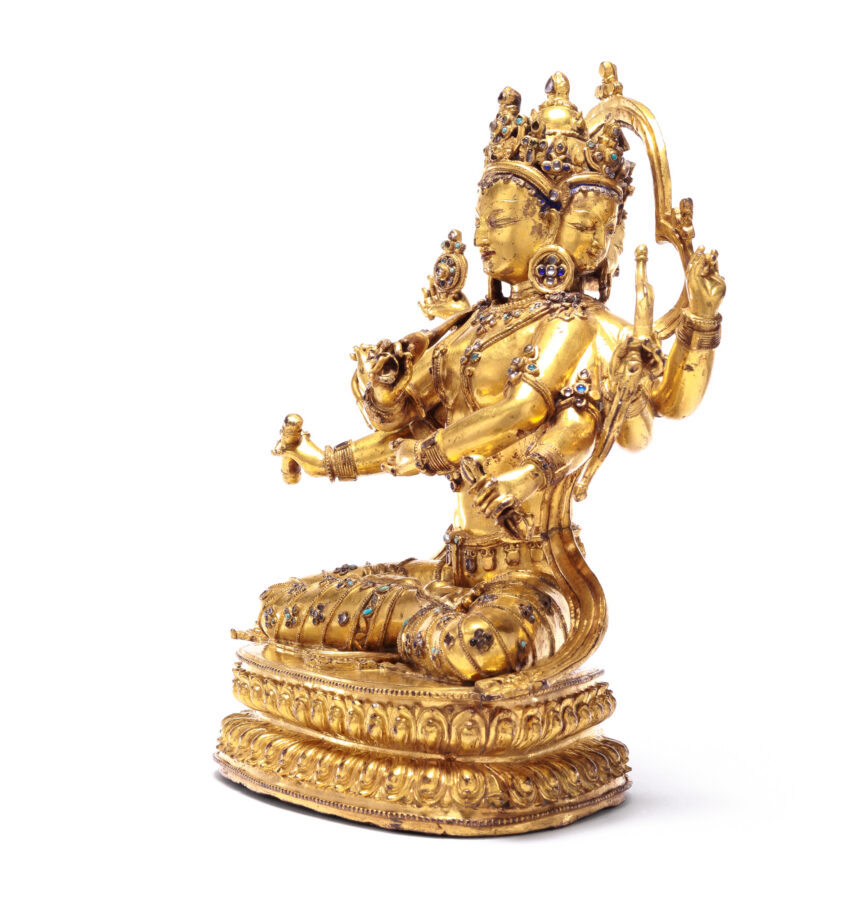
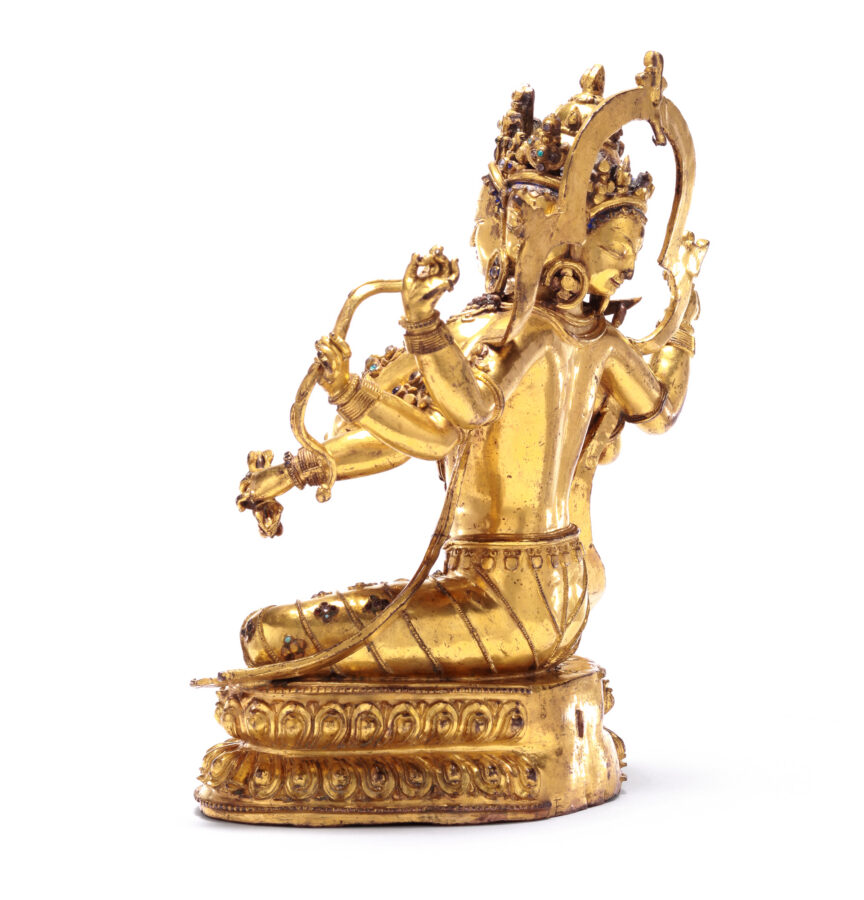
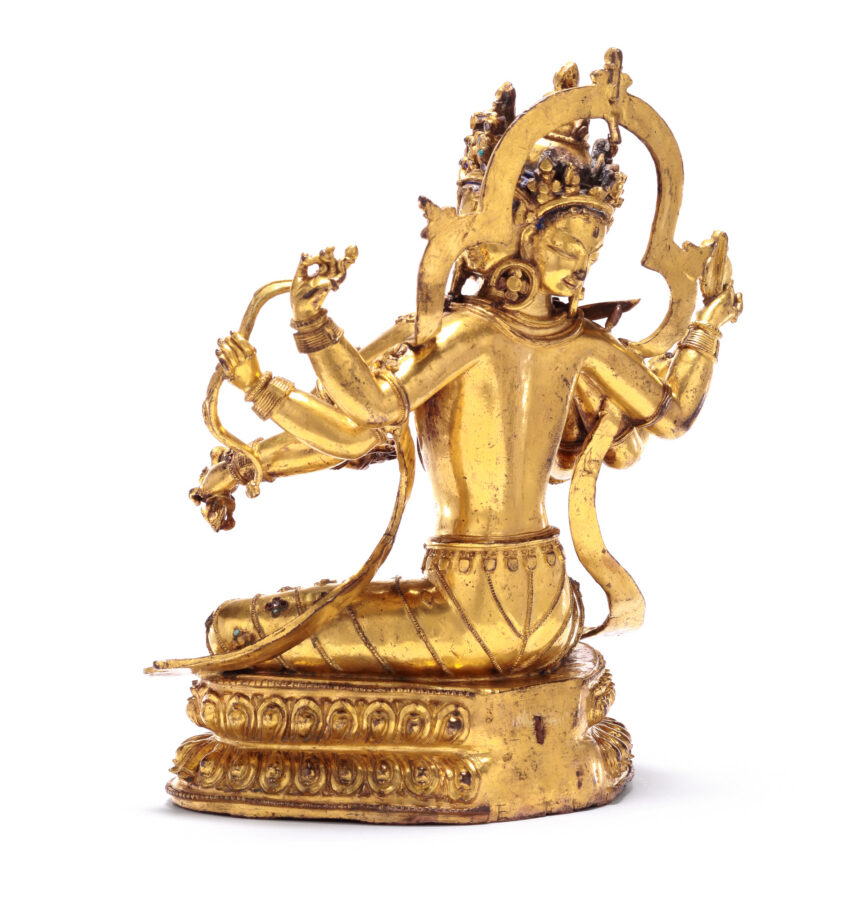
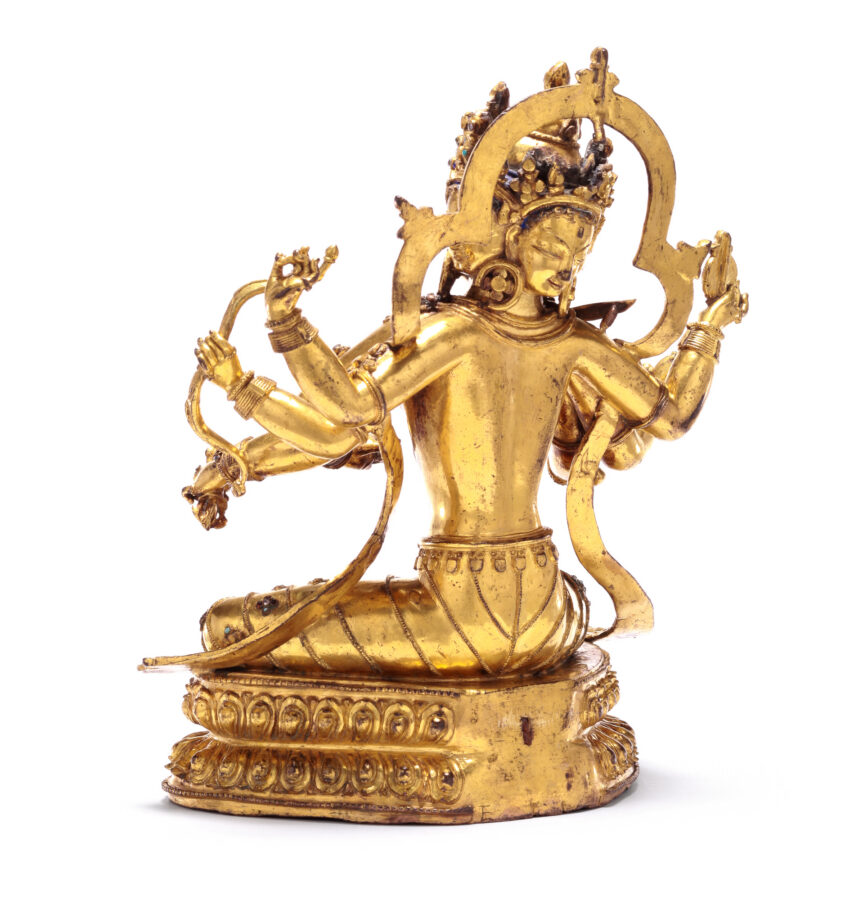
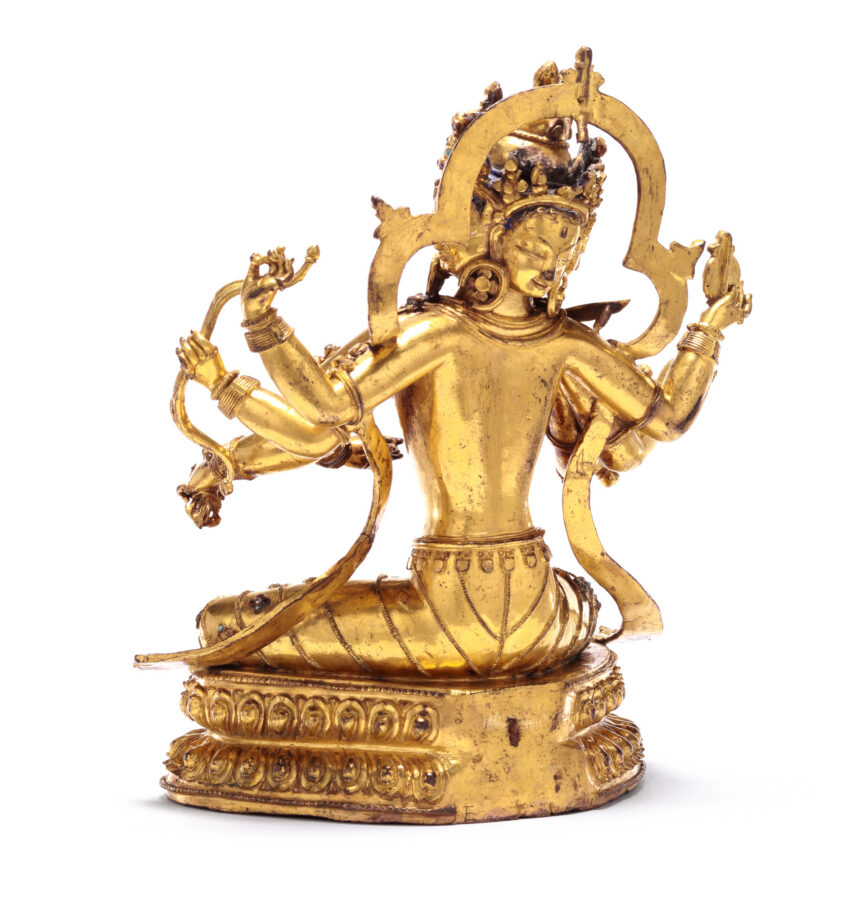
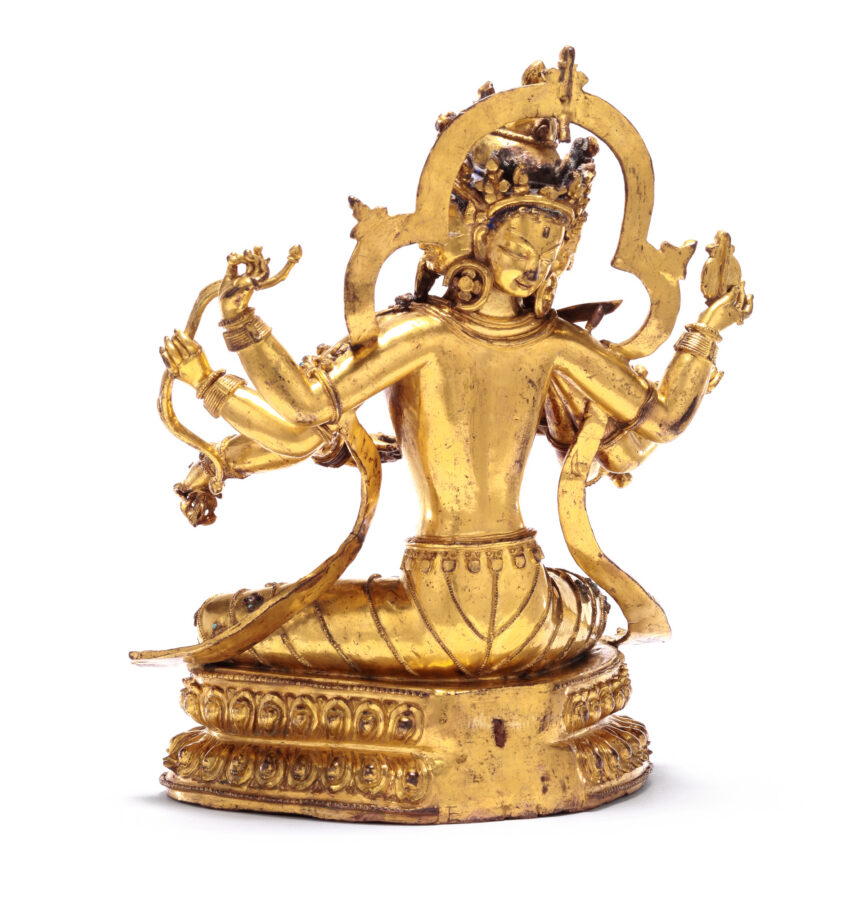
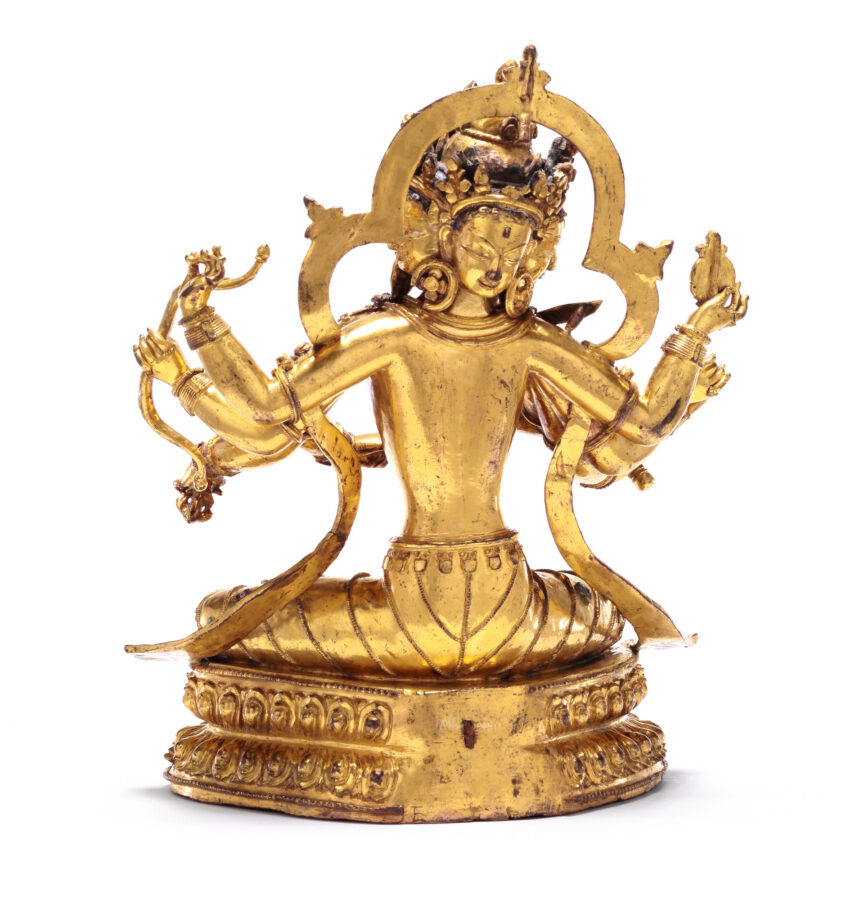
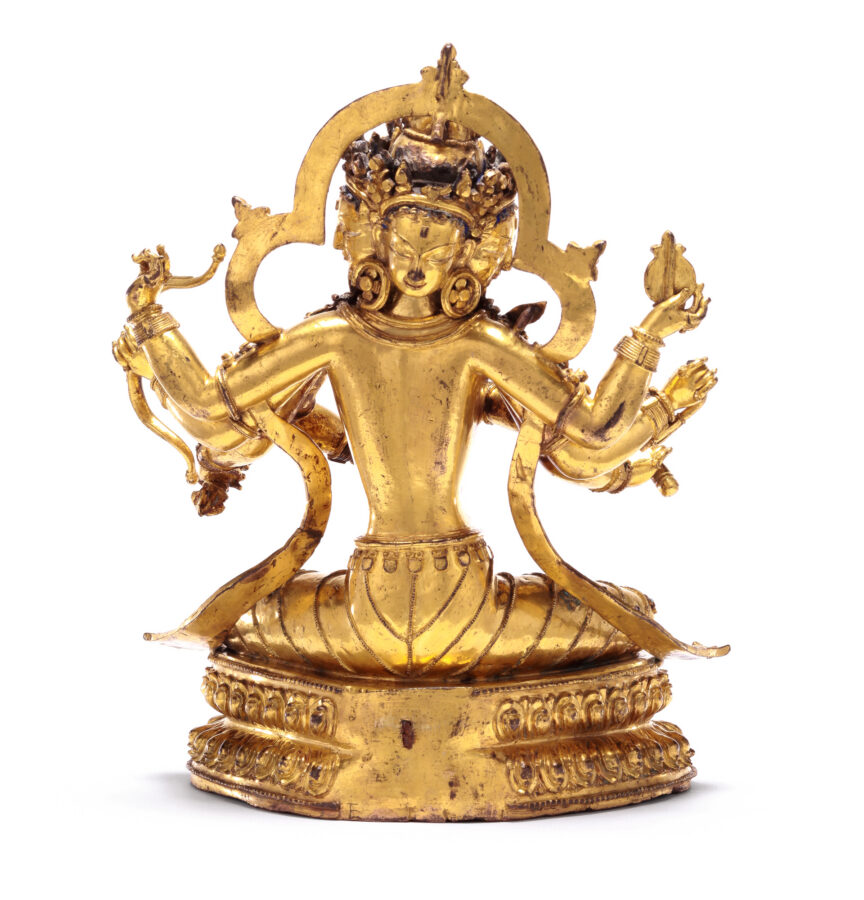
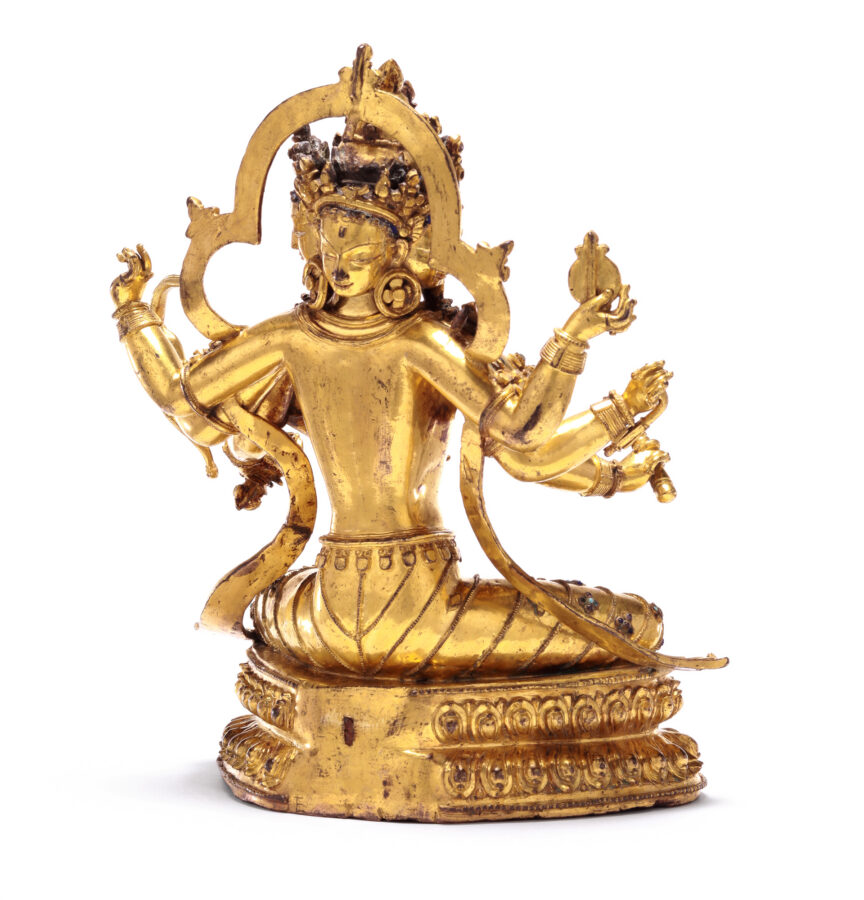
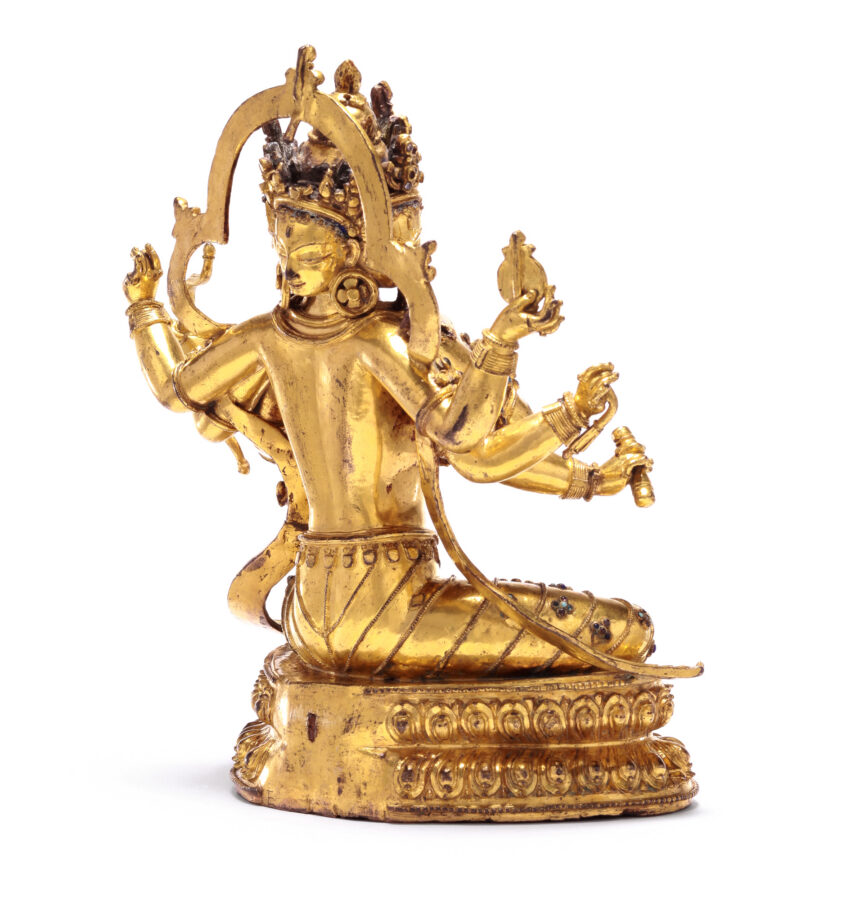
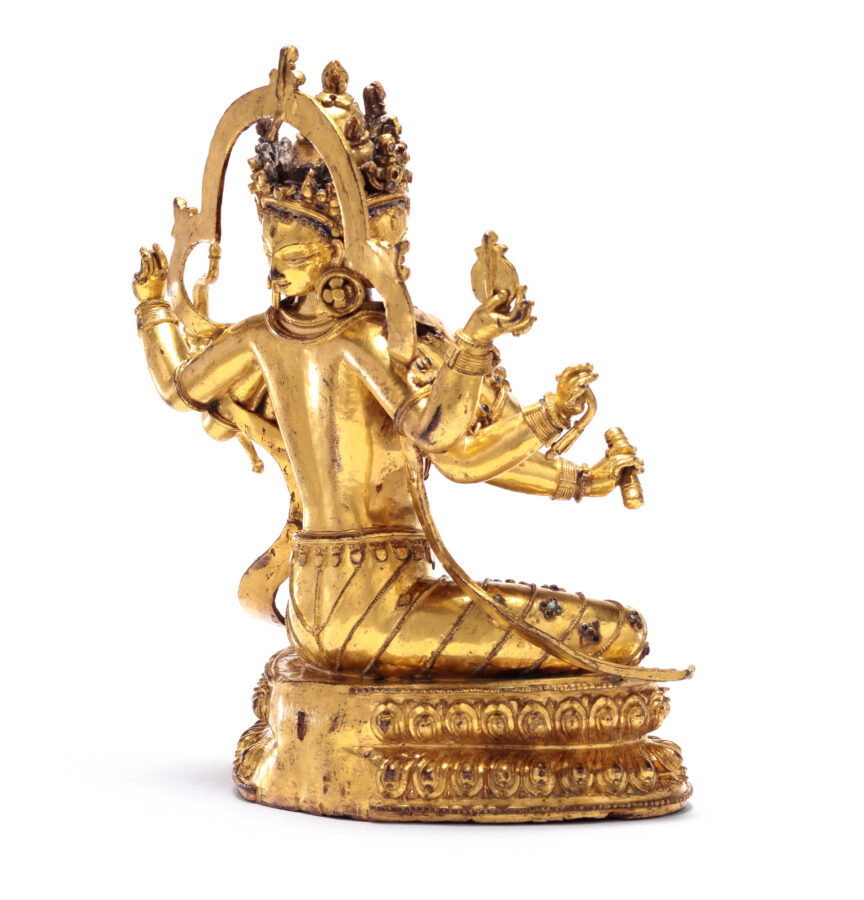
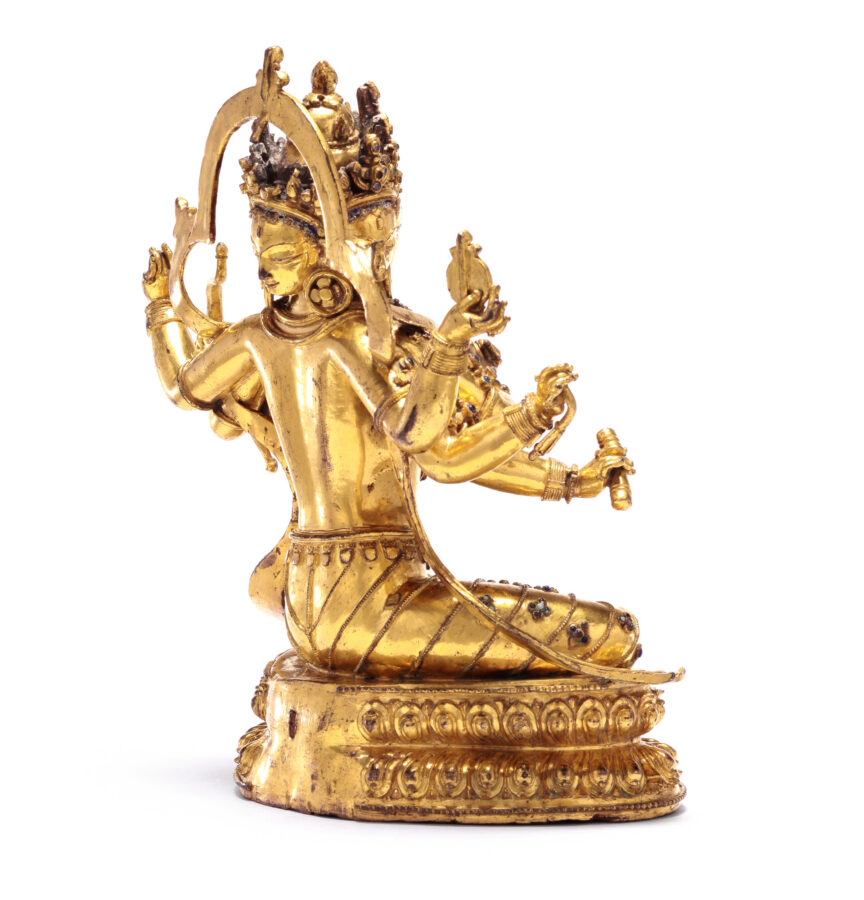
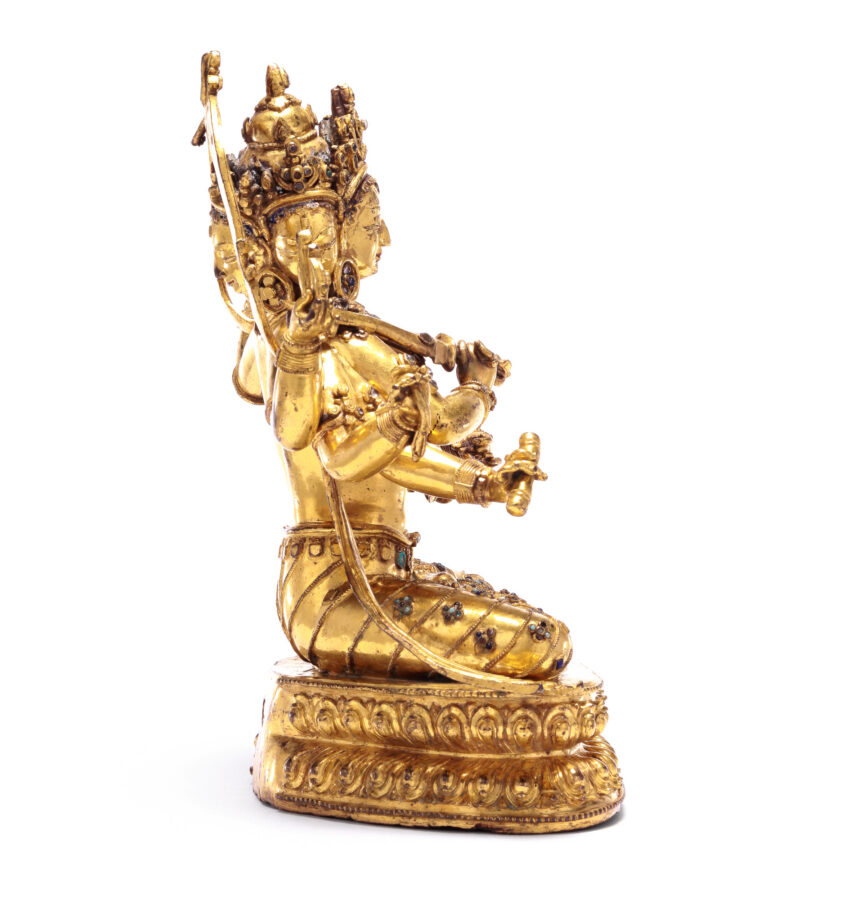
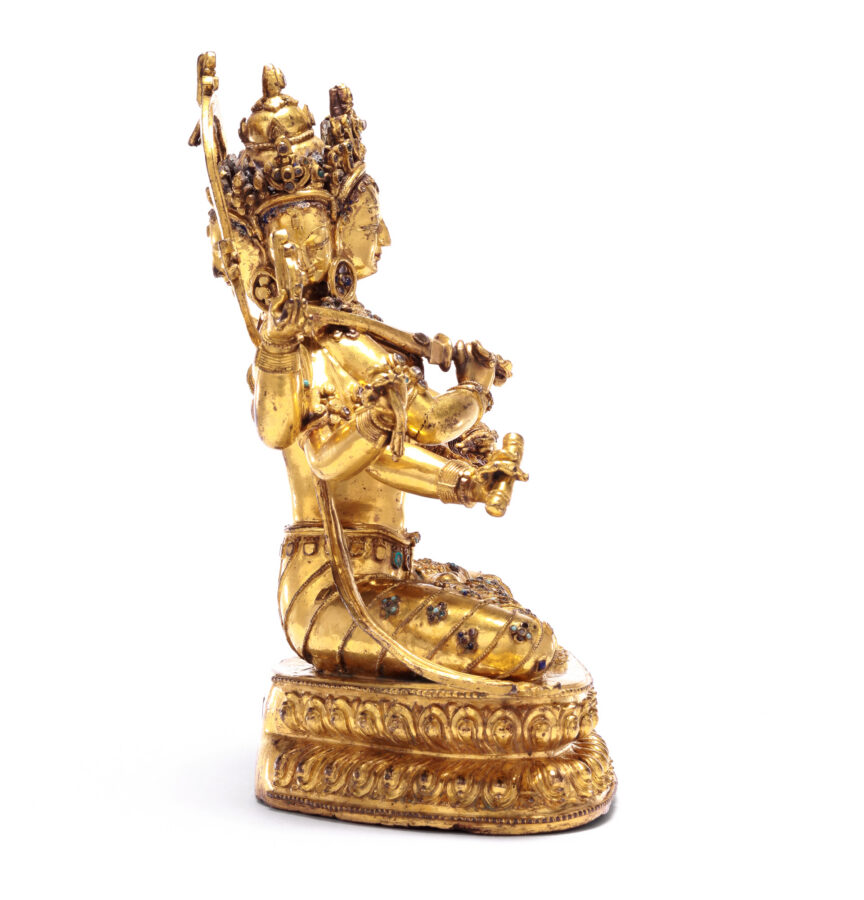
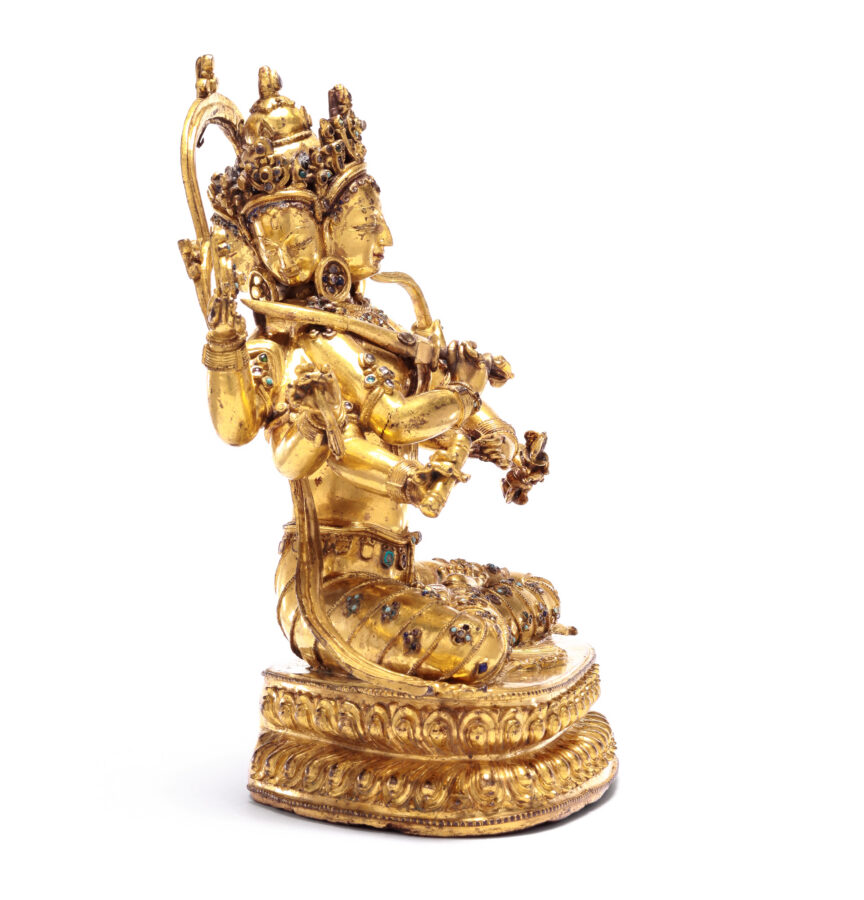
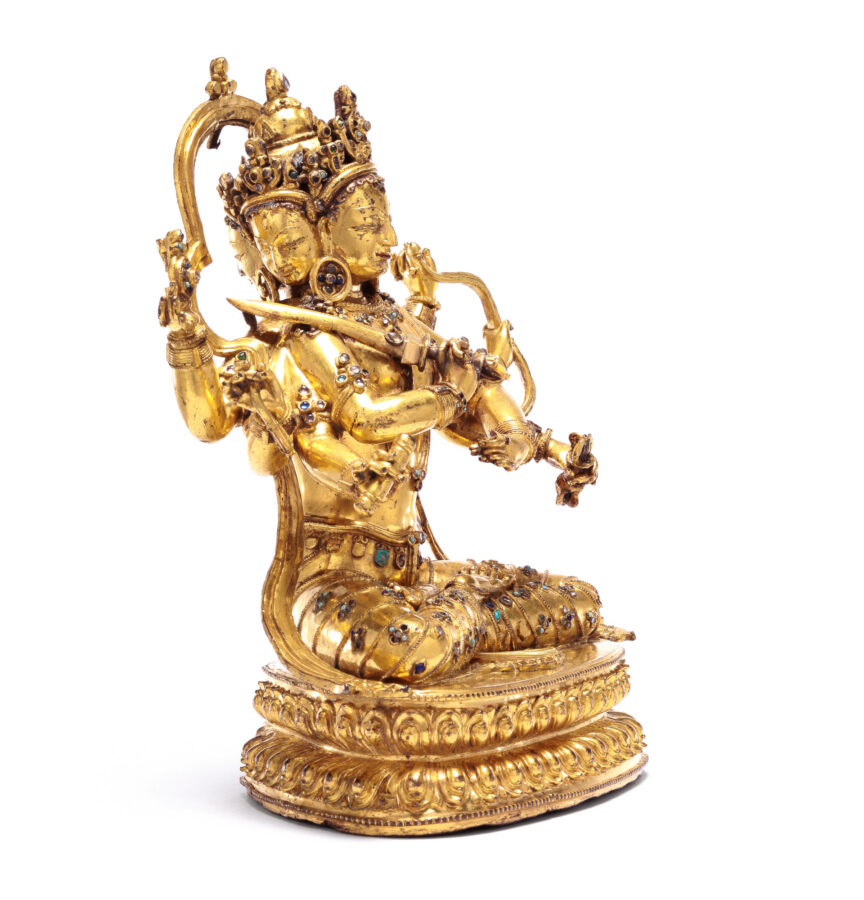
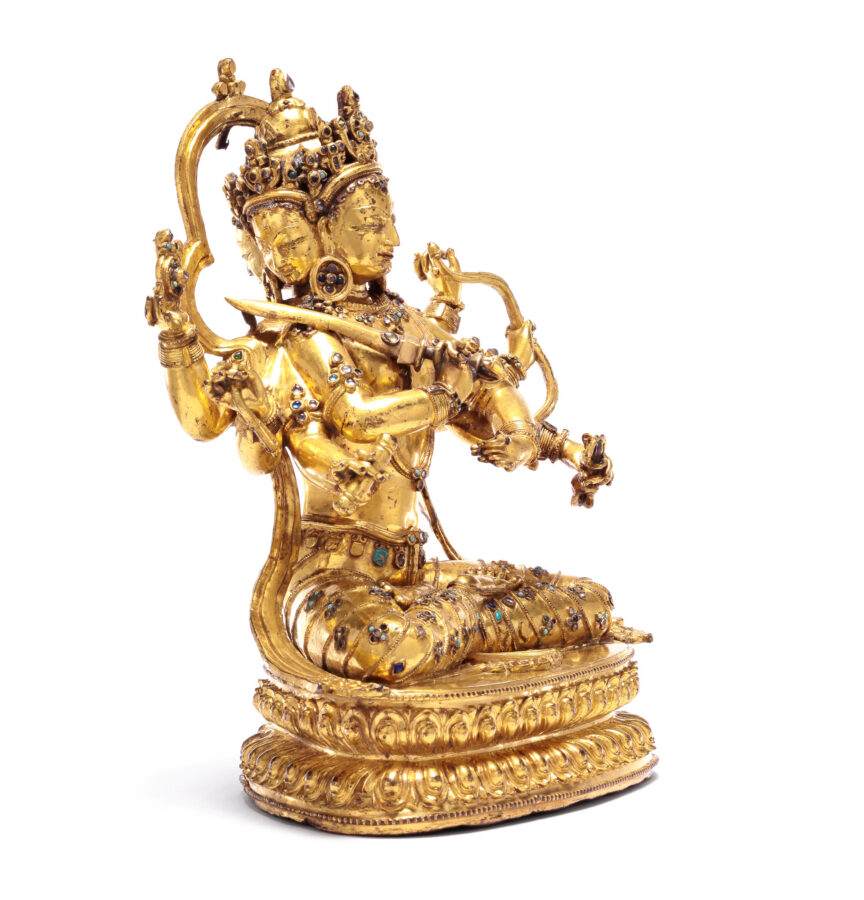
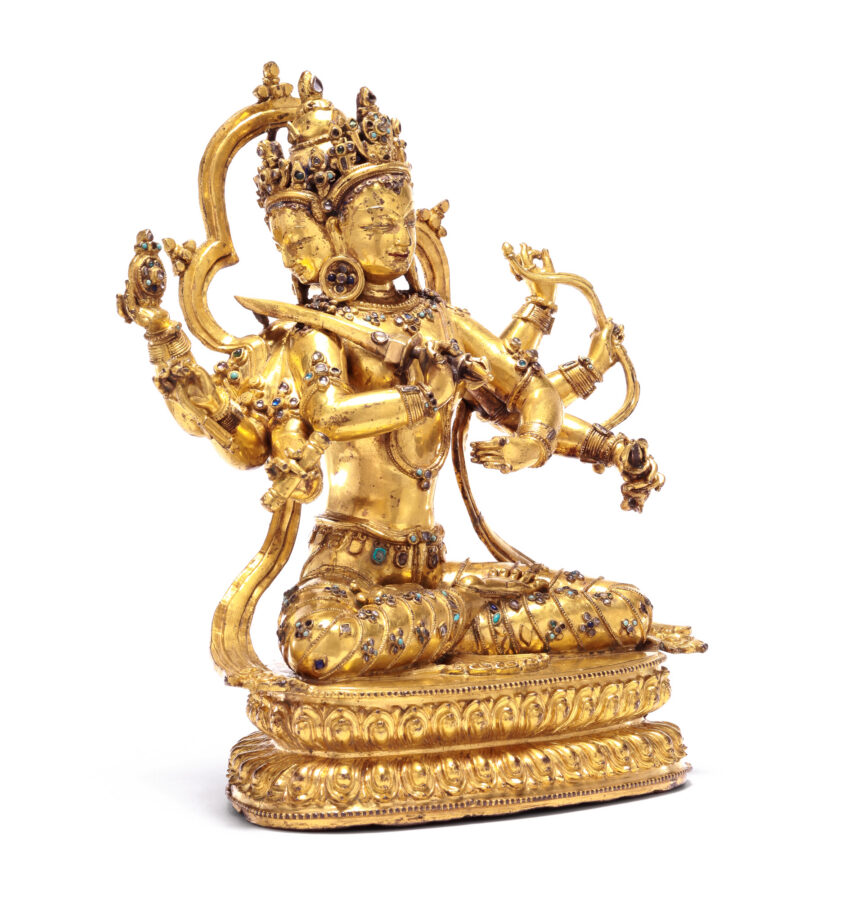
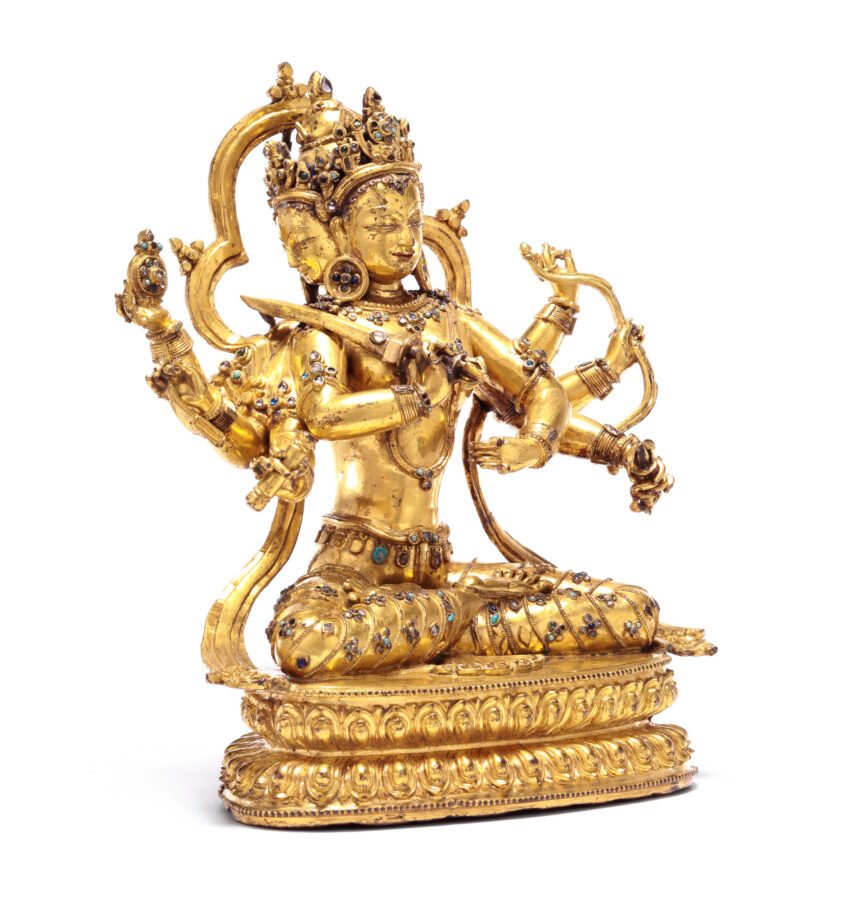
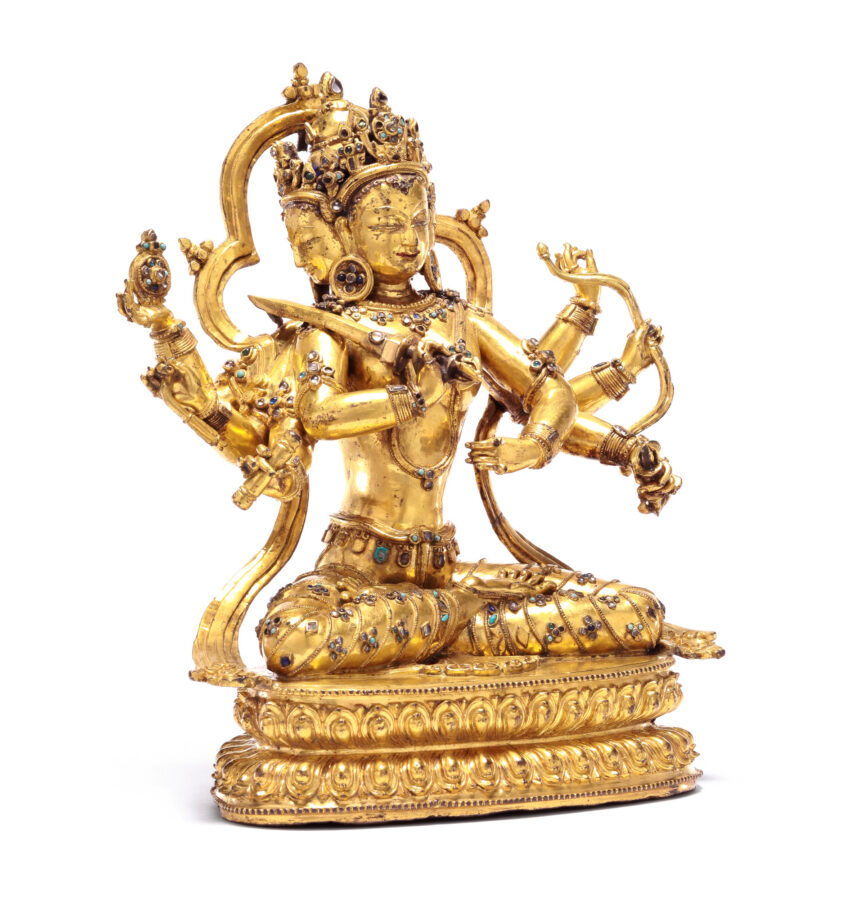
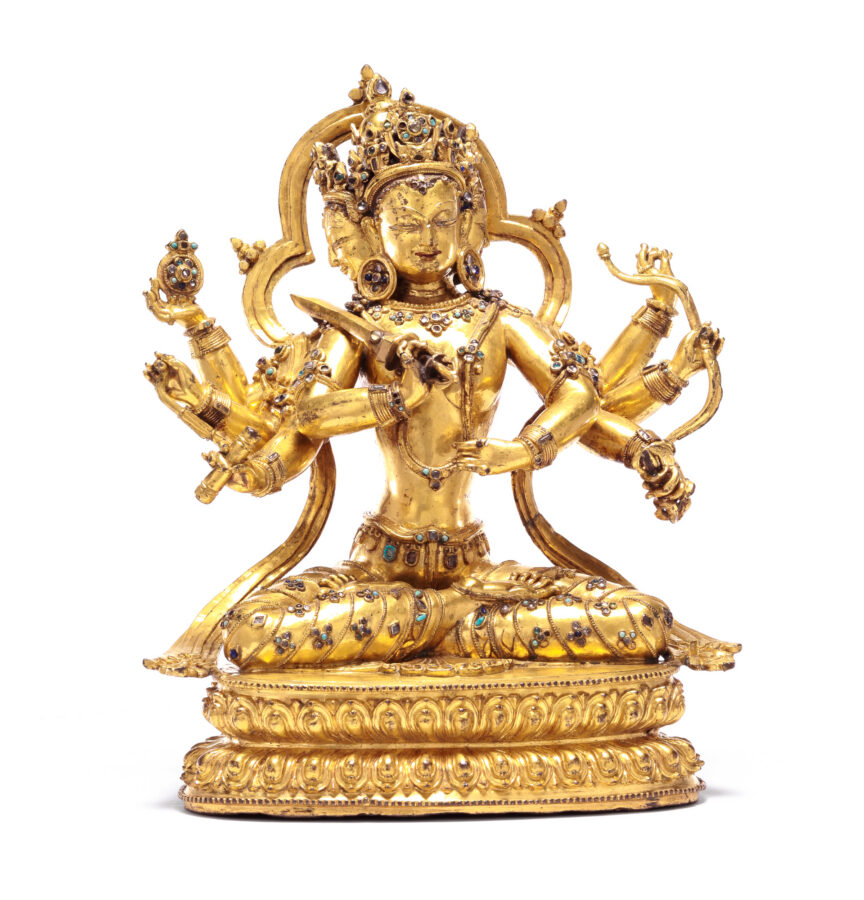
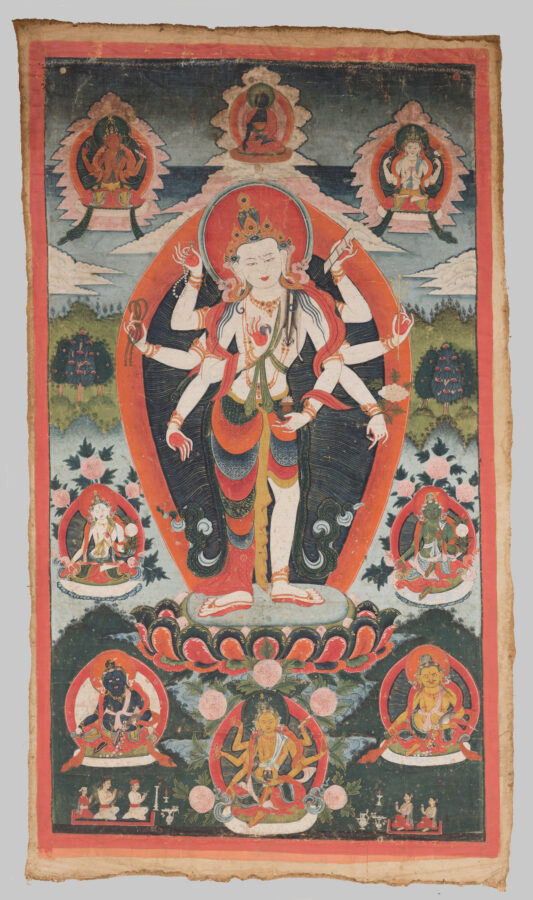
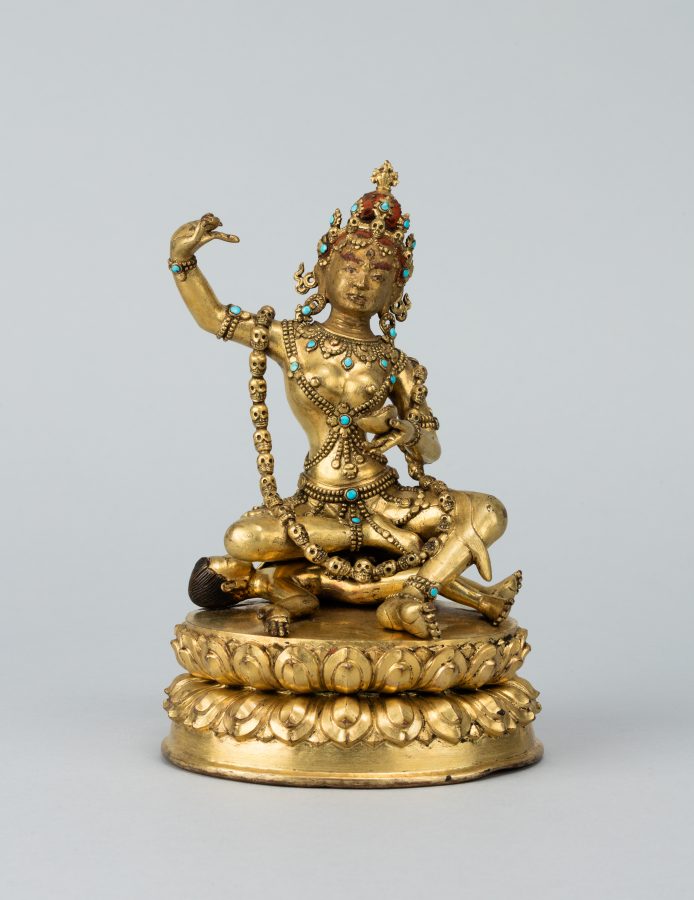
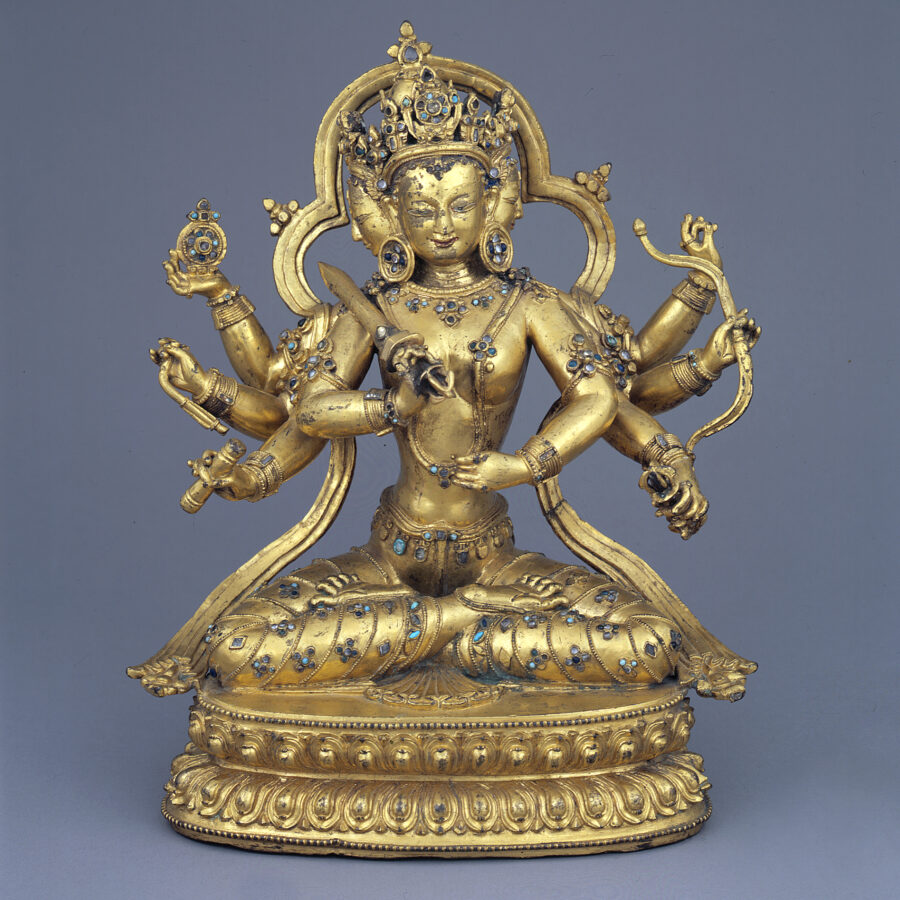
Pratisara is one of the Five Protector Goddesses (Pancharaksha), personifications of five early Esoteric Buddhist spells (dharani) for protection against worldly harm. Of the five she is often considered the principal figure and protects from sin and illness.
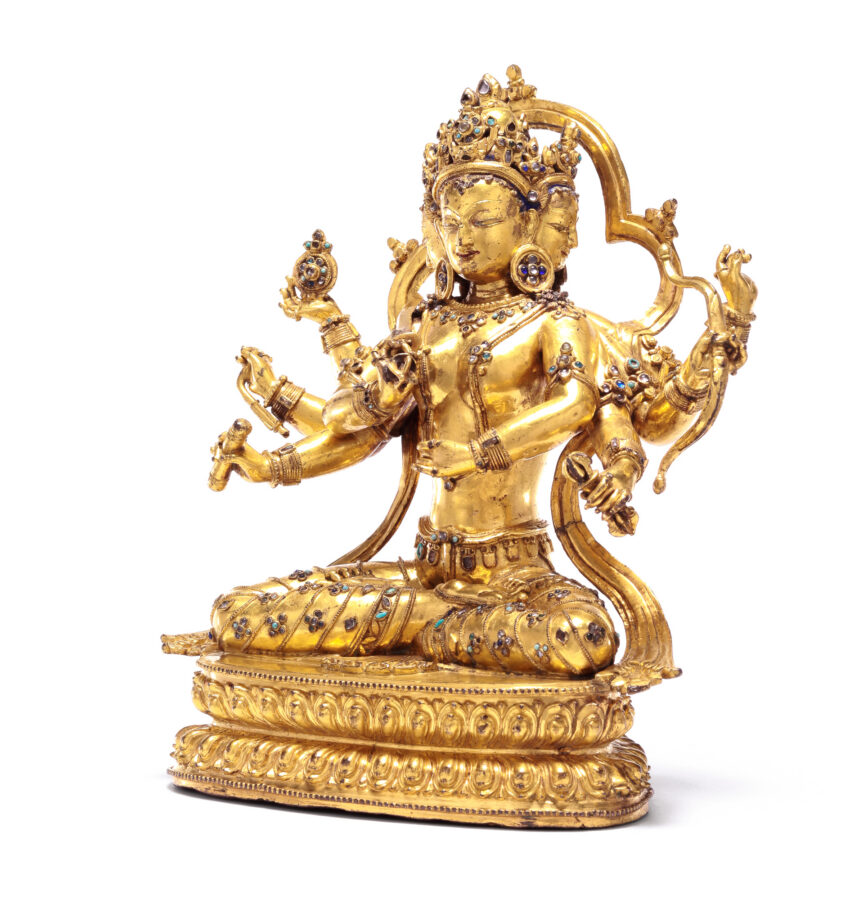
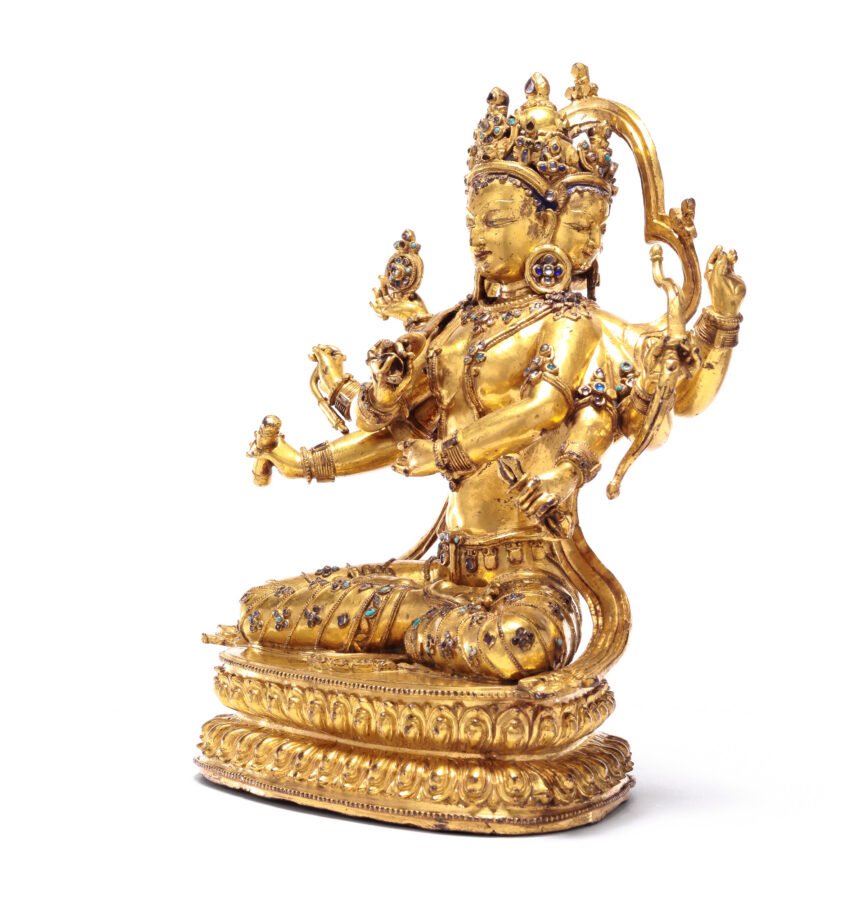
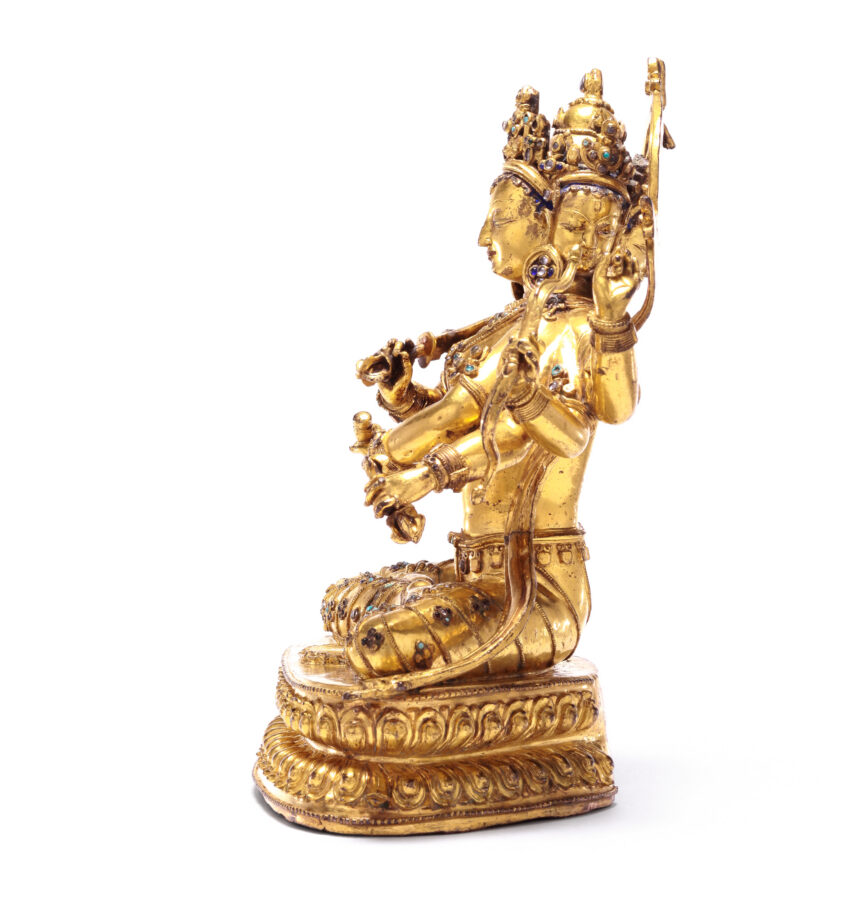
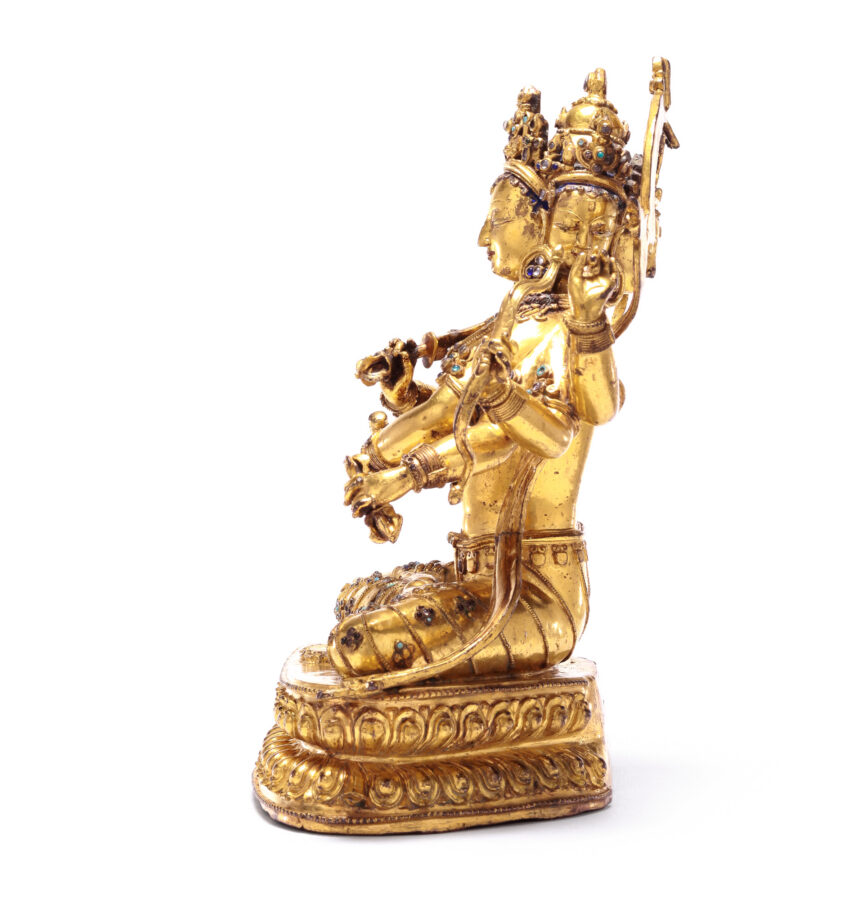
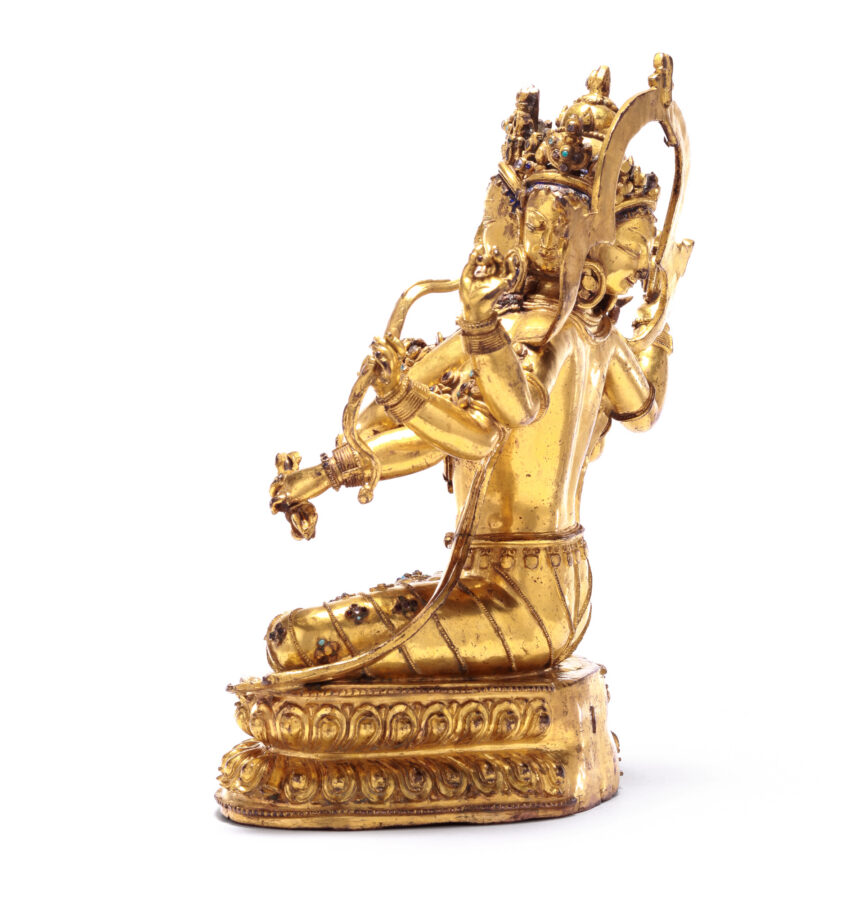
This slender image bears typical characteristics of late 14th- and early 15th-century sculpture. The slim figure is slightly bent towards the left, and her multiple heads and arms are stacked in a way that makes them appear almost natural. The elegant sweep of her scarf billows to frame her head and flares out at the goddess’s knees.
The double-lotus base with its slim petals is typical for Nepalese craftsmanship of this period, both in Tibet and at the Chinese court. In its elegance of form and ornamentation this bronze demonstrates the continuing importance of Nepalese craftsmanship in Tibet, as famously represented by the sculptures of Densatil in Tsang region, central Tibet, to which this sculpture has been attributed.
However, evidence visible inside the unsealed base reveals a small metal fastening at the back of base, suggesting the sculpture once had a backing or aureole. It was probably not attached to a Densatil stupa, as the existing fixture is unlikely to have been able to bear the sculpture’s weight.
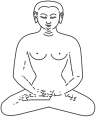
Also known as vajra position, this posture is associated with meditation.
A kind of energy that can be used, individually and collectively, to effect change.
Prescribed practices that carry symbolic meaning and value within a specific tradition and are intended to attain a desired outcome. Rituals are usually done as part of a ceremony or regular routine.
Female bodhisattvas and tantric deities embody specific enlightened qualities such as wisdom, power, and protection, and can be peaceful or wrathful in appearance.
Today, Tibetans primarily inhabit the Tibetan Plateau, situated between the Himalayan mountain range and the Indian subcontinent to the west, Chinese cultural regions to the east, and Mongolian cultural regions to the northeast. During the 7th to 9th century, Tibetan rulers expanded their empire across Central Asia, and established Buddhism as the state religion.
 March 15, 2024–October 6, 2024
Rubin Museum
150 W. 17th St., NYC
Get the latest news and stories from the Rubin, plus occasional information on how to support our work.