Central Tibet
ca. 1720
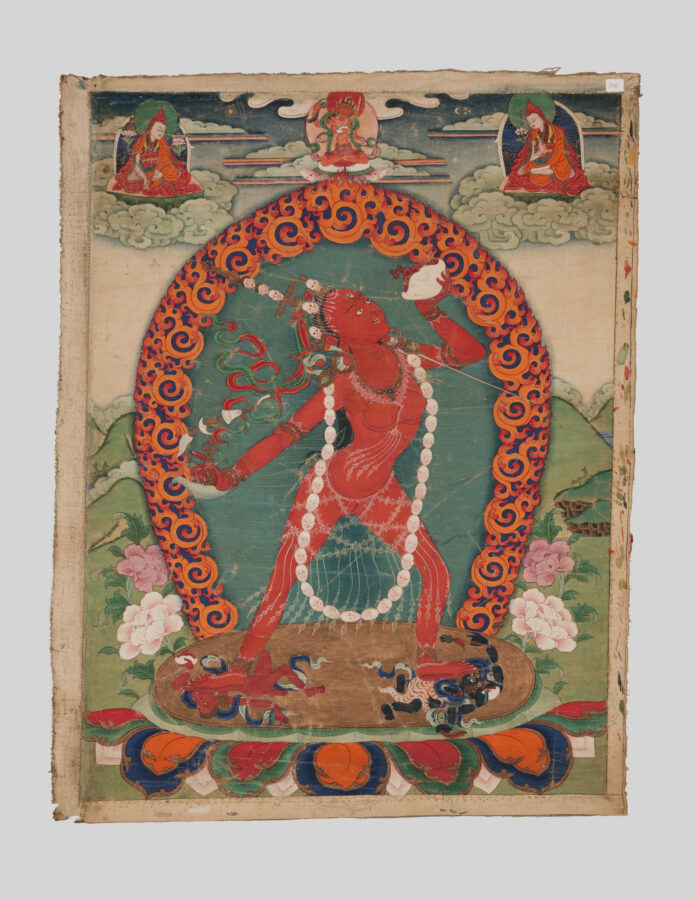
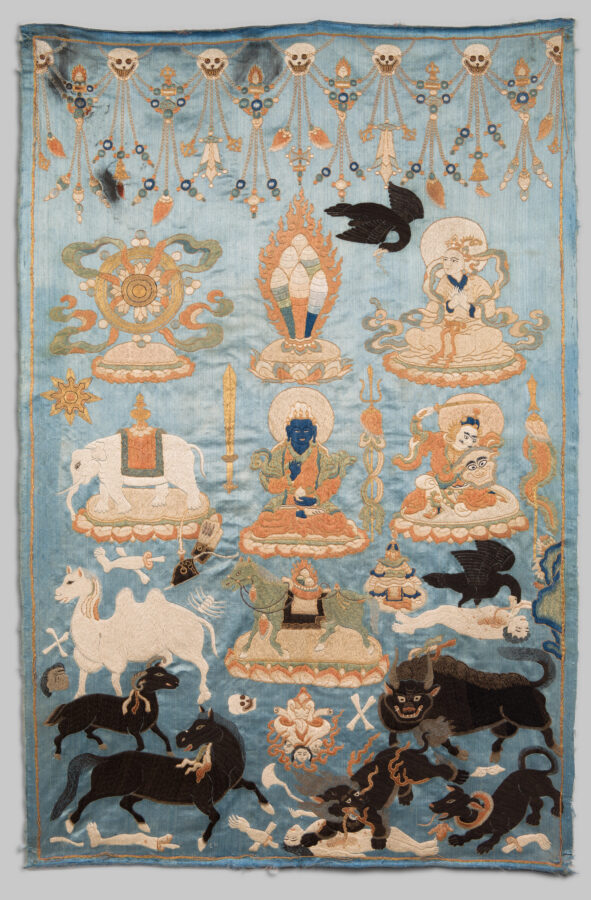
A skull cup is an attribute of tantric deities and is usually paired with a curved knife. It can symbolize a mind filled with the bliss of realizing the true nature of reality.
Central Tibet
ca. 1720
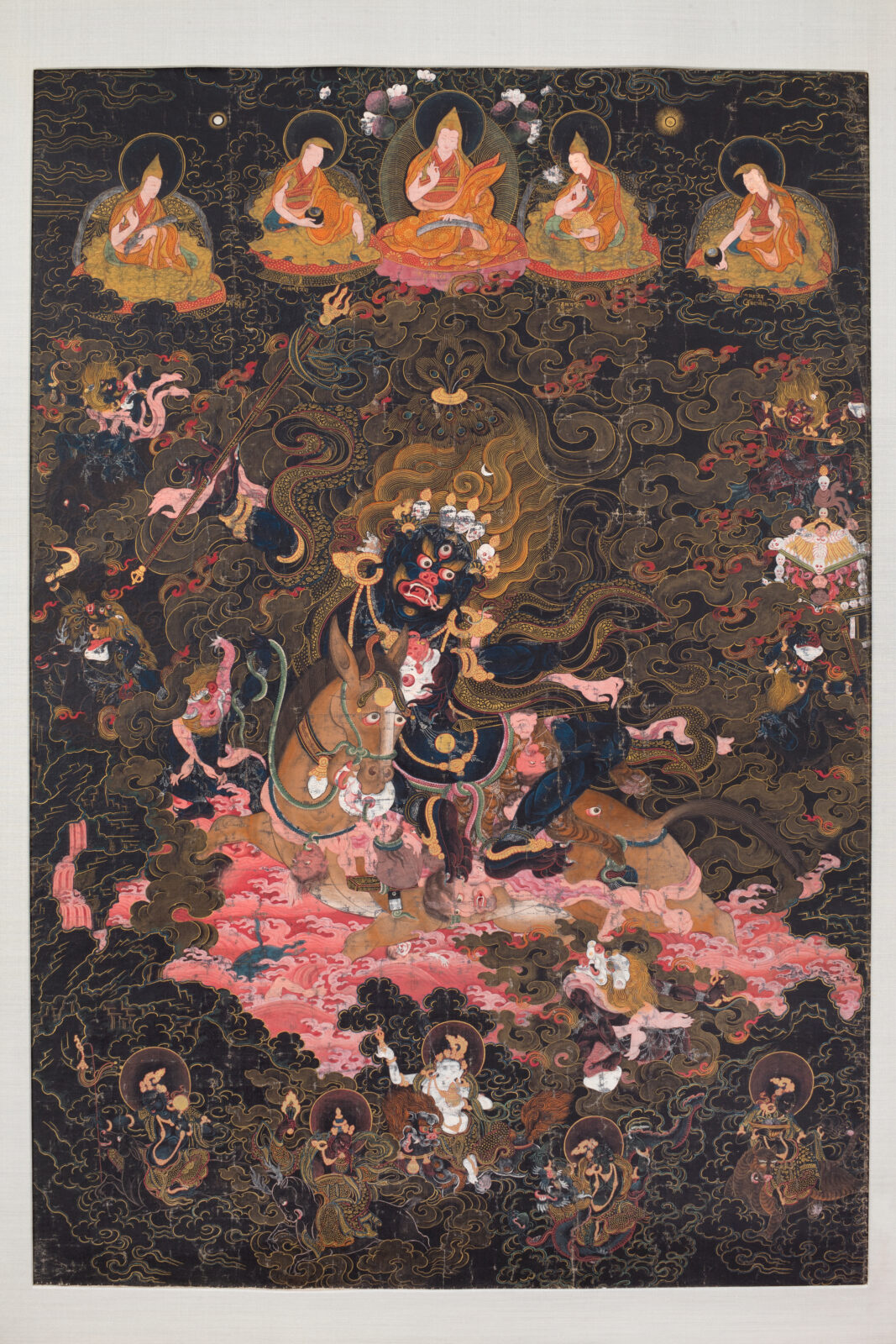
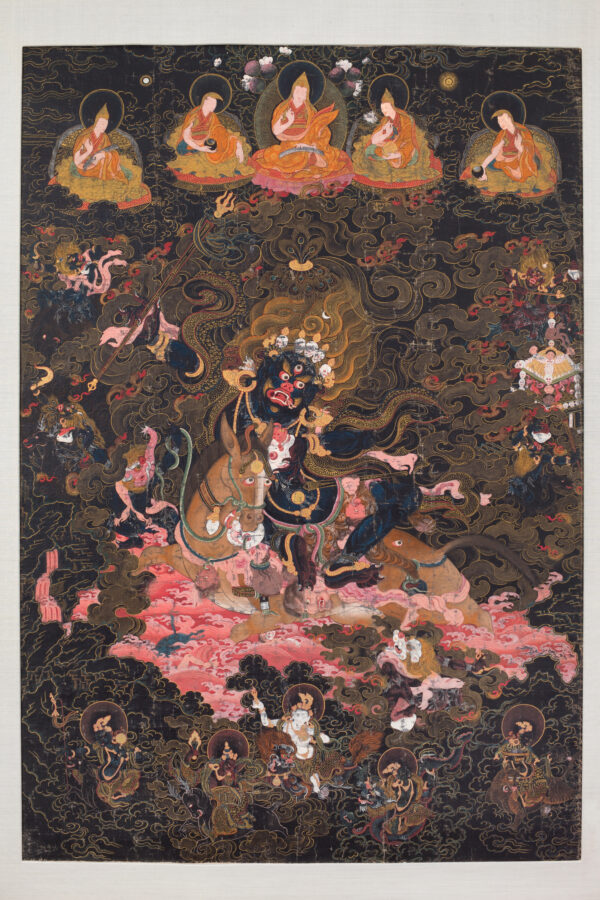
Black background paintings are a special format in Tibetan art traditionally reserved for wrathful deities. Typical for this genre, gold is used to outline the figures and flames with spare touches of red for flames and other forms to create a dramatic effect. This painting is further enlivened by the varied use of reds and pinks in the churning sea of blood the central deity rides across.
The important 18th-century Tibetan figure the first Purbu Chok, Ngawang Jampa (1682–1762), wrote the inscription on the back. This text is also recorded in his collected writings in reference to a set of seven paintings of protector deities he commissioned, helping to contextualize and date the painting to around 1720.The central figure of this painting is Makzor Gyelmo, “Queen Who Repels Armies,” one of the primary protectors of the Geluk tradition of Tibetan Buddhism. Prominent teachers of the painting’s patron and his tradition are assembled at in the top row: Lobpon Puntsok Gyatso (17th century), Khardo Rinchen (1672–1749), Je Drubkhang Rinchen (1641–1713), the Fifth Dalai Lama Ngawang Lobzang Gyatso (1617–1682), and the Fifth Panchen Lama Lobzang Yeshe (1663–1737).

A skull cup is an attribute of tantric deities and is usually paired with a curved knife. It can symbolize a mind filled with the bliss of realizing the true nature of reality.
An energy wielded with intention, skill, and compassion to offer protection and remove obstacles. In Buddhism, it is considered different than negative emotions like anger or rage.
The idea that everything is temporary, constantly changing, and moving through stages of development, decay, and dissolution. Impermanence is a reminder to avoid strong attachments and focus on the present moment.
A religious movement that originated in India around the fifth to seventh century with sacred writings and esoteric teachings and practices transmitted from teacher to student through initiation. These remain an important part of Hinduism and Buddhism today.
One of the main sources of suffering in the endless cycle of death and rebirth known as samsara. Buddhists regard offering protection from fear as an act of compassion or form of giving.
In Buddhism time is perceived as relative, dynamic, and conceptual. This outlook highlights important principles of interdependence within Buddhist philosophy.
A kind of energy that can be used, individually and collectively, to effect change.
In Buddhism gender is considered more fluid compared to some other religions. Certain traditions emphasize the importance of all genders in achieving enlightenment. The feminine is considered an embodiment of wisdom and the masculine is an embodiment of method.
The end of this life marked by the cessation of bodily functions followed by decay. According to Buddhism, after death consciousness transitions to an intermediate state known as the bardo before embarking on another life.
The transmission of teachings from one generation to the next, from teacher to student, traced all the way back to the Buddha without interruption. A complete lineage is essential in Tantric Buddhist practices as it makes the blessings of the teaching more powerful.
Female bodhisattvas and tantric deities embody specific enlightened qualities such as wisdom, power, and protection, and can be peaceful or wrathful in appearance.
Tantric deities personify various enlightened qualities and are the focus of esoteric religious practices (tantras) that aim to swiftly and radically transform one’s understanding of reality.
Protectors of Buddhist teachings who destroy obstacles that impede the path to enlightenment. The more frightening and gruesome their appearance, the greater their power.
Today, Tibetans primarily inhabit the Tibetan Plateau, situated between the Himalayan mountain range and the Indian subcontinent to the west, Chinese cultural regions to the east, and Mongolian cultural regions to the northeast. During the 7th to 9th century, Tibetan rulers expanded their empire across Central Asia, and established Buddhism as the state religion.

Get the latest news and stories from the Rubin, plus occasional information on how to support our work.