Tibet
15th-16th century
Tibet
15th-16th century
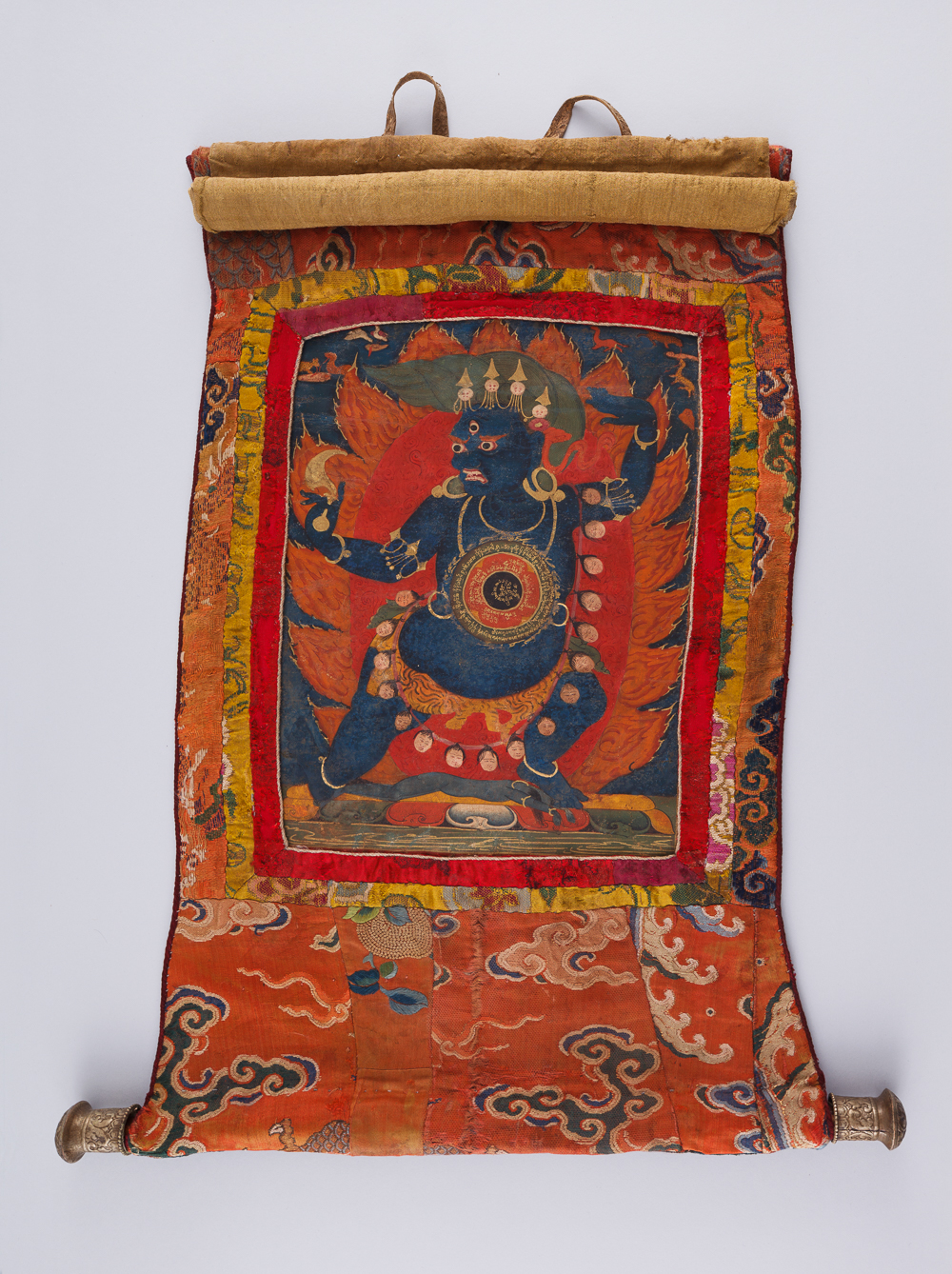
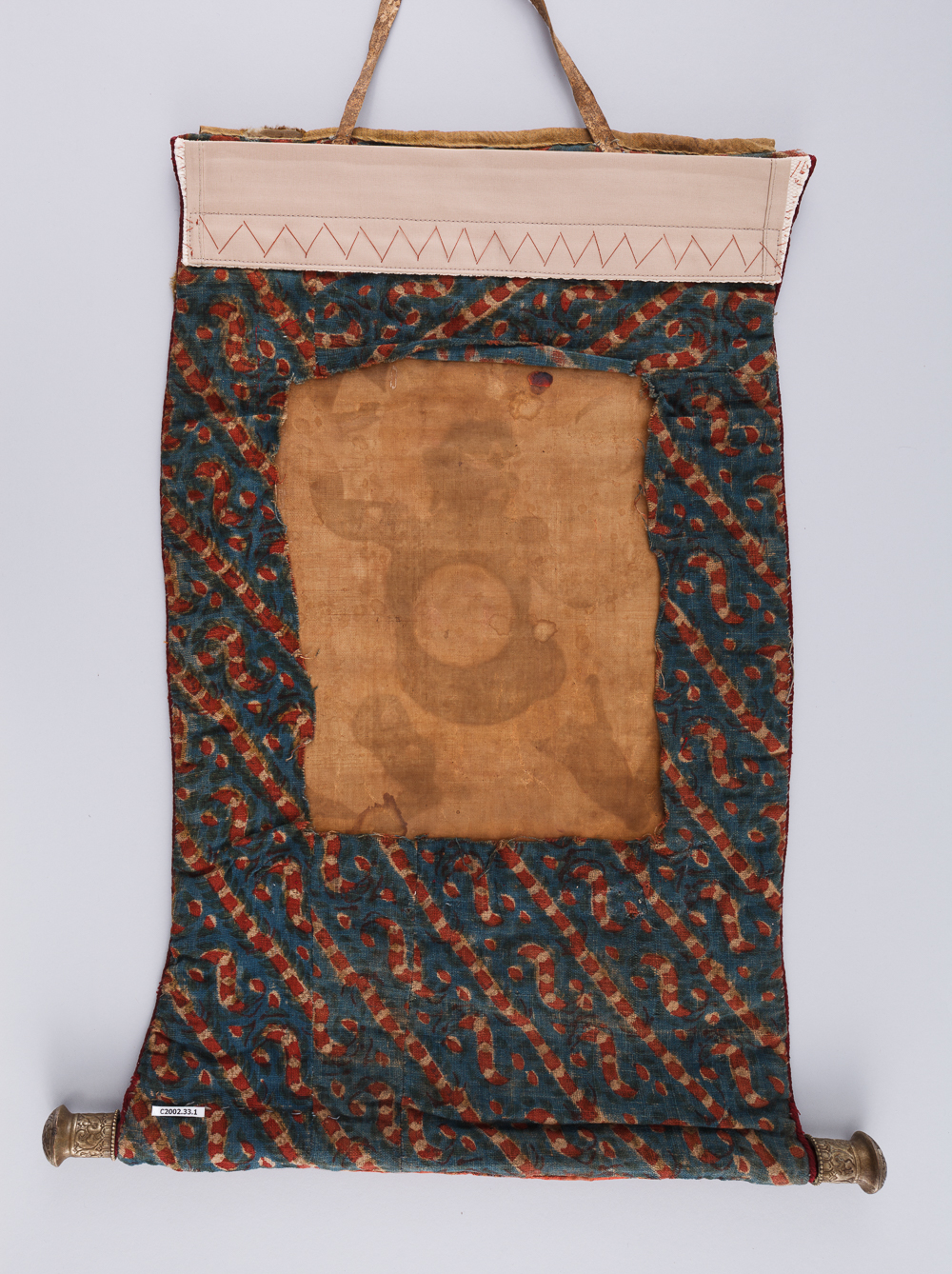
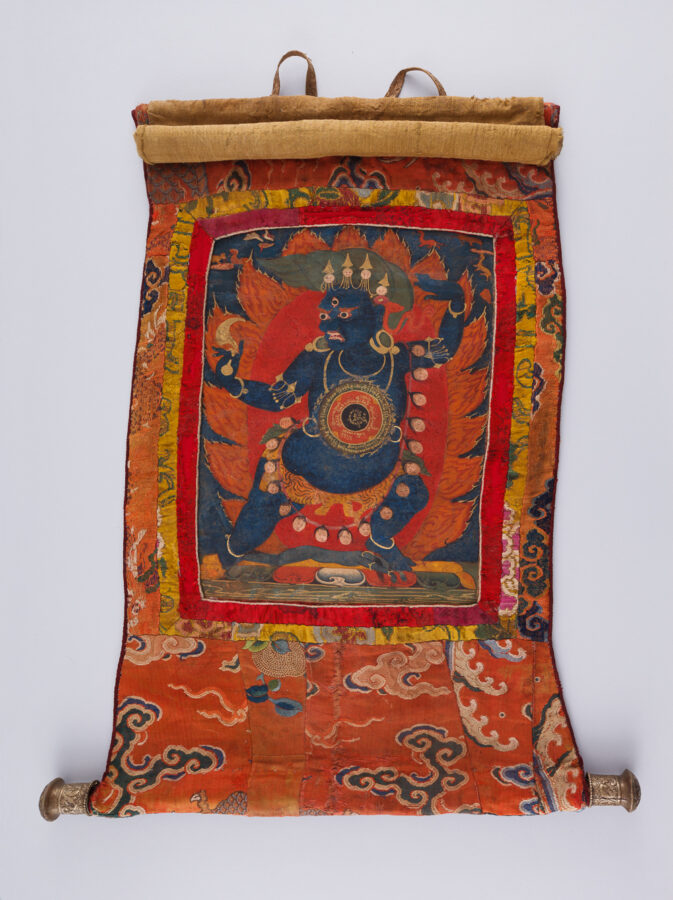
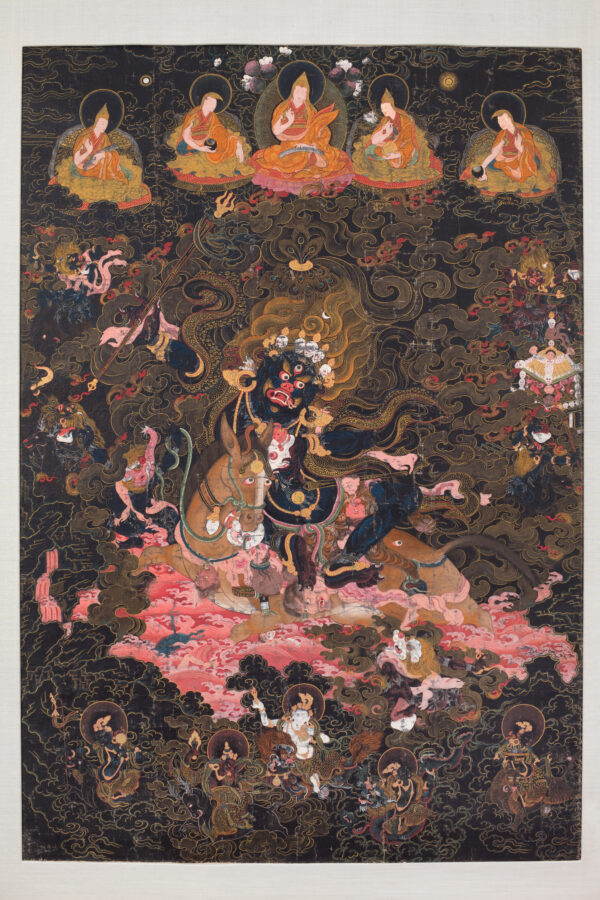
The figure is most likely Black Yakshini (Kali Yakshini), although Sister Ekajati (sring mo ral cig ma), “The Single-Braided-Haired One,” remains a possible alternative. The identification is based particularly on the figure’s distinctive attribute: a golden razor held in her right hand. Both deities are female protectors associated with the group of five activity deities in Sakya ritual traditions.
According to the 19th-century master Jamgon Kongtrul Lodro Thaye (1813–1899), the main difference between the two is the object held in the left hand. Black Yakshini has her left arm raised, with a moon emerging from the palm, while Sister Ekajati holds intestines in her raised left arm. This distinction is important for identifying the present figure.On close examination, it is more likely that a moon originally emerged from the palm of the left hand and was later erased or covered during repainting. The possibility that the figure held intestines seems less likely, since traces of the intestines would normally be expected to remain more visible, even if the area had been repainted. The surviving evidence therefore favors Black Yakshini as the figure depicted here.
However, it is also possible that the painter failed to depict every element of the full textual iconographic description. The absence of a clearly visible moon or intestines should therefore not be taken as proof that the figure corresponds to neither deity. The left-hand attribute may have been omitted, simplified, damaged, or lost through later repainting. The figure’s dark blue body, fierce expression, human-head ornaments, and clothing associated with Monpa dress are consistent with the general appearance of these protective deities. The figure should also be distinguished from Great Mother Ekajati, a separate deity occupying a different position in Tibetan Buddhist ritual traditions.
Additional identifying evidence comes from the protective circle (yantra/srung ’khor) depicted at the figure’s heart. This diagram consists of concentric circles of sacred mantras and ends with a Tibetan prayer requesting protection and the successful completion of ritual activities. The invocation mantra at its center is particularly significant. According to Sakya sādhanas, this mantra is used to invoke both Sister Ekajati and Black Yakshini as, the two female protectors (mgon mo gyis) among the five activity deities. It therefore supports the identification of the figure as belonging to this group but cannot, by itself, distinguish between the two.

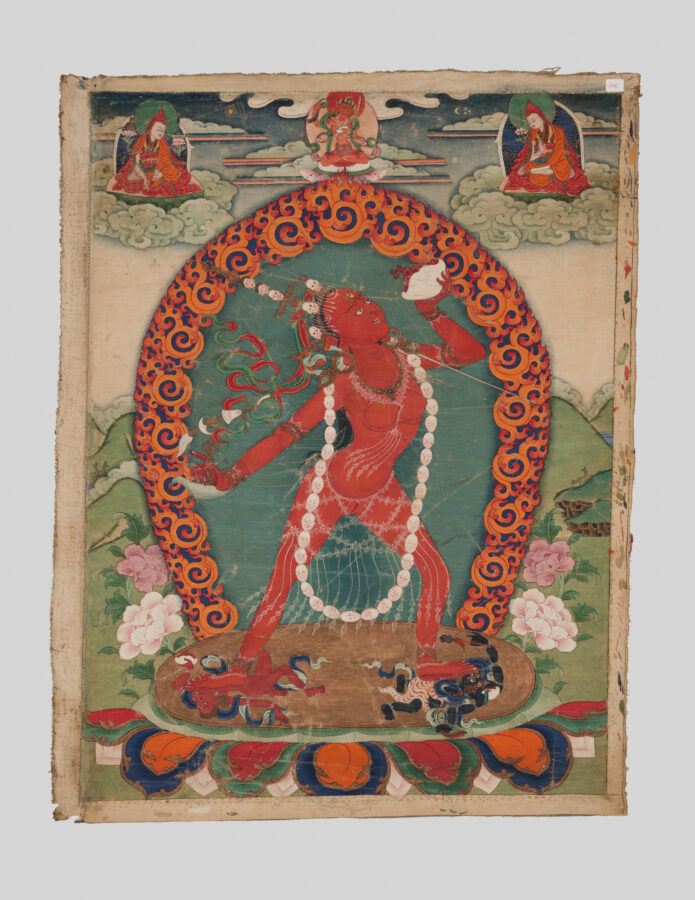
This posture features a triple- bend of the body at the knee, hip, and waist.

This weapon is an attribute of tantric deities and is usually paired with a skull cup. When held by female deities it symbolizes wisdom’s destruction of all obstacles to enlightenment. When held by male deities it represents the method aspect of enlightenment.
An energy wielded with intention, skill, and compassion to offer protection and remove obstacles. In Buddhism, it is considered different than negative emotions like anger or rage.
A kind of energy that can be used, individually and collectively, to effect change.
Prescribed practices that carry symbolic meaning and value within a specific tradition and are intended to attain a desired outcome. Rituals are usually done as part of a ceremony or regular routine.
Tantric deities personify various enlightened qualities and are the focus of esoteric religious practices (tantras) that aim to swiftly and radically transform one’s understanding of reality.
Protectors of Buddhist teachings who destroy obstacles that impede the path to enlightenment. The more frightening and gruesome their appearance, the greater their power.
Today, Tibetans primarily inhabit the Tibetan Plateau, situated between the Himalayan mountain range and the Indian subcontinent to the west, Chinese cultural regions to the east, and Mongolian cultural regions to the northeast. During the 7th to 9th century, Tibetan rulers expanded their empire across Central Asia, and established Buddhism as the state religion.

Get the latest news and stories from the Rubin, plus occasional information on how to support our work.
