Tibet
19th century
This posture features a triple- bend of the body at the knee, hip, and waist.
Tibet
19th century
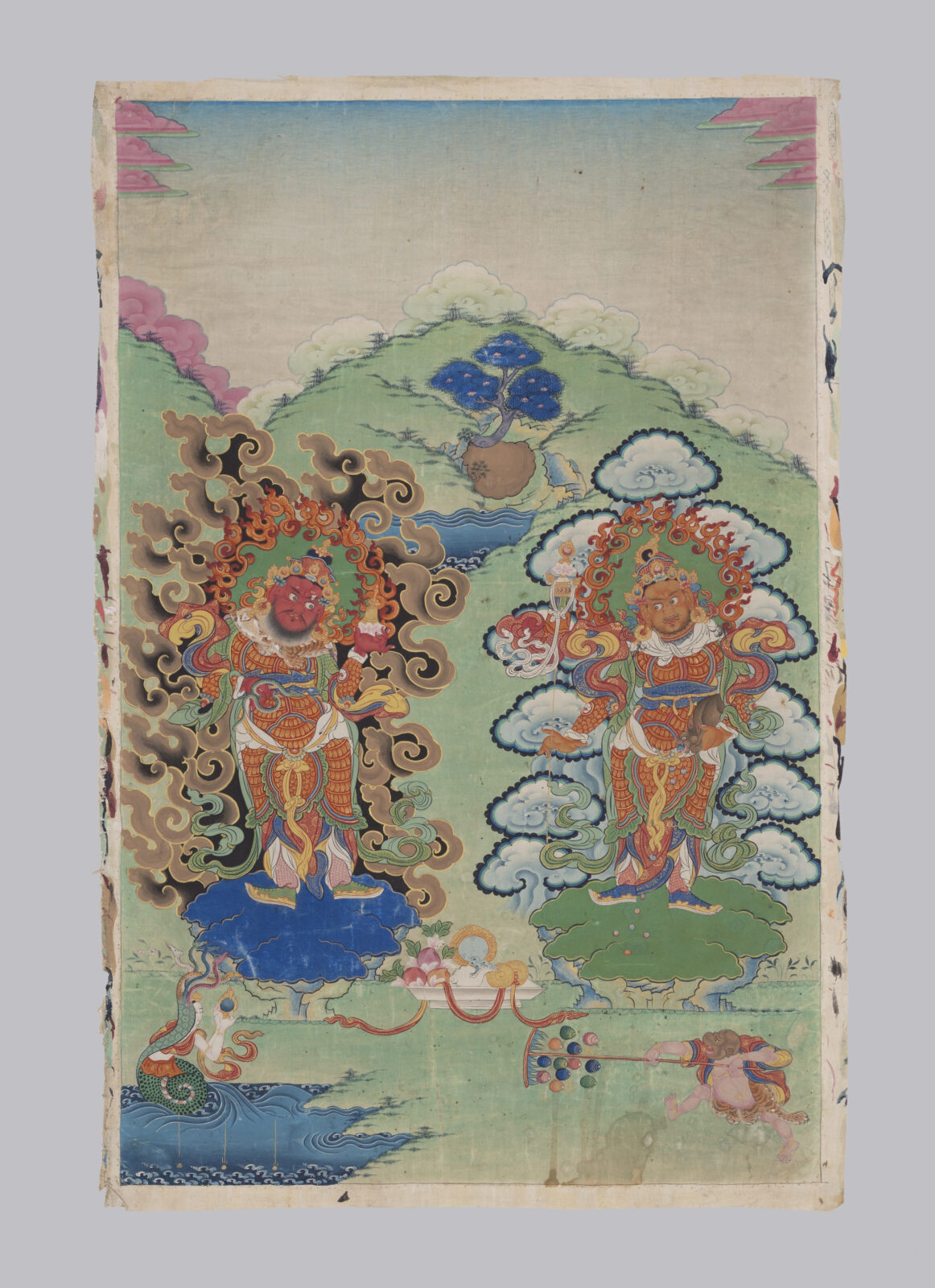
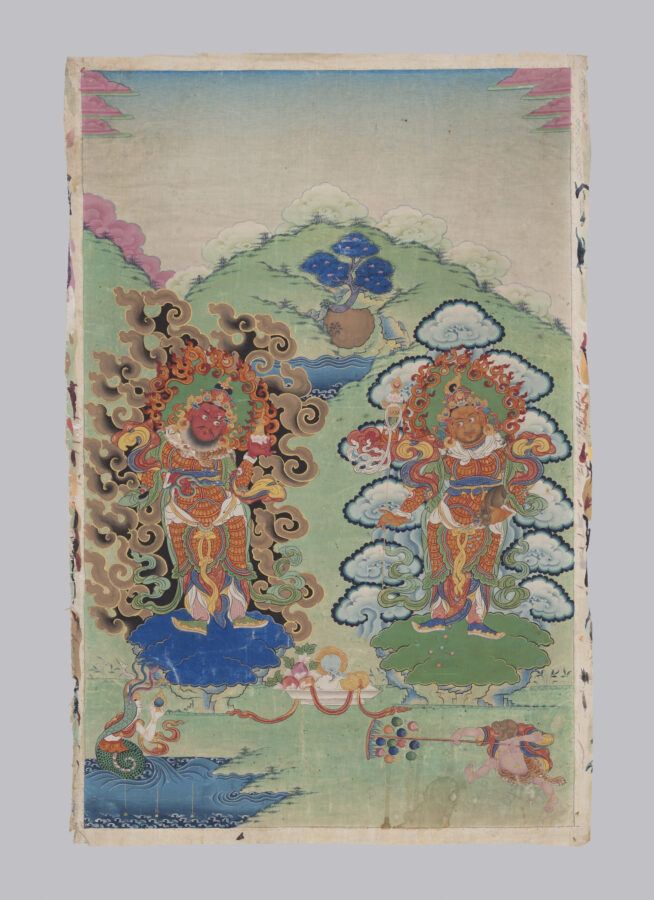
This painting depicts two of the four guardian kings, who are said to protect the Buddha’s teachings in the four cardinal directions. These figures are typically depicted as warriors clad in armor of Central Asian design. Large-scale sculptures and mural paintings of the four great kings can often be found flanking the entrance gates of Buddhist monasteries and verandas of temples.
On the left stands Virupaksha, Guardian King of the West. He is red and has large round eyes, a moustache, and beard. His rulership over water spirits, known as nagas, is indicated by the green snake in his right hand. He holds a stupa on a lotus in his left hand. He wears elaborate armor with a tiger’s pelt draped around his back and a jeweled golden headdress, round earrings, and flowing silk scarves as adornments. Billowing smoke and flaming radiance surround him. Below to the left is a naga creature with a hood of five snakes offering him a large jewel from a lake.
On the right stands Vaishravana, Guardian King of the North. He is orange and equally armored, bejeweled, and adorned with flowing scarves. His rulership over all earth spirits, known as yakshas, is indicated by a long victory banner in his right hand. His left hand cradles a mongoose who disgorges gems, the riches of earth, which fall to the green rock Vaishravana stands on. Clouds and flaming radiance engulf him. Below to the right is a yaksha creature raking the gems to hoard them.
Between the two guardian kings is a plate filled with the peaceful offerings of the five senses—a mirror, scented water in a conch shell, cymbals, fruits, and silk scarf. Both guardians stand in a landscape of green hills with a lake and an open cave by a tree. White clouds top the hills, and pink clouds edge the expanse of clear sky.
This painting is likely from a set depicting Buddha Shakyamuni and his disciples, the sixteen arhats. Pairs of the guardian kings such as this would be placed at either end of the set of up to 21 paintings.
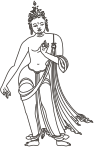
This posture features a triple- bend of the body at the knee, hip, and waist.
A kind of energy that can be used, individually and collectively, to effect change.
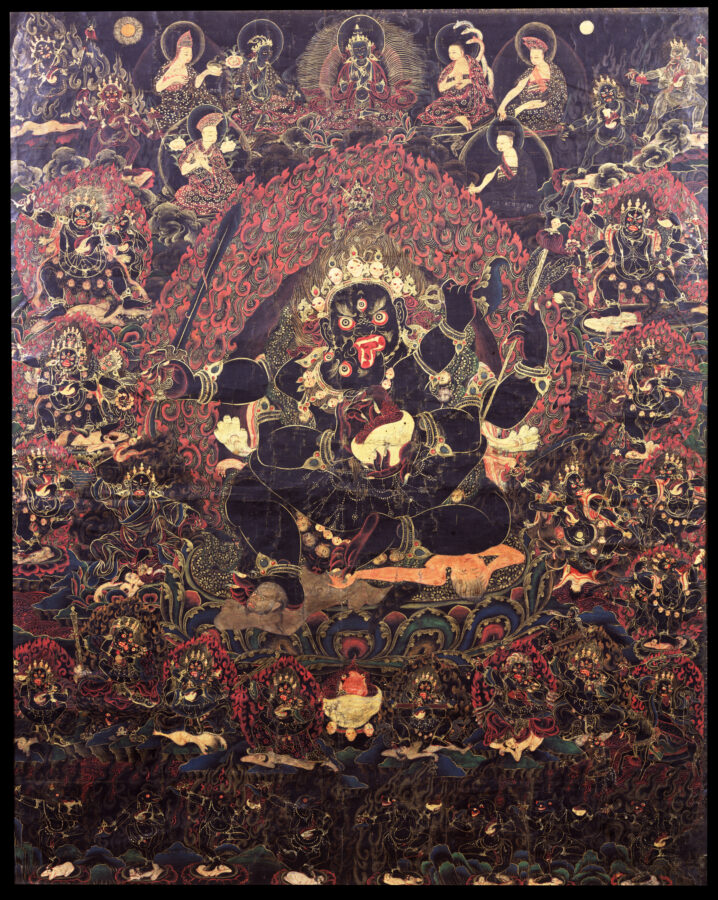
Buddhist practitioners in some traditions believe that cutting through ordinary perceptions that keep us in the endless cycle of death and rebirth, known as samsara, can create a powerful and enhanced divine identity that leads to enlightenment.
Tantric deities personify various enlightened qualities and are the focus of esoteric religious practices (tantras) that aim to swiftly and radically transform one’s understanding of reality.
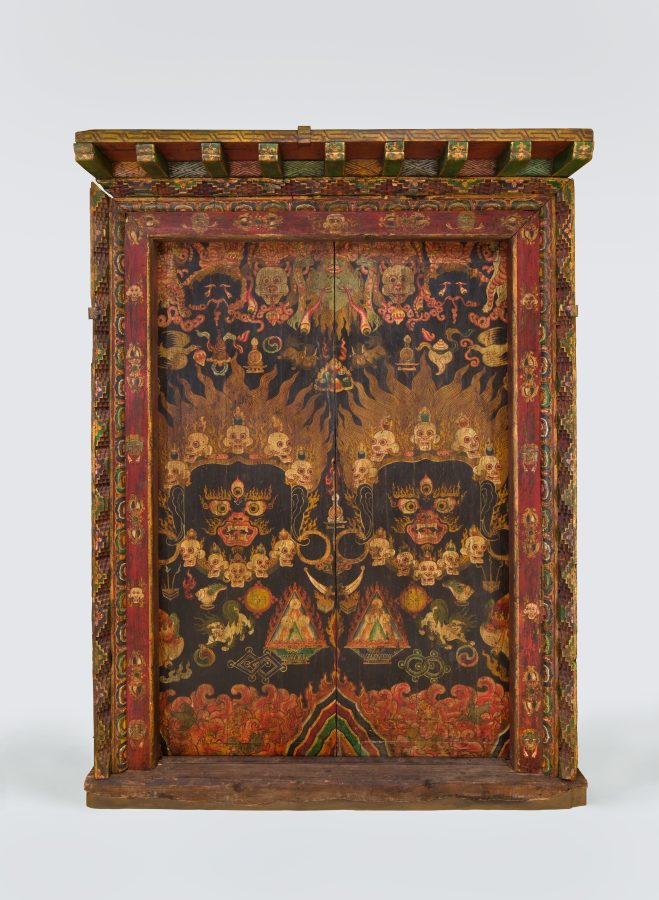
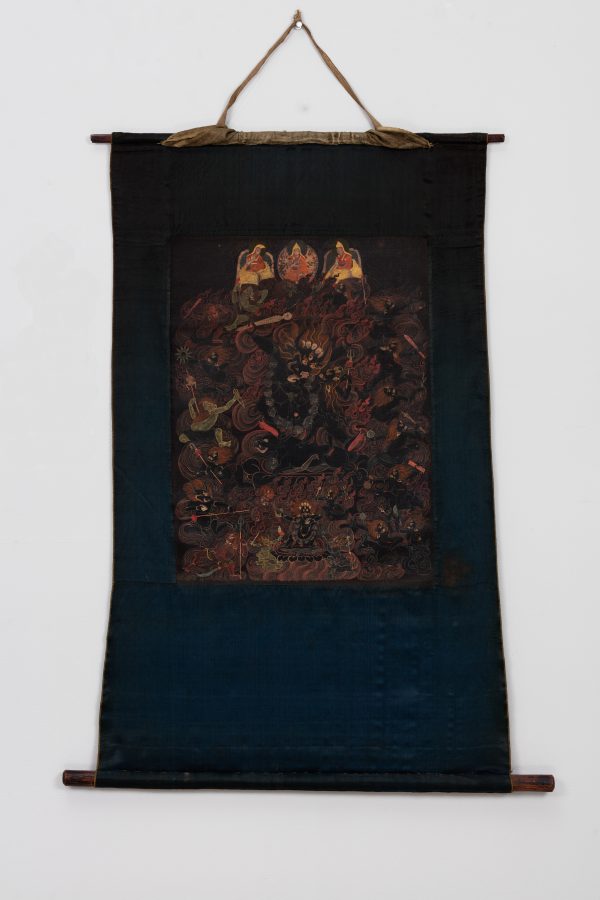
Protectors of Buddhist teachings who destroy obstacles that impede the path to enlightenment. The more frightening and gruesome their appearance, the greater their power.
Today, Tibetans primarily inhabit the Tibetan Plateau, situated between the Himalayan mountain range and the Indian subcontinent to the west, Chinese cultural regions to the east, and Mongolian cultural regions to the northeast. During the 7th to 9th century, Tibetan rulers expanded their empire across Central Asia, and established Buddhism as the state religion.

Get the latest news and stories from the Rubin, plus occasional information on how to support our work.