
Season 6 · Episode 2
Kathleen Hanna:
Everywhere I went in my 20s and my late teens, just walking to the bank, I was just massively harassed. Even in high school, guys would pull up and ask me how much, grown men. And I was like 14, 15 years old. People just don’t even acknowledge a lot of times that other people are human beings.
That’s me, punk singer, writer, and frontwoman of the bands Bikini Kill and Le Tigre Kathleen Hanna.
And I got mad in my apartment. And so I made this flyer that was about street harassment and I Xeroxed it and I stood in front of my apartment and I handed it to people, only women. And men got mad they didn’t get one and I didn’t care. And some women balled them up and threw them in the trash and on the ground and I called them litter bugs. No, it was the beginning of the like, I don’t care. You know what I mean? I have to do something. And my whole feeling was I’m not the only one going through this. And if one woman reads this and she thought she was the only one, then there’s two of us. And then I kind of started doing a lot of that stuff.
Welcome to season 6 of AWAKEN, a podcast from the Rubin Museum of Himalayan Art about the dynamic path to enlightenment and what it means to “wake up.”
I am Kathleen Hanna, a guest on this episode and your host for this season of AWAKEN.
At a time when anger seems more present—and potent—than ever, how can a better understanding of wrath help us transform this challenging emotion into an effective catalyst for change?
In this season, we explore the concept of wrath as a powerful force for awakening and transformation. Experts in the realms of art, philosophy, Buddhism and more share how wrath can be used for protection and meaningful action when applied with intention, skill, and compassion.
Buddhist and Hindu art has long been a pathway to insights and awakening, illuminating perspectives on how to navigate the world. Over the course of eight episodes we look at artworks of wrathful deities from the Rubin Museum’s collection to learn what these terrifying figures can teach us about harnessing wrath for the benefit of all.
In this episode, we go deeper into the differences between anger and wrath.
Myisha Cherry:
I think all these words that we have for anger, whether that’s anger, whether that’s resentment, whether that’s rage, whether that’s wrath, I don’t want to say that I don’t care about the distinctions. I think at the end of the day, people are going to find one of those words to be uncomfortable with and make a judgment about the phenomenon as a whole.
Kathleen Hanna:
Myisha Cherry is an associate professor of philosophy at the University of California, Riverside, the director of the Emotion and Society Lab and the author of several books including The Case for Rage: Why Anger is Essential to Anti-racist Struggle and the forthcoming How to Love.
Myisha Cherry:
And that’s what I’m interested in. I’m interested in why anyone is uncomfortable with any subset of the emotion, because I think once we get at that, we’re going to find kind of a common pattern about, in general, people are uncomfortable with whatever this family of subtypes of anger is. And I want to get at why you are uncomfortable and I want people to see that no matter what you call it, it still has potential to be good in the world.
Kathleen Hanna:
Professor Annabella Pitkin teaches Buddhism and East Asian Religions at Lehigh University.
Annabella Pitkin:
From a philosophical point of view, the most crucial distinction between anger, the poison, and we’ll use the English word wrath as this liberating kind of powerful energy that even an enlightened being, a Buddha, might have that distinction really comes down to the combination of ignorance or delusion about the true nature of reality and addiction to the self addiction to the ego, self cherishing, self grasping.
Sharon Salzberg:
In the Burmese system of the Buddhist psychology, anger and fear are of the same mind state. They’re just two different forms. Anger being the outflowing, expressive, energized form, fear being the held in frozen, imploding form of wanting to strike out against what’s happening, wanting to declare it to be untrue. And anger in that form is likened to a forest fire. So one distinction to be made that’s really, really important is the difference between feeling anger and being overcome by anger.
Kathleen Hanna:
Sharon Salzberg is a meditation pioneer, world-renowned teacher, and New York Times bestselling author of books including Loving Your Enemies, Real Change, and Finding Your Way.
Sharon Salzberg:
So feeling anger, we feel what we feel, and there are ways of working with that, but being overwhelmed by anger is what’s likened to a forest fire, which burns up its own support, which means it destroys its host. So what is the host? Our bodies, our nervous system, our family relationships, our community. We get destroyed if we’re overwhelmed by anger is the statement. It’s the supposition. And so the great, great challenge for us is recognizing we feel what we feel. The positive part of anger is energy.
Annabella Pitkin:
We hear about three poisons or negative mental states or unskillful, mental states, mental states, cognitive processes that trap each of us and all living beings in an endless cycle of suffering and mutual harm and repeated experiences of death and painful rebirth. And that trio of negative mental states include ignorance or delusion, two different words for the same thing. And then attachment, or addiction, we could say grasping, and then on basis of those two, anger as a toxic emotion.
Sharon Salzberg:
So can we almost extract the energy without getting consumed by the fire? And that is a great task for mindfulness. So that’s, I think, an important understanding to have. If we go on to talk about wrath, that if we’re overwhelmed by anger, it’s very self-destructive. And one of the consequences of that is that we’re less effective in trying to make the change we’re seeking because we’re burning up.
Annabella Pitkin:
Wrath would be the power, the fierceness, the energy, the courage, the strength, the steadfastness, the clarity, the energetic force that we might associate with anger, right? Standing up for what you believe in protecting others. The mother who leaps to the heroic defense of her child, far beyond her ordinary strength, the shy person who’s being pushed around, but when they see someone else in trouble, all of a sudden their shyness, their fear drops away and they step in front of the vulnerable person and they say back off that powerful kind of courageous, heroic energy that seems to have something to do with anger in our conventional way of thinking, but that is not tainted or spoiled by attachment to the self, by selfishness, by taking pleasure in someone else’s suffering. Wrath is not a bully. Wrath is not there to pick on someone.
Kathleen Hanna:
I remember one time I was walking in Portland, Oregon, with my mom when we lived there. And my mom would’ve seen most people: She’s a nurse, very mild mannered, tiny person, great legs. My mom has great legs. And she’s not a yeller. She also has a very crass sense of humor, but she’s not someone who looks violent or they’re going to start a fight or whatever. And there was a man yelling at a woman across the street and I think he slapped her. And my mom ran across the street in front of cars to get in between them. And I have never heard somebody yell in the way my mother yelled at that man. And then she dusted herself off, walked back to me, and we just went about our business. And I think seeing that was fierce. Like that was my example. And that was the…in certain cases this is absolutely ok.
Myisha Cherry:
Anger is a response to wrongdoing in the world.
Kathleen Hanna:
Again, Myisha Cherry.
Myisha Cherry:
We are angry in our bodies. So it’s also kind of what it is to be angry is to experience that kind of the embodiment. So there’s stereotypical or typical kind of physiological responses that we have when it comes to anger, hence why I said it doesn’t feel good, why doesn’t it feel good? Our blood pressure rises. We get hot, right? It’s synonymous with heat. We may even get kind of shaky a little bit, right? The nervous system’s kind of doing its work, so that’s anger. But also emotions have kind of a motivational profile to it. If it’s the case that fear kind of motivates us to flee or to freeze or to fight, anger is going to motivate us to approach the object of our anger. So if you’re angry, you’re motivated to kind of do something about it. You want to go to the target of your anger either to get them to stop or you want to kind of supersede or trample over their plans to continue to do any kind of wrongdoing towards you.
Kathleen Hanna:
I was a student at Evergreen College when I became a pioneer of the Riot Grrrl movement. I’d grown tired of being subjugated to the mistreatment and injustices of being a woman and really needed to do something about it.
I think it was just one of those things where it’s like the sink is running and all you have is duct tape, so that’s what you use. And I just felt that way. I was like, I could sit there and think of the best possible use of my time and how to do this and how to do that, but it was very immediate. It was like, I’m going to do something today. I’m going to see it through from start to finish. I’m going to start designing this flyer. I’m going to walk to the Xerox place. I’m going to make a hundred copies and then I’m going to come back and then I’m going to stand outside and do it. It was a beginning, middle, and an end project for me. And that was something that anger gave me.
I would make flyers one that said slut, and it was all about how we use that word against each other as women and boys and men use it against us and then we use it against each other. It was directed at teenagers and I put it at the library in Judy Bloom books or Babysitter’s Club books. And that was sort of the first performing I ever did. If I could stand on a street and walk up to a bunch of teenage girls and hand them hot pink flyers that said slut really big on them, I could get on stage and sing with a band. It felt like not a big deal. But I think that was the first time when I was like, “Well, I’m going to do something. What can I do?” I was like, “Well, what do I have? I have paper. Okay, I have a typewriter. Okay. I have some, back then, rub on letters and rub on illustrations.” And so I just used what I had.
When I read a feminist book and then I realized it wasn’t my fault, the stuff that was happening to me, I had to share that information. And so the quickest way I could think is just make a Xerox. And then I started getting artier with them, and then I started writing manifestos, and then I started making zines, and I was making chatbooks with poetry, and a lot of them had to do with all of the isms and how they related to each other, but in really kind of poetic terms and using graphics and stuff like that. I was in a band in the ’90s that was very underground famous and the internet didn’t exist. And so the thing that was passed around to everybody was like, “Oh, she gets really angry at shows.” And it became a fetish thing, so that men and boys would come to our shows in an attempt to make me angry. And so it started to feel like I was cosplaying anger, but I wasn’t, I was genuinely mad. In a way, guys would come up and they would harass a girl at a show and I would walk down and physically kick them out. And then that became what we were known for.
This season, we are exploring images of wrathful deities from the Rubin Museum’s collection. In Buddhist and Hindu art wrathful deities are fierce embodiments of compassion and awakening in action.
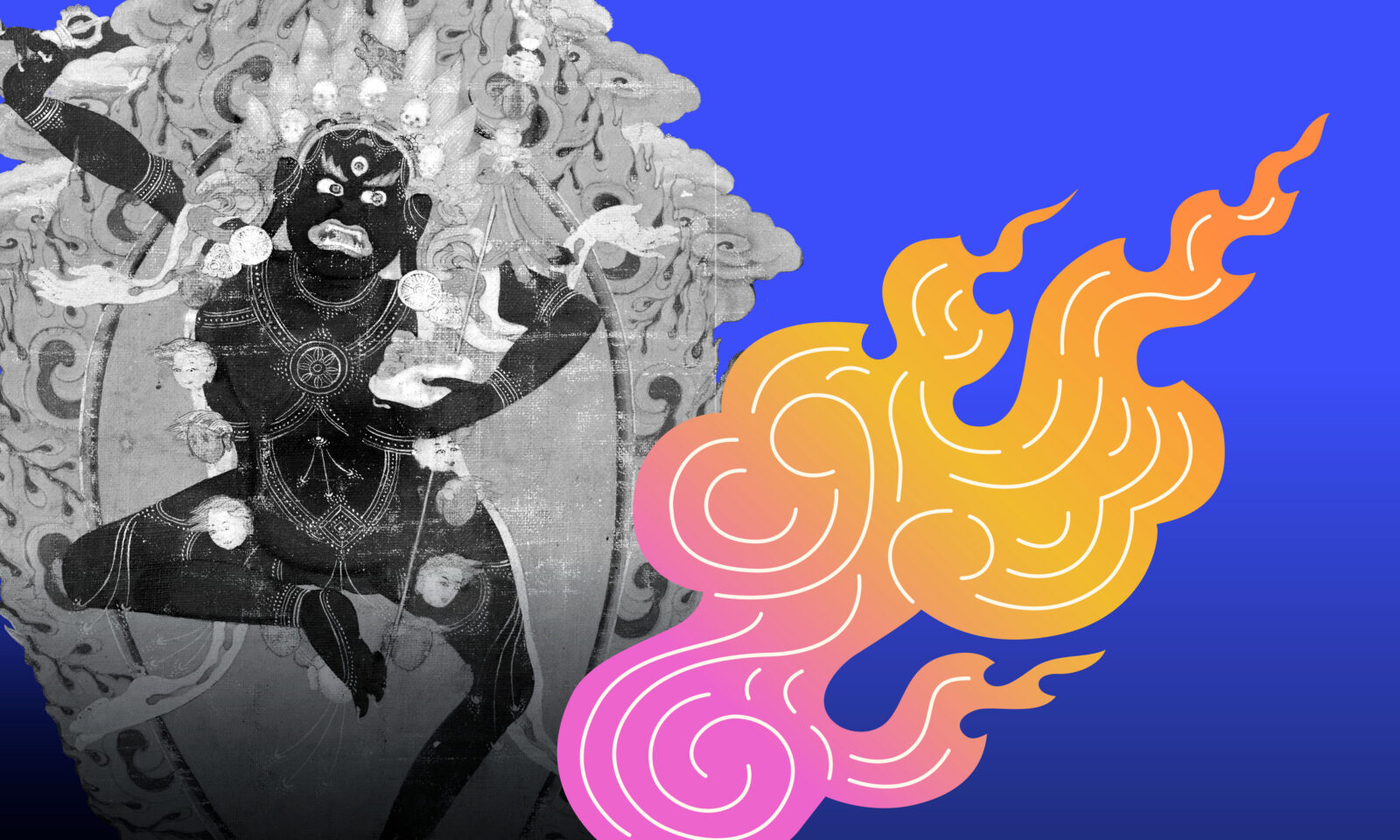
In this episode, professor Annabella Pitkin looks at an image of Vajrayogini. In this painting, she appears in her most wrathful form known as Krodhakali, the “Fierce Black One.” For Tibetan Buddhists, her frightening form is not an expression of cruelty or violence, but rather symbolizes her fiercely compassionate ability to cut through the ego, fear, and attachments that keep beings trapped in suffering. Krodhakali reveals a vision of awakened womanhood in which wrath, intensity, and even destruction can be useful on the path toward wisdom and liberation.
To see this artwork, visit rubinmuseum.org/awaken
Annabella Pitkin:
Vajrayogini is an enlightened aspect of the female enlightened being. Sometimes she’s portrayed as semi-wrathful, and then we see her as extraordinarily beautiful, but also quite fierce and terrifying. Here, she’s particularly frightening, but we can see that she’s dancing. We can see that she is naked except for tiger skin and ornaments made of bones, and she carries a staff with severed heads on it. She carries a knife in one hand, a special vajra flailing knife, and she carries in the other hand, in her left hand a skull cup. She has fangs and she has three eyes. Her eyes are staring out of her head, terrifyingly, wrathful, and then they’re small skulls in her headdress. And she too is cloaked in a wild animal skin, and she too is cloaked in flames. She is surrounded by an orial of flames, the flames of enlightened awareness that kind of burn away delusion, burn away fear, burn away negativity or harmfulness. So she again, is simultaneously a protector. She’s there to drive off all evil, negativity, everything terrifying. She’s equal to it, frightening it away, driving it away, protecting us from harm. She’s the tough love, no bs, no excuses, just trample on all of that self cherishing, grasping at the ego, making up stories to make ourselves feel better. There’s no room for any of that. She tramples on this prone human figure. All those negativities, those negative mental states and all the negative forces that might assail us, she dances on top of them. She utterly subdues them. So there is a quality of tough love, of no excuses, of waking up the audience. There’s a quality of fierce protection.
Kathleen Hanna:
I think that anger, it’s like water and you have to use it to irrigate stuff instead of to destroy a whole town. And it can really do either thing. And to me, I learned so much from my emotions. I feel like one of the really hard things about growing up in this culture has been constantly being told I’m too much and that you’re not supposed to have emotions and just to have a flat affect and not be too much. Don’t be too funny, don’t be too loud, don’t be too mad, don’t be too sad. And then you just hold back on all that stuff. And then it comes out three years later in a really inappropriate time and space. And that’s why I think it’s so important to be able to look at our feelings, especially anger and be like, “Hey, what is this telling me?” Listen to them. They’re a friend, welcome them in and be like, “Oh, I see I’m feeling anger. Huh? What’s that about? What are you doing? Why are you here?”
Back to Vajrayogini.
Annabella Pitkin:
There’s also a quality of blissfulness. This quality of blissfulness is very adjacent to the quality of wrath, and there’s the sense that the flames of this wrathful compassion burn through all the negativities, delusions, fears, lies we might tell ourselves, delusions, self-righteousness, all the kind of negative anger, revenge, grudge, holding, all of that goes up in flames.
And what’s left is this infinite freedom, compassion in meditational terms, the union of bliss and emptiness. And that blissful quality is very much present in this image because it is so beautiful.
Kathleen Hanna:
The cure for anger is community to me. And so all of my art, probably almost all of it that I’ve ever made, has been in an attempt to forge community and to be a part of a community, not to be the leader of a community, but just to get people together and to realize our agency together. It’s hard, when I think of fierce compassion, I just think about it’s not just the anger, it’s the fact that I’m not connecting to other people who are feeling the way I’m feeling, and so I’m stuck. And so the compassion part comes from, I want to make sure since I just found this kind of weird off-ramp out of my anger, a way that I can process it, I want to share it.
Annabella Pitkin:
She is pure awareness, pure bliss, the flames of pure wisdom, energy manifesting here in a ferocious way, but purely for liberation. And the skull cup that she holds is also a symbol of the enlightened, blissful awareness that the flames also point us towards. So there’s nothing here of attachment or grasping. All of that is trampled. All of that is burned up and blazed away. And so in that sense, she is the furthest thing from the ordinary kinds of angry energy that we might have in our own minds. She’s manifesting something else, a different kind of energy, a kind of self less, enlightened, fierce compassion. And she exhorts the viewer to do likewise, to burn through their own self grasping and allow that blissful awareness to set them free as well.
Kathleen Hanna:
There’s got to be action. And even if it’s your art. For me, I’ve been writing a lot of songs and making music lately. I think it’s incredibly powerful in this time to get thousands of people together to enjoy music that is angry and hopeful and joyful, and some of it’s danceable, but to have people kind of communing together and have people who are working to end the conflict in Gaza at the event tabling and telling people how they can get involved, to have other organizations who are maybe doing things locally, be involved at the show, and then have it be a place where people who are feeling like, “I don’t know where to plug in.” Well, if you liked our show, these organizations are ones that we’ve vetted that we feel like would be great places to start.
Myisha Cherry:
Here’s the thing, I think sometimes we should have rage. We should have intense feelings towards a particular wrongdoing that is warranted, but it doesn’t necessarily mean that it’s irrational.
Kathleen Hanna:
Myisha Cherry.
Myisha Cherry:
The things that I’m interested in is our emotional lives and the emotions that we have, how they inform our moral lives, what they tell us about our moral lives, what they tell us about our political lives, what roles do they play, how do we respond? What role do they play in reconciliation and in repair? What do they say about the moral value of ourselves and our society?
Kathleen Hanna:
You just heard the voices of Myisha Cherry, Annabella Pitkin, Sharon Salzberg, and me, Kathleen Hanna, a guest on this episode and your host.
To see the artwork discussed in this episode, go to rubinmuseum.org/awaken
If you’re enjoying the podcast, leave us a review wherever you listen to podcasts, and tell your friends. Leaving a review is one of the best ways to support us. It helps us reach listeners like you.
For more stories and news from the Rubin, follow @rubinmuseum on Instagram and sign up for the Museum’s monthly newsletter at rubinmuseum.org.
AWAKEN season 6 is an eight-part series from the Rubin, a global museum dedicated to presenting HImalayan art and its insights.
AWAKEN is produced by the Rubin Museum of Himalayan Art with Westin Harris, Kimon Keramidas, Christina Watson, Sovah Woydak, and Sarah Zabrodski in collaboration with SOUND MADE PUBLIC including Tania Ketenjian, Philip Wood, Kristin Mueller, Christine Driscoll, and Aaron Siegel.
Original music has been produced by Hannis Brown with additional music from Blue Dot Sessions.
AWAKEN season 6 is supported, in part, by the Charina Endowment Fund, The Prospect Hill Foundation, and Shelley and Donald Rubin, with generous contributions from the Rubin’s Board of Trustees, individual donors, and Friends of the Rubin.
This program is supported, in part, by public funds from the New York City Department of Cultural Affairs, in partnership with the City Council.
This program is supported, in part, by the New York State Council on the Arts with the support of the Office of Governor Kathy Hochul and the New York State Legislature.
Thank you for listening.
In the English language, anger and wrath are often grouped together, but in Buddhism they are quite different. Anger is considered a poison, a fire that consumes and destroys everything it touches. Wrath is a liberating energy that is free of ignorance, delusion, and attachment. A painting of the wrathful deity Krodhakali illuminates how the powerful potential of anger can be transformed into enlightened action.
This episode features singer, writer, and frontwoman of the bands Bikini Kill and Le Tigre and host of AWAKEN season 6 Kathleen Hanna. Other guests in this episode include author, professor, and philosopher Myisha Cherry, professor of Buddhism and East Asian religions Annabella Pitkin, and meditation pioneer, mindfulness and lovingkindness teacher, and author Sharon Salzberg.
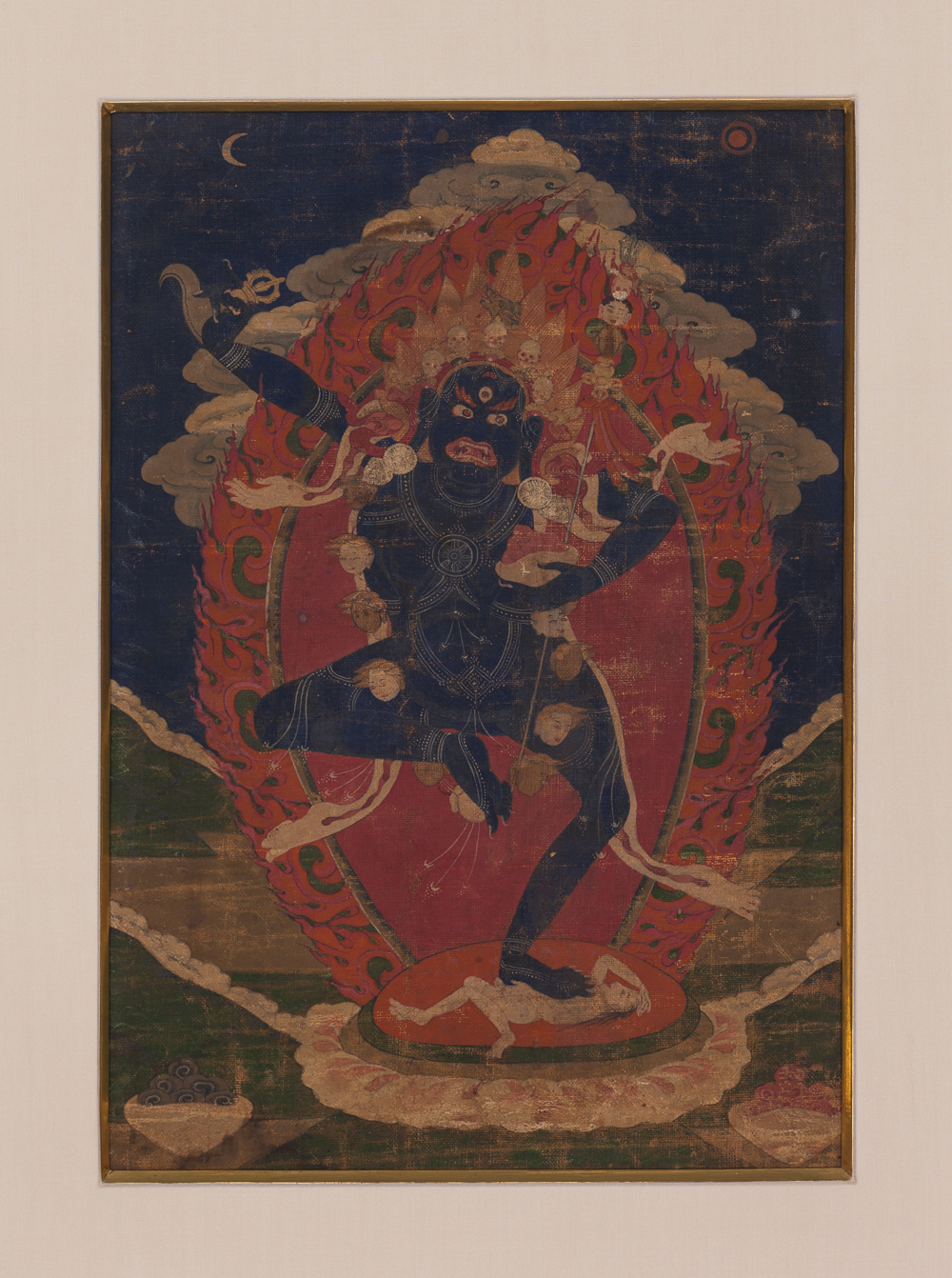
Vajrayogini, Krodha Kali; Tibet or Mongolia; 18th century; Pigments on cloth; Rubin Museum of Himalayan Art, Gift of the Shelley and Donald Rubin Foundation; F1996.24.3

Kathleen Hanna is a punk singer, writer, artist, and frontwoman of the influential bands Bikini Kill and Le Tigre. Her memoir Rebel Girl was an instant New York Times and Sunday Times bestseller. She is a leading voice in the feminist movement and has been named one of the best live performers of our time. Follow @mskathleenhanna on Instagram, @thekathleenhanna on TikTok, and subscribe to Future Windows on Substack.

Myisha Cherry is an associate professor of philosophy at the University of California, Riverside. She writes about the role of emotions and attitudes in our moral and public lives. Her books include The Case for Rage, Failures of Forgiveness, and the forthcoming How to Love. She is also the director of the Emotion and Society Lab, and hosts the UnMute Podcast, where she interviews philosophers about the social and political issues of our day. Myisha has written for the Los Angeles Times, The Atlantic, Salon, and New Philosophers Magazine, and her work has been featured in the New Yorker, Essence, and Publisher’s Weekly.

Annabella Pitkin is a scholar of Tibetan Buddhist intellectual history, philosophy, and literature, and associate professor of Buddhism and East Asian religions at Lehigh University. Her research explores themes of renunciation, power, and the bodhisattva ideal. She is the author of Renunciation and Longing: The Life of a Twentieth-Century Himalayan Buddhist Saint about the life of the meditator-poet Khunu Lama Tenzin Gyaltsen (1895–1977). She is on the editorial committee of the Treasury of Lives: A Biographical Encyclopedia of Tibet, Inner Asia, and the Himalaya, and is a member of the review committee for the Rubin Institute.

Sharon Salzberg is a meditation pioneer, world-renowned teacher, and New York Times bestselling author. She was among the first to bring mindfulness and lovingkindness meditation to mainstream American culture over 50 years ago, inspiring generations of meditation teachers and wellness influencers. Sharon is cofounder of the Insight Meditation Society in Barre, MA, and the author of 14 books, including the New York Times bestseller Real Happiness, now in its second edition, and her seminal work, Lovingkindness. Sharon’s podcast, The Metta Hour, has amassed eight million downloads and features interviews with thought leaders from the mindfulness movement and beyond.
Get the latest news and stories from the Rubin, plus occasional information on how to support our work.