Ang Sang
Lhasa, Tibetan Autonomous Region, China
2007
This posture features a triple- bend of the body at the knee, hip, and waist.
Ang Sang
Lhasa, Tibetan Autonomous Region, China
2007
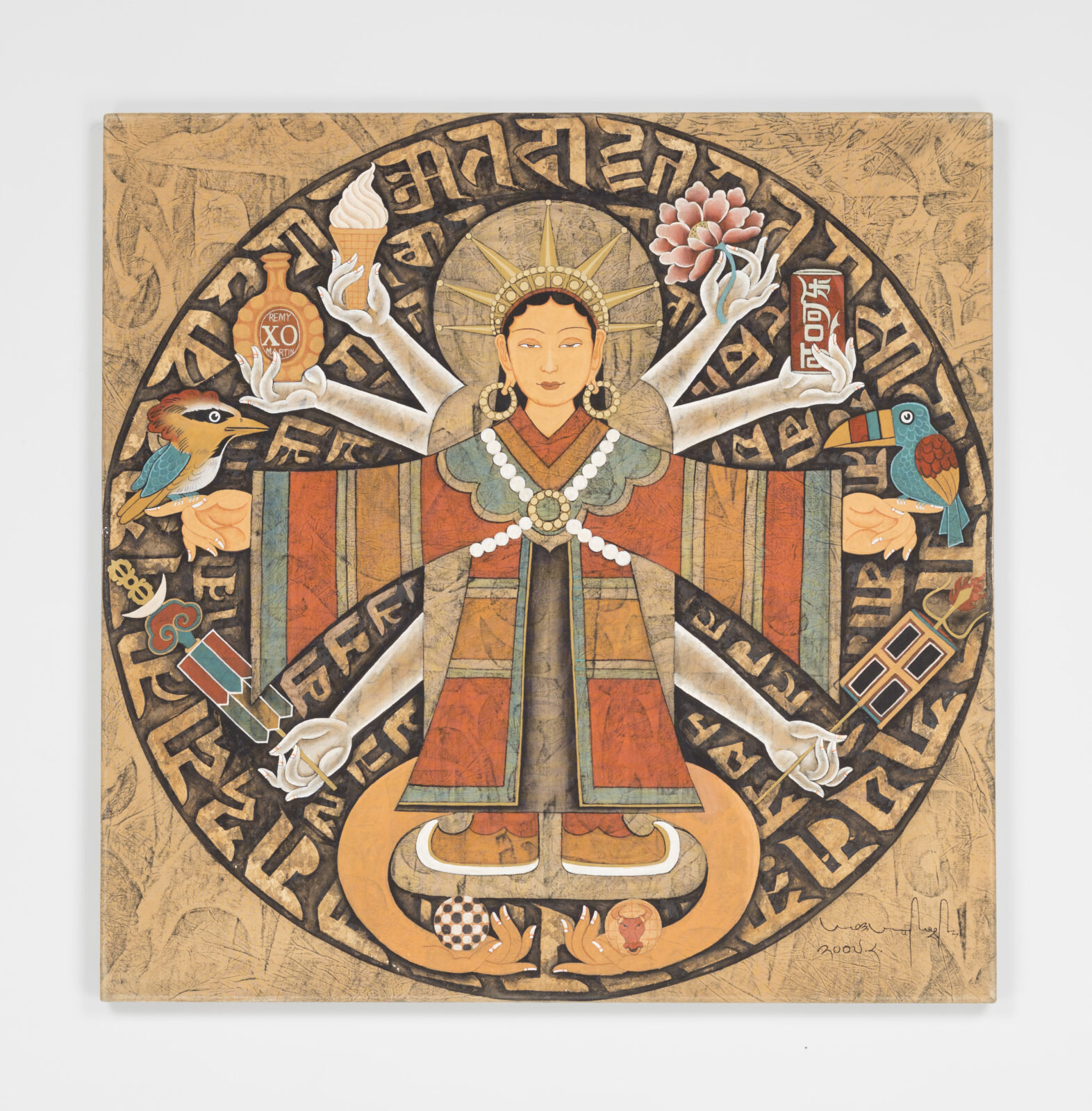
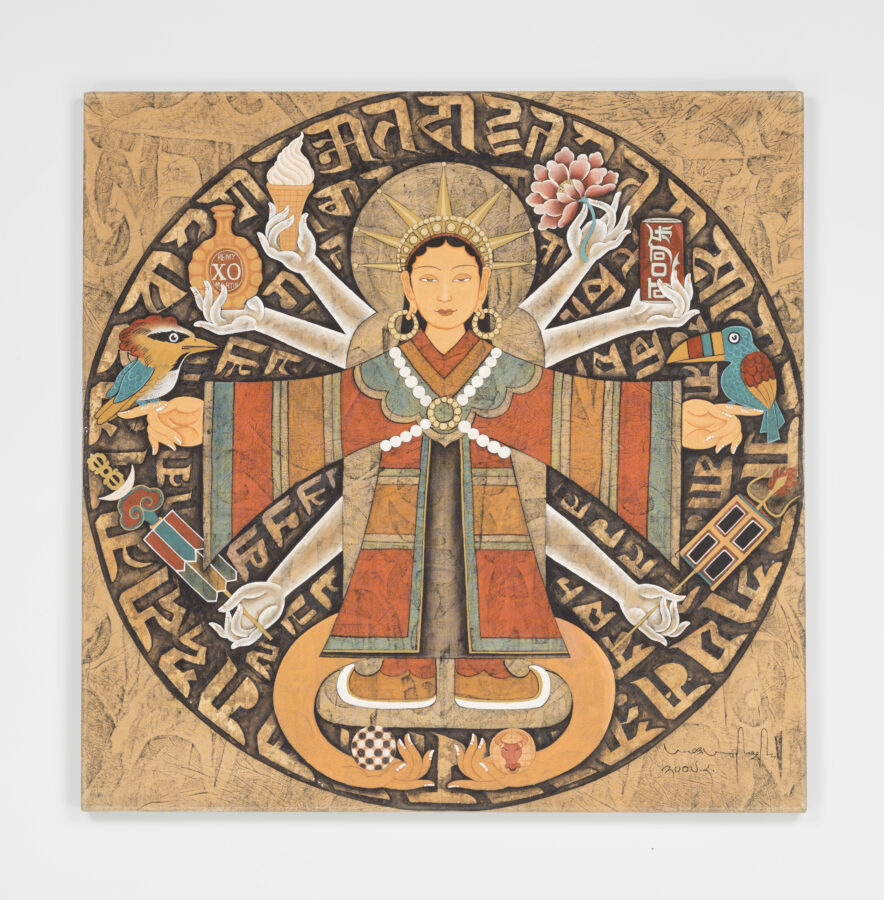
Ang Sang is a Lhasa-based contemporary artist and co-founding member of the Gedun Choephel Artists’ Guild. Working mostly in painting, he often combines traditional Buddhist iconography with Western motifs, as apparent in the work Dialogue Between the Birds of the Land and the Ocean. The central haloed figure evokes depictions of the thousand-armed bodhisattva of compassion Avalokiteshvara, but three of the hands hold objects representative of Western consumer culture: a bottle of Rémy Martin XO cognac, an ice cream cone, and a can of Coca-Cola inscribed with Chinese characters. The two birds —perhaps an Indian roller and a kingfisher—could symbolize the air/land and water. Instead of a bodhisattva crown, the figure wears a crown with radiating spikes, unmistakably invoking the famous silhouette of the Statue of Liberty. In his own words, Ang Sang seeks a “common point between Tibetan traditional art and Western avant-garde art.” His work serves as a reminder that the compassion embodied by the bodhisattva pierces through time and space.

This posture features a triple- bend of the body at the knee, hip, and waist.
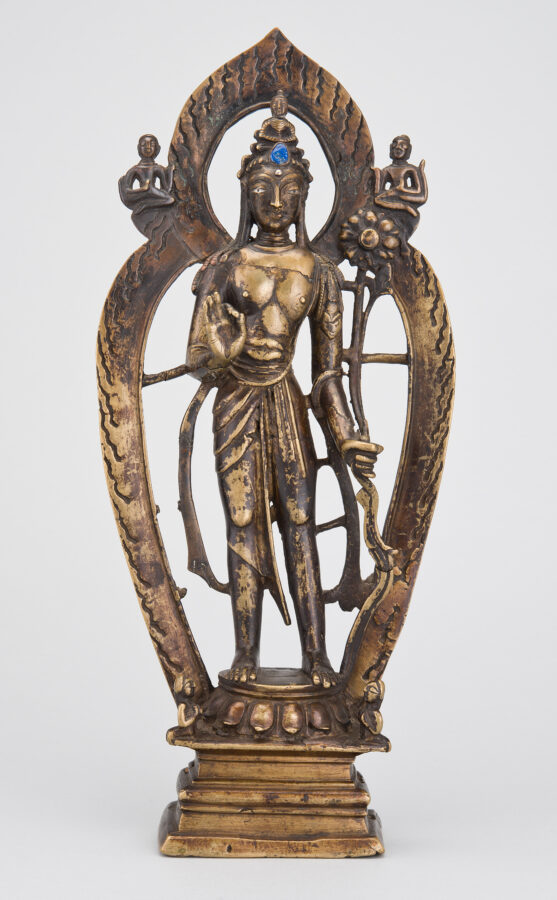
Beings who aspire to become fully awakened like the Buddha and are dedicated to helping others on the path to enlightenment.
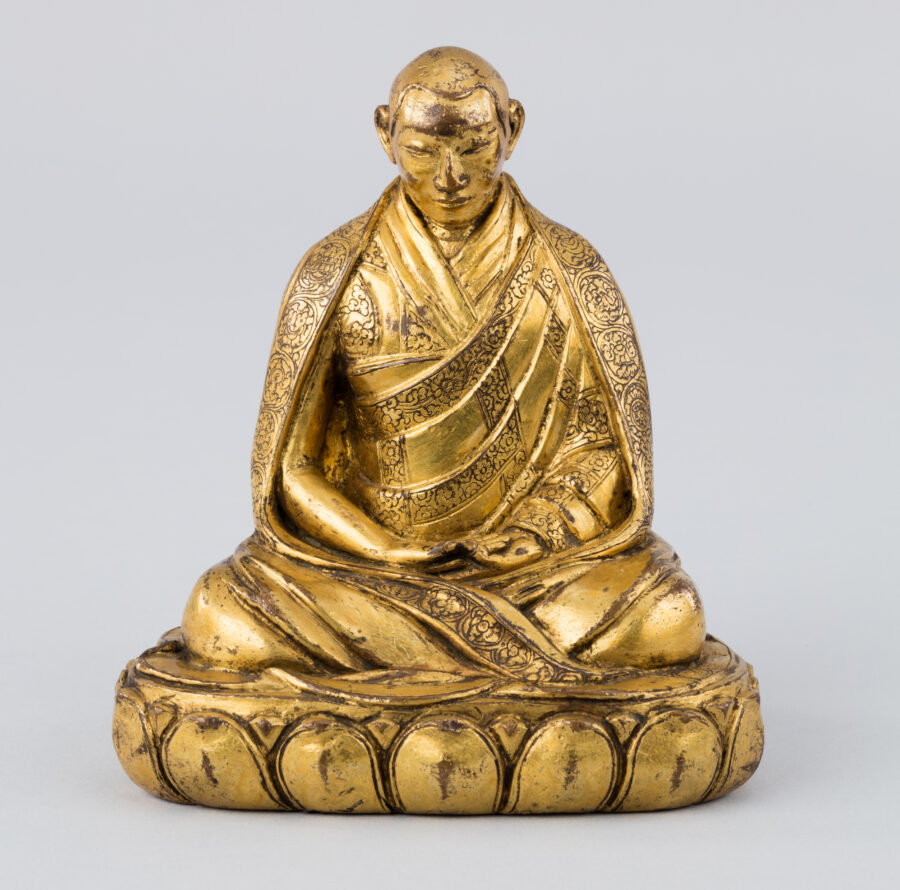
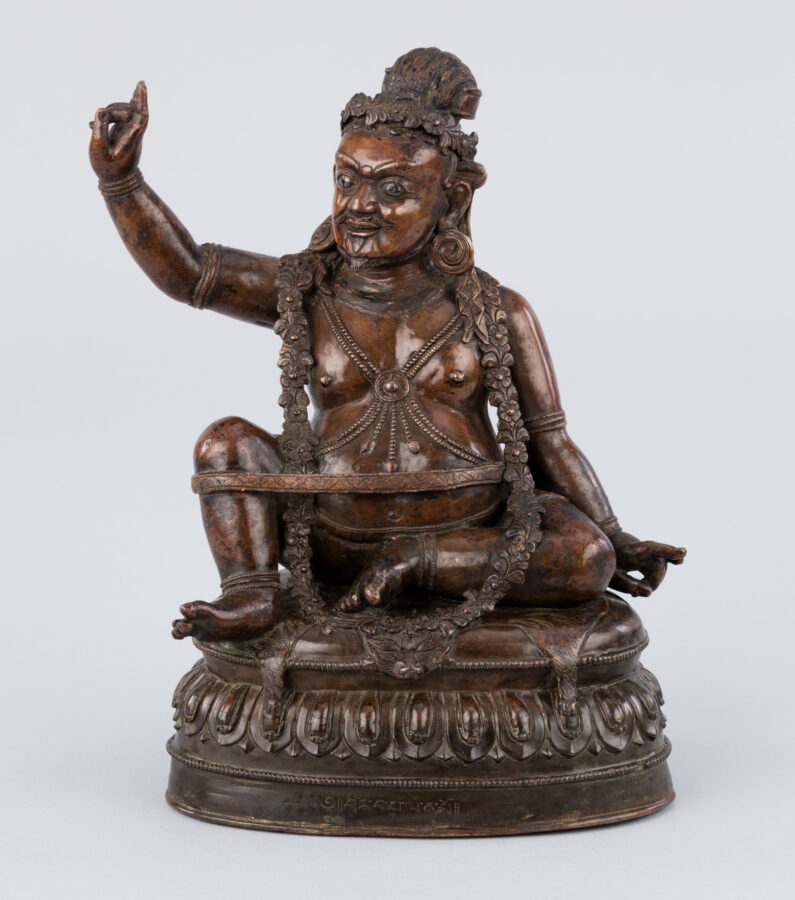
Himalayan art includes portraits of legendary and historical humans, including accomplished religious teachers (lamas), the Buddha’s original disciples (arhats), and spiritually accomplished tantric masters (mahasiddhas).
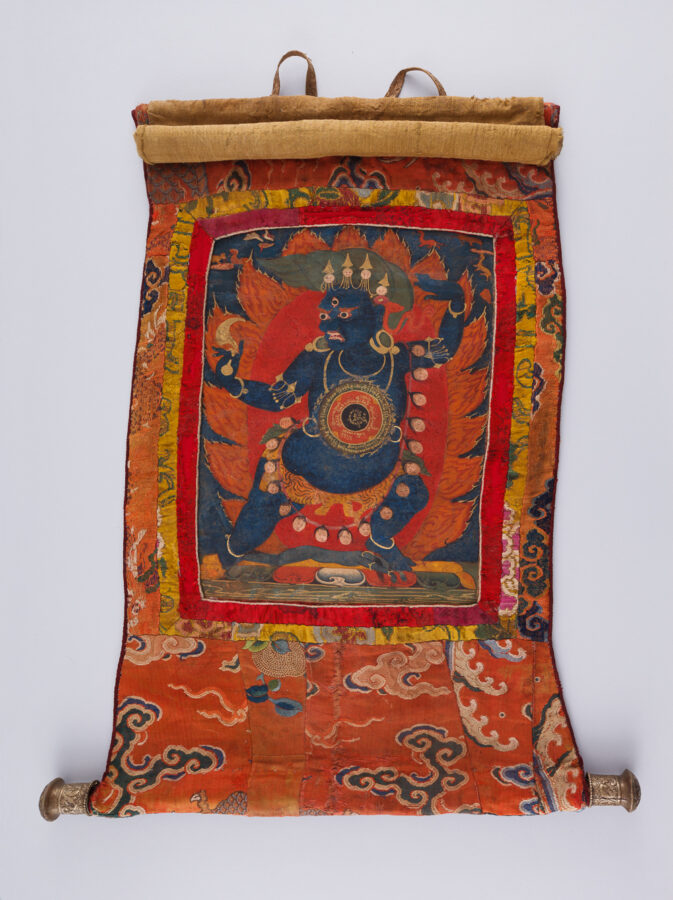
Tantric deities personify various enlightened qualities and are the focus of esoteric religious practices (tantras) that aim to swiftly and radically transform one’s understanding of reality.
Today, Tibetans primarily inhabit the Tibetan Plateau, situated between the Himalayan mountain range and the Indian subcontinent to the west, Chinese cultural regions to the east, and Mongolian cultural regions to the northeast. During the 7th to 9th century, Tibetan rulers expanded their empire across Central Asia, and established Buddhism as the state religion.

Get the latest news and stories from the Rubin, plus occasional information on how to support our work.