Tibet
15th century


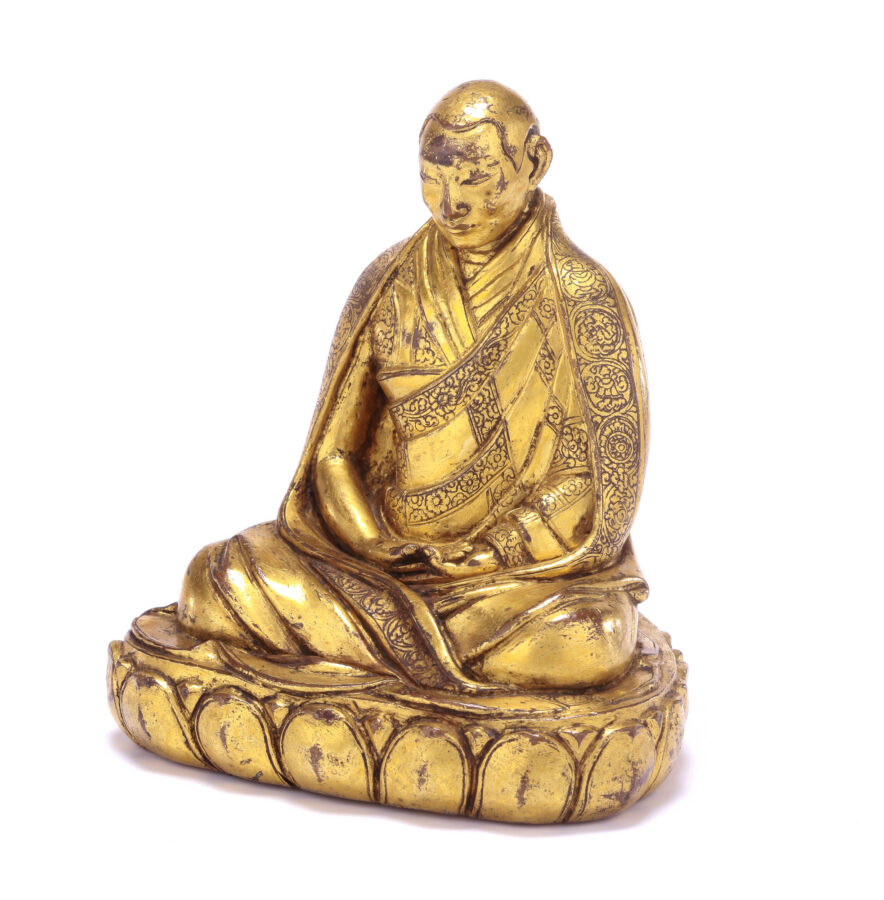
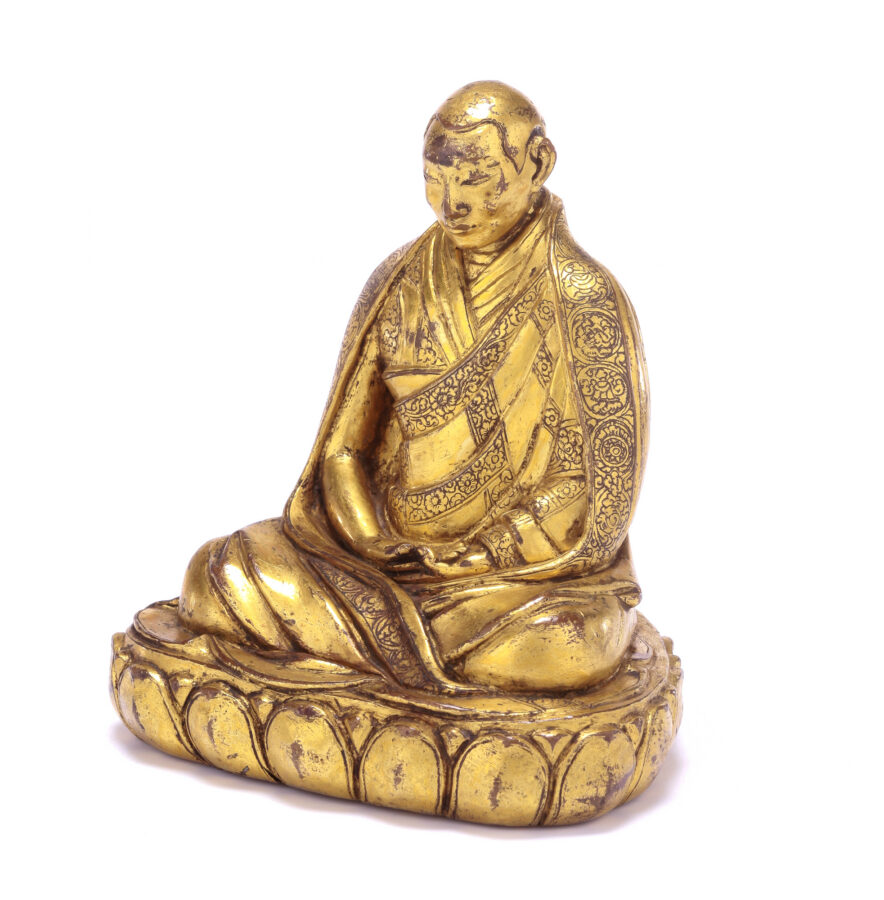
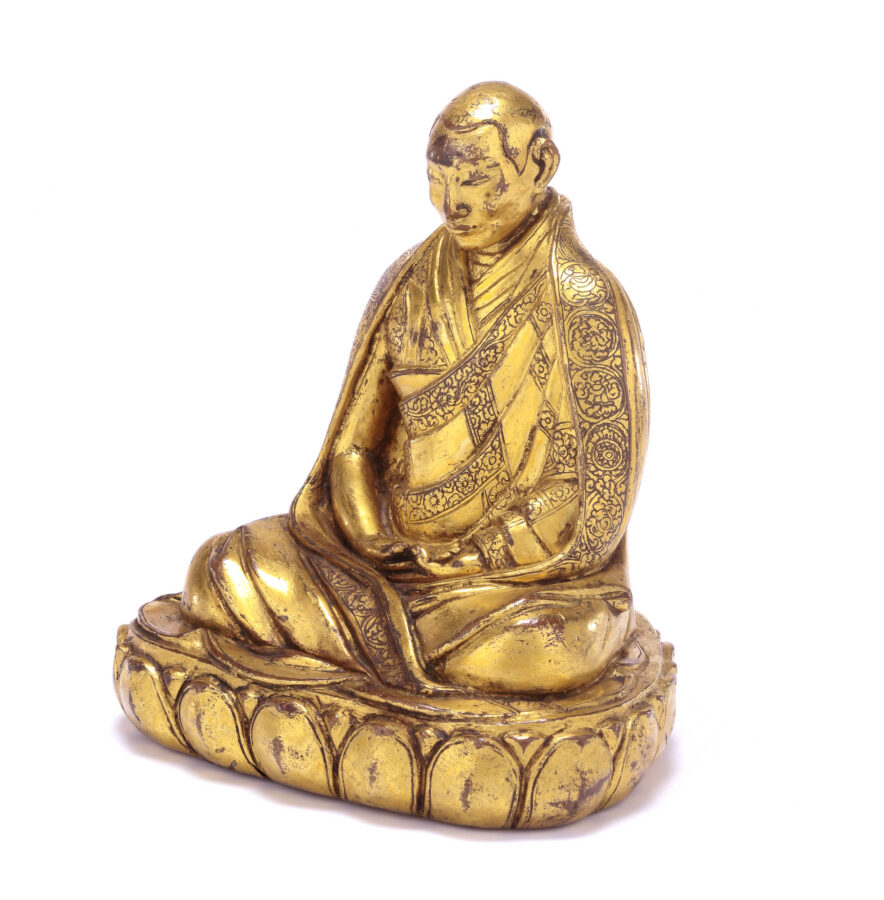
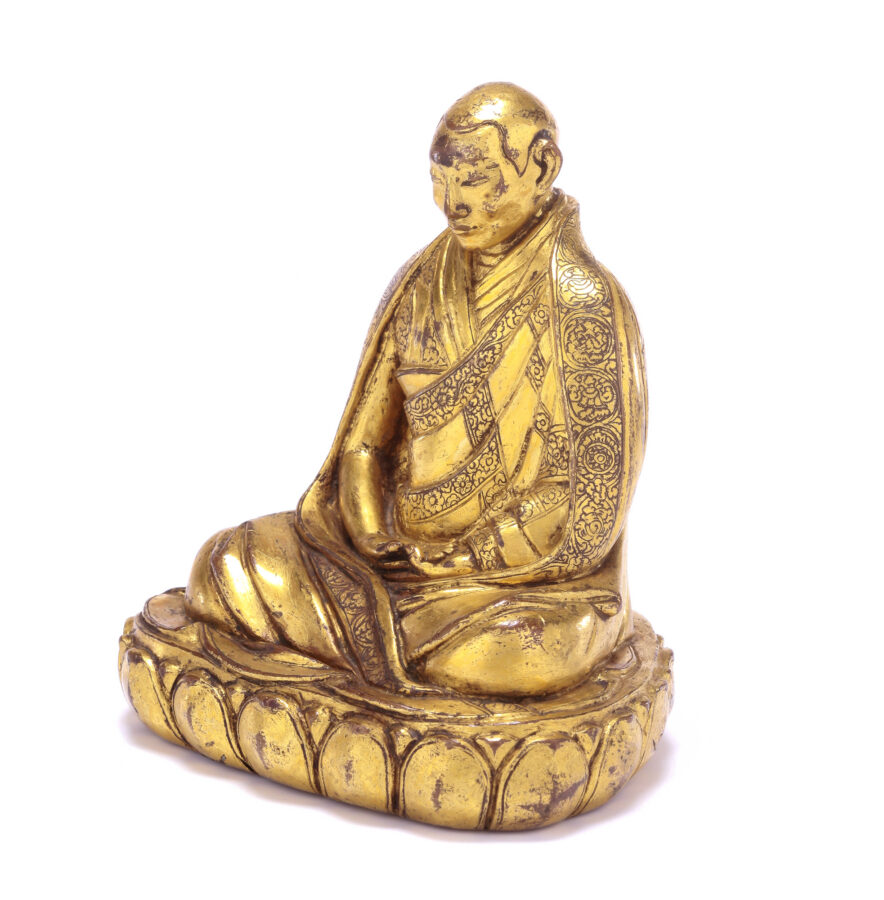
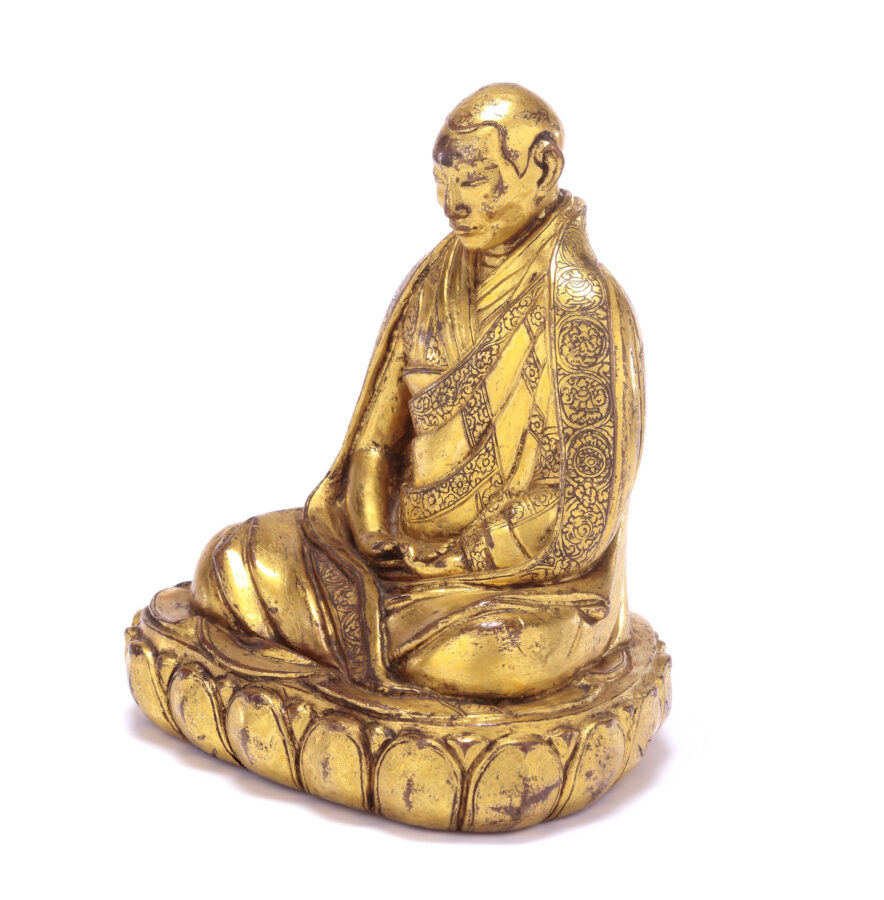
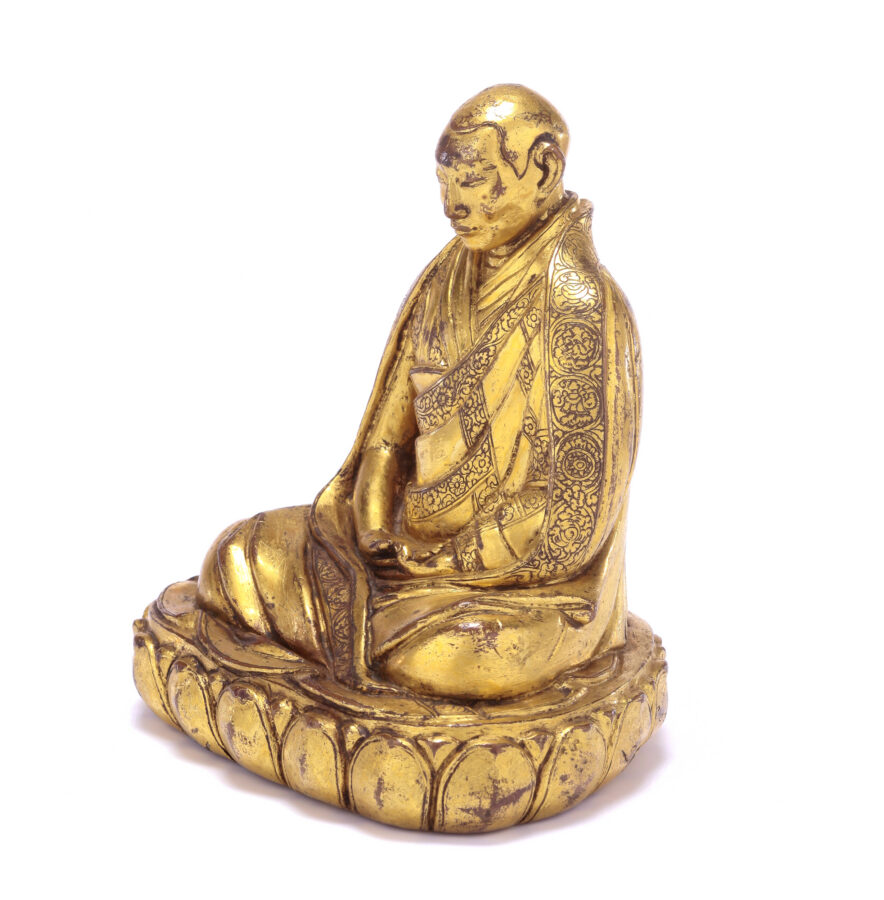
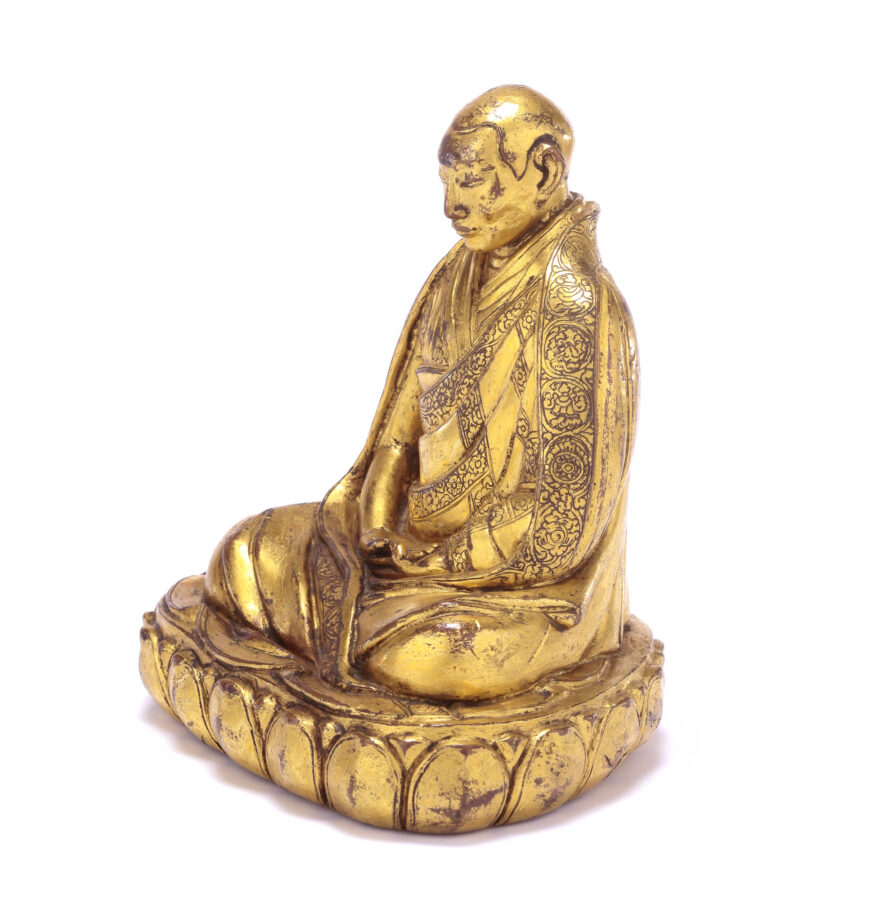
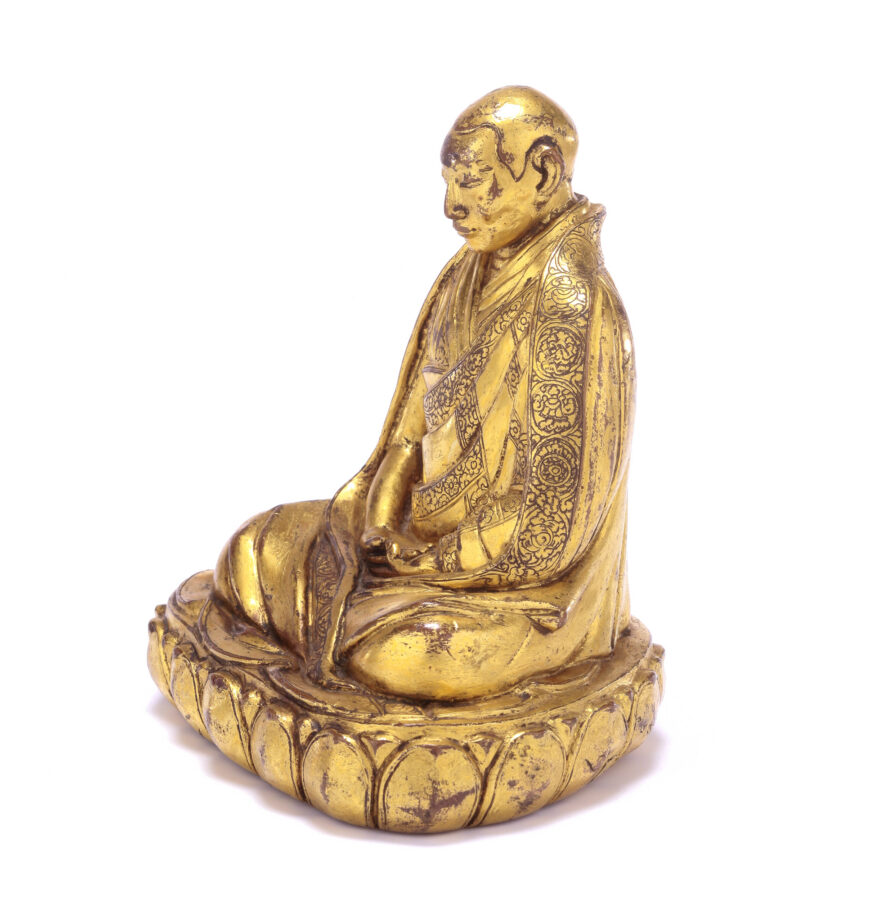
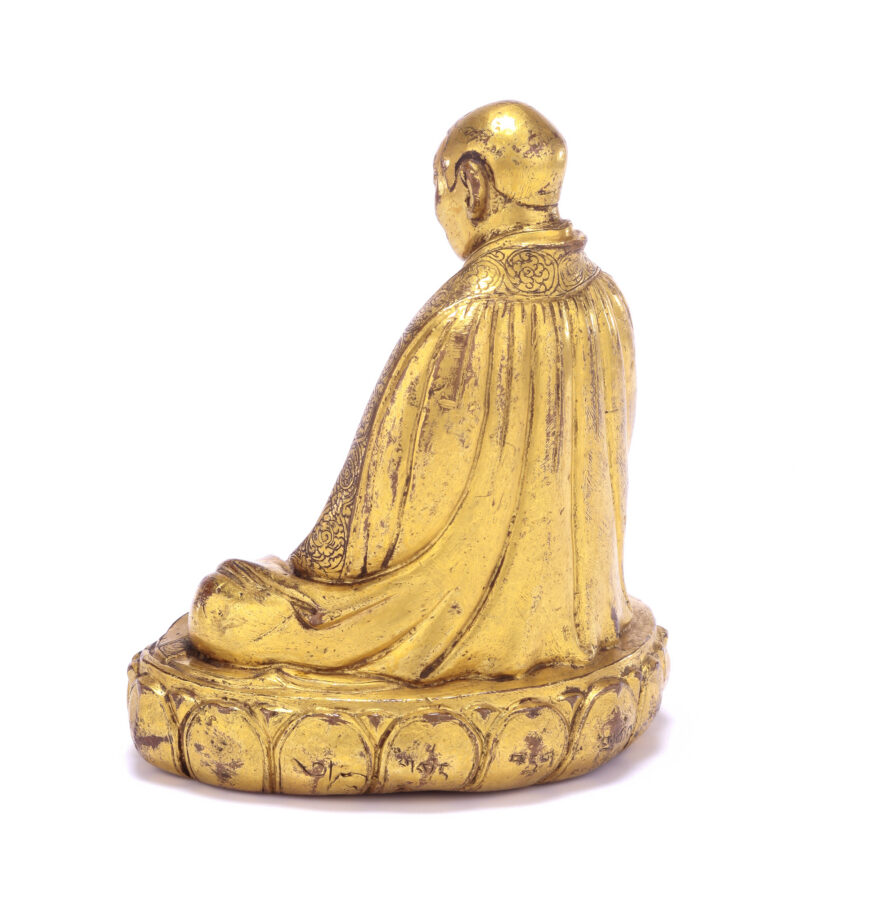
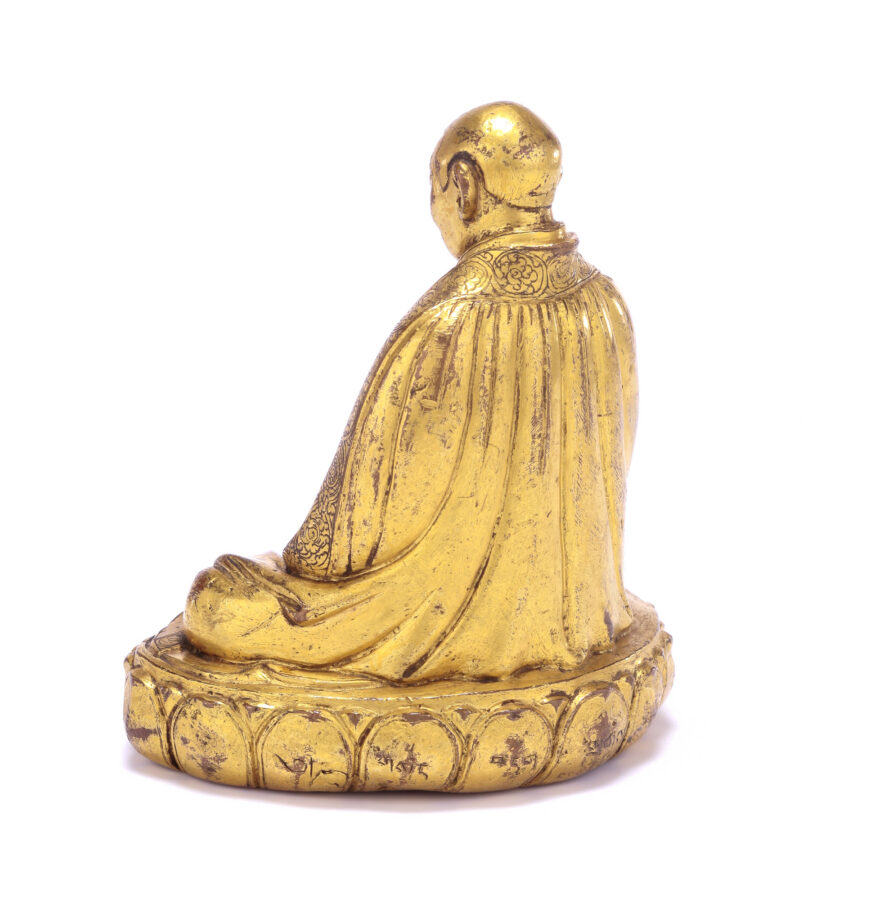
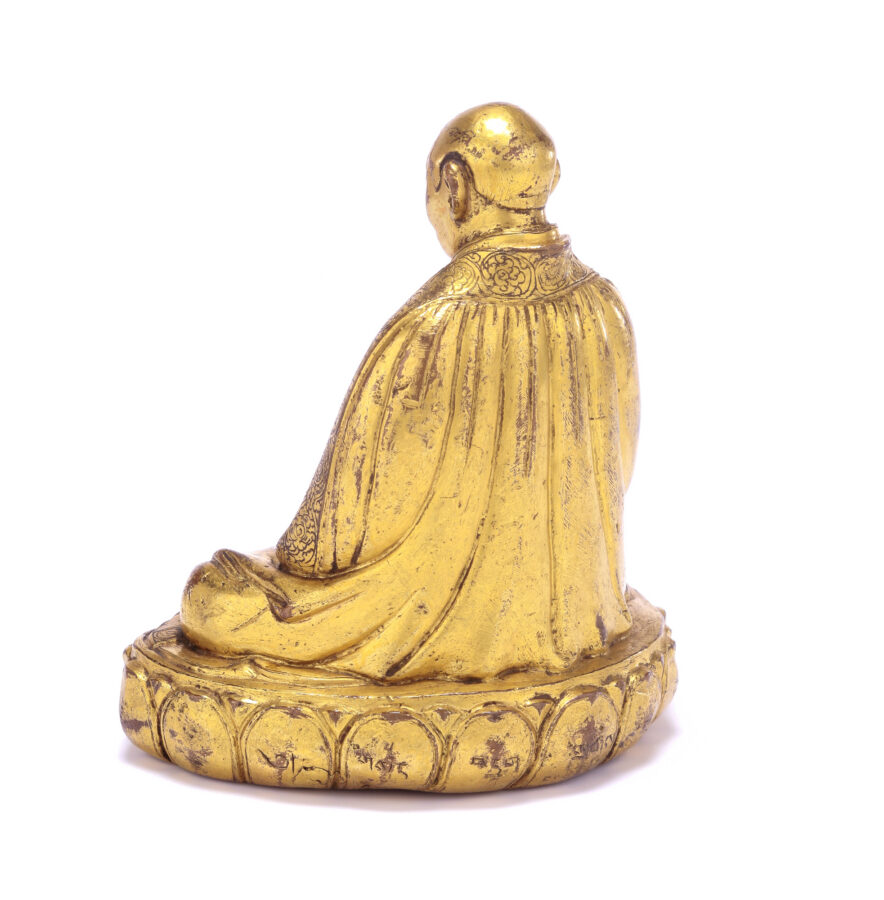
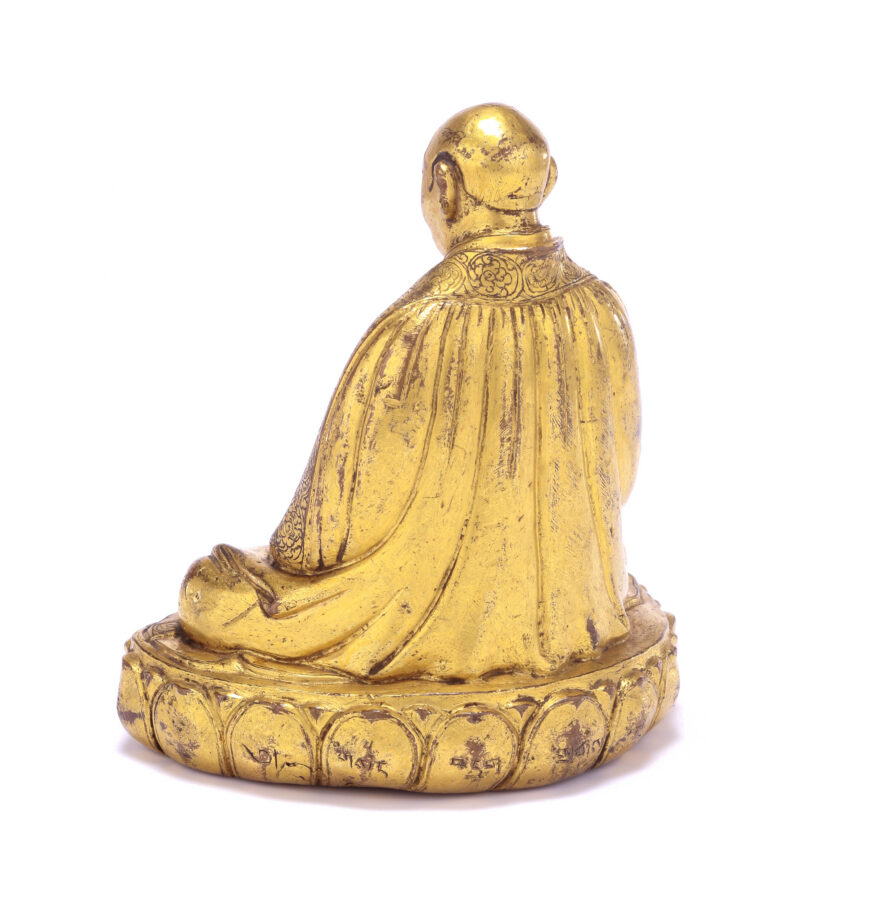
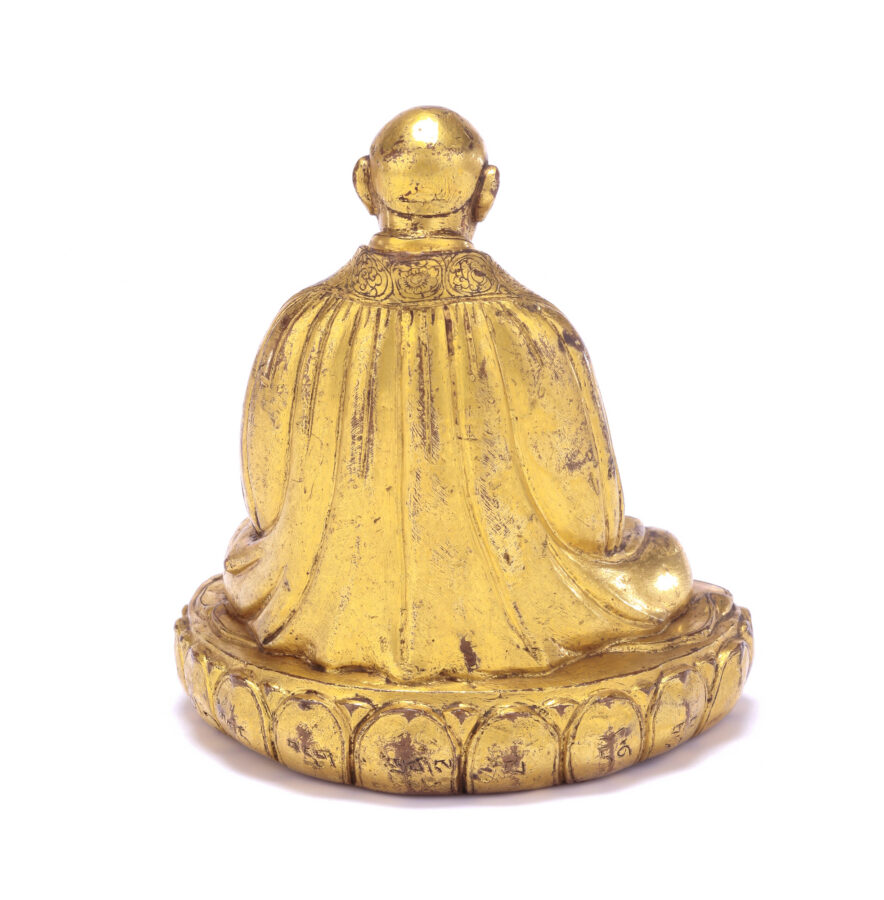
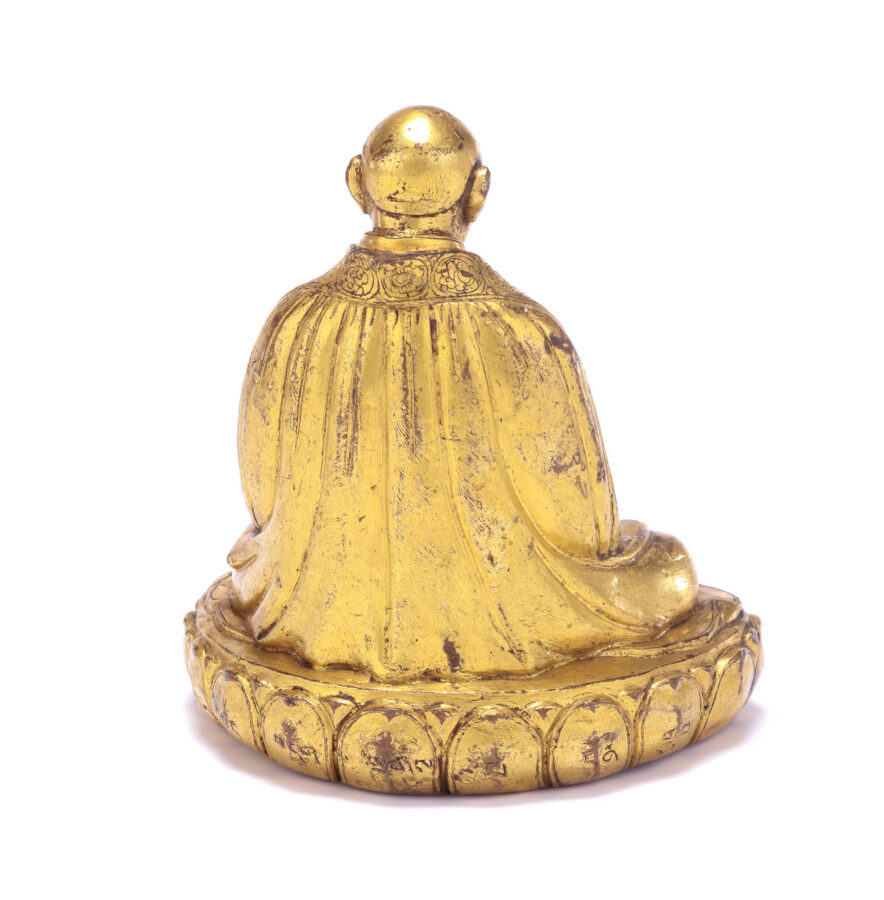
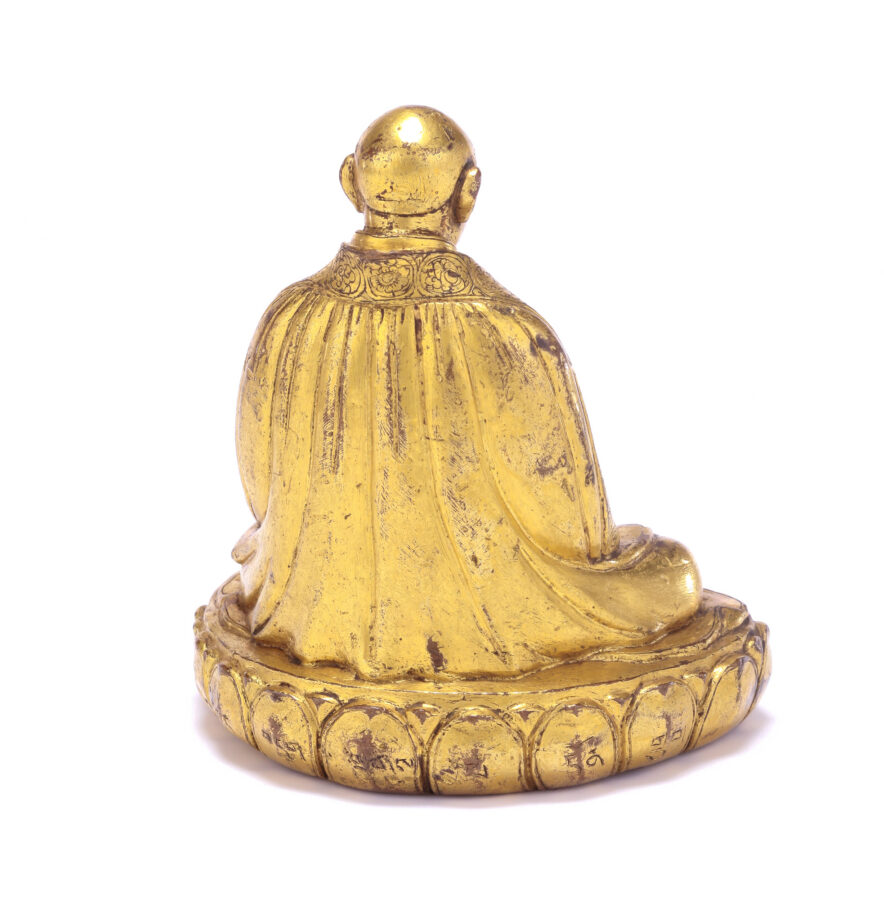
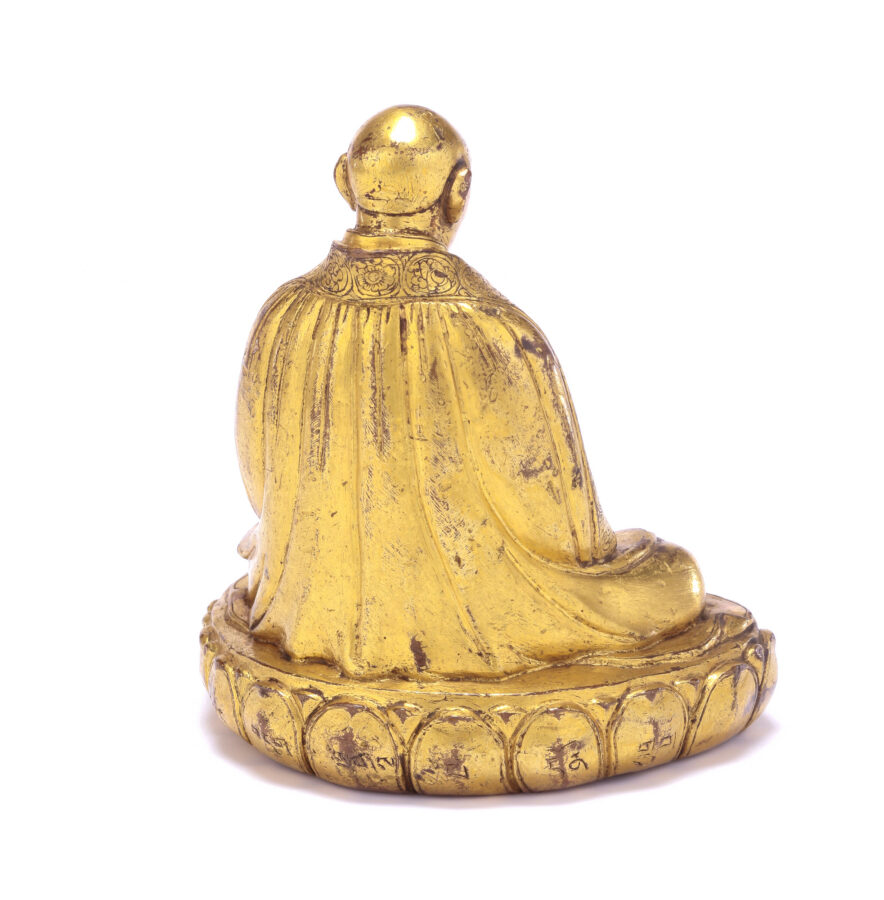
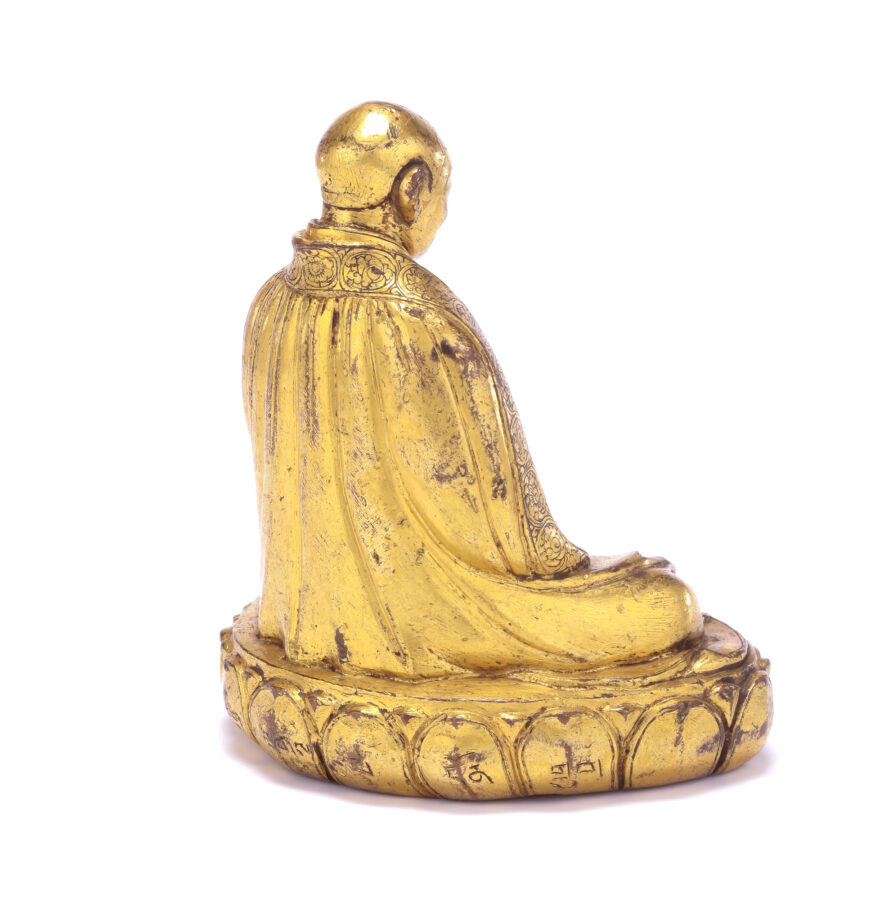
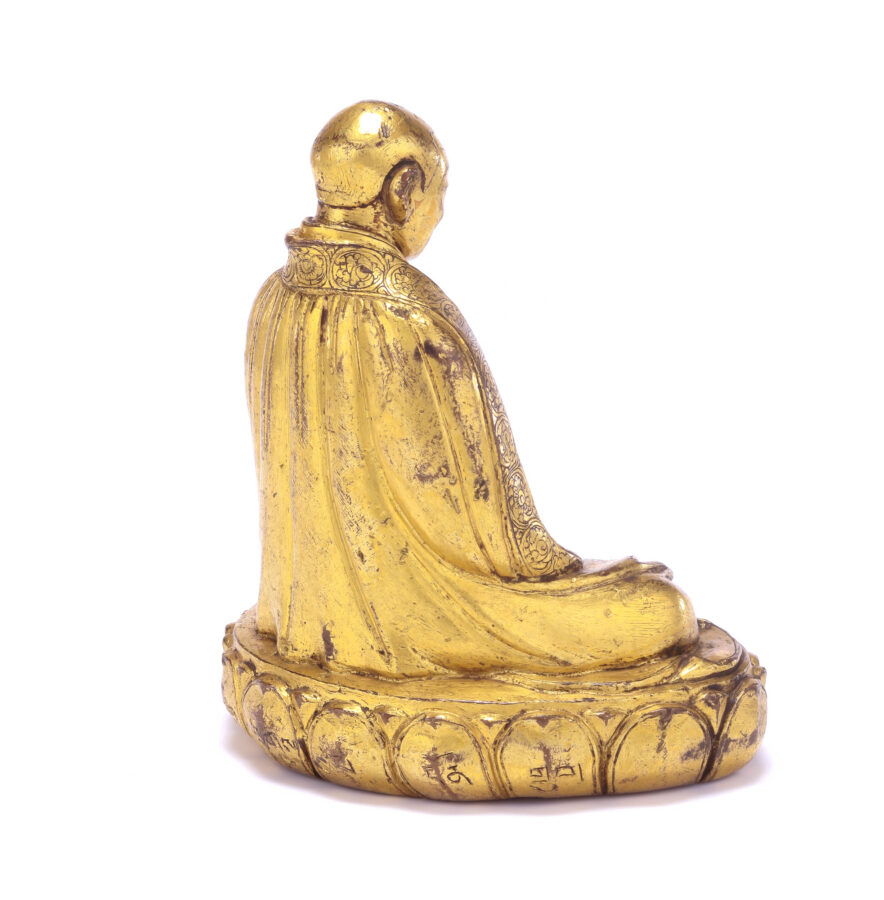
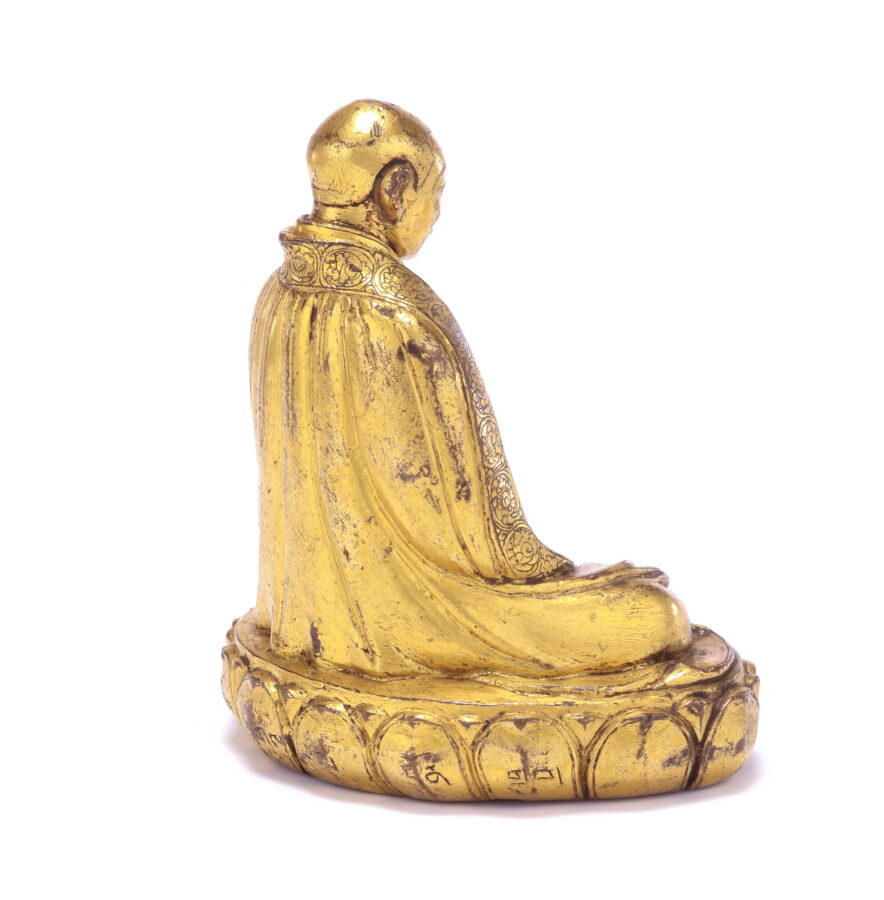
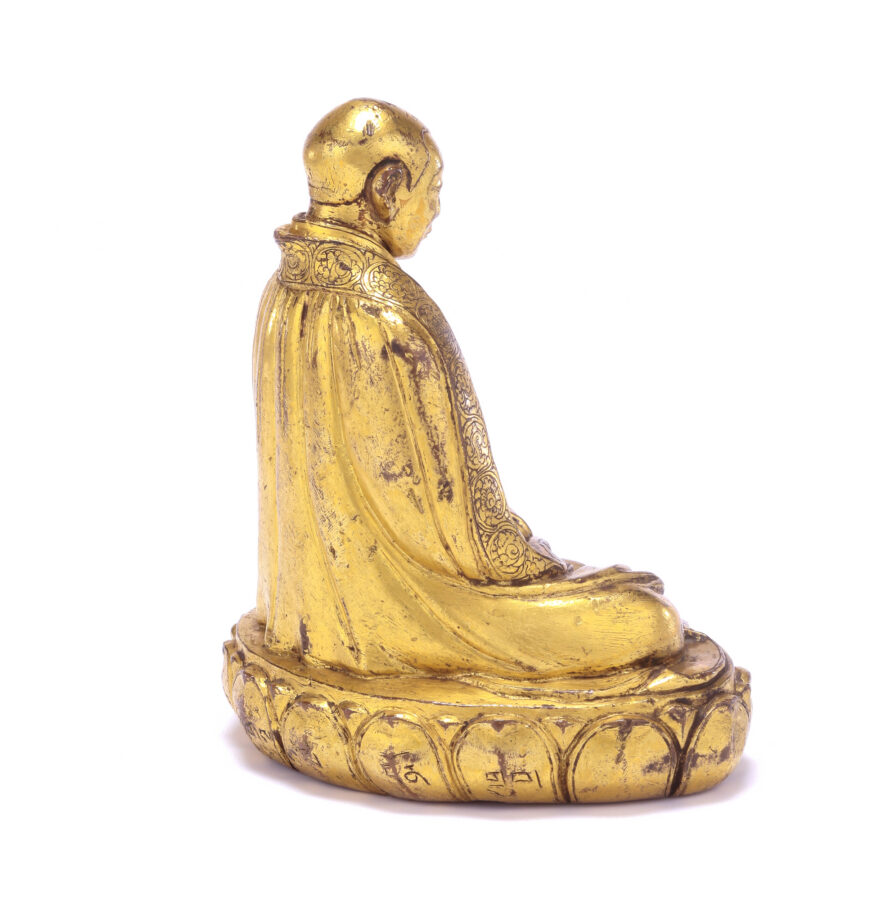
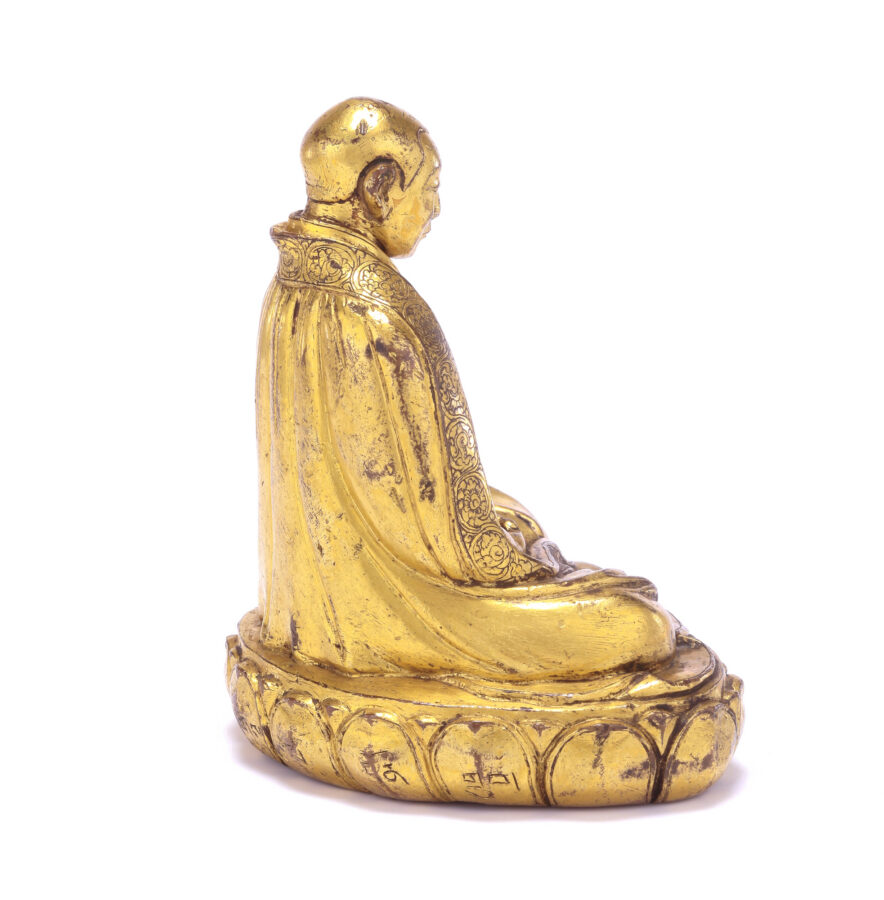
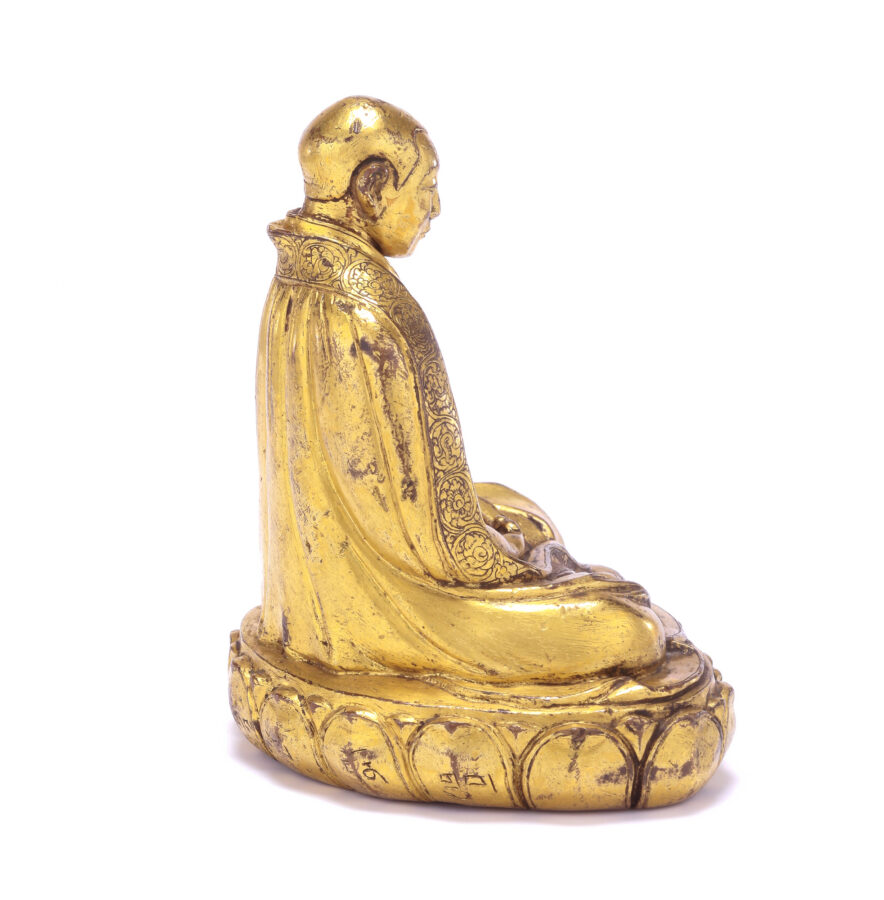
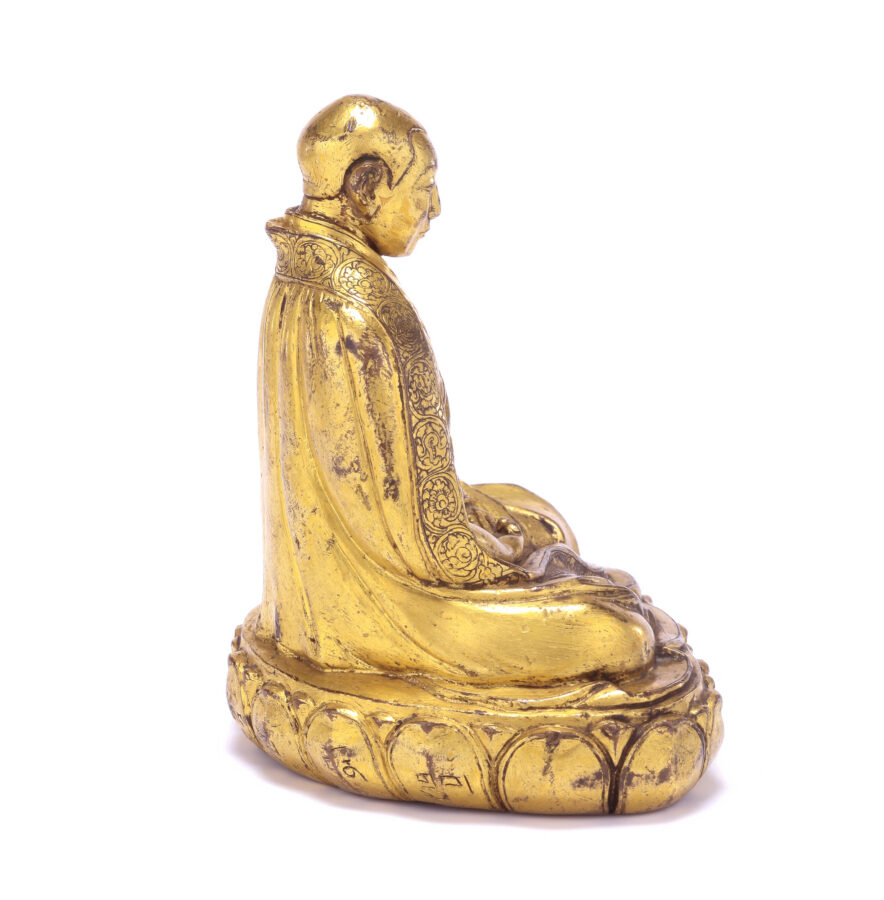
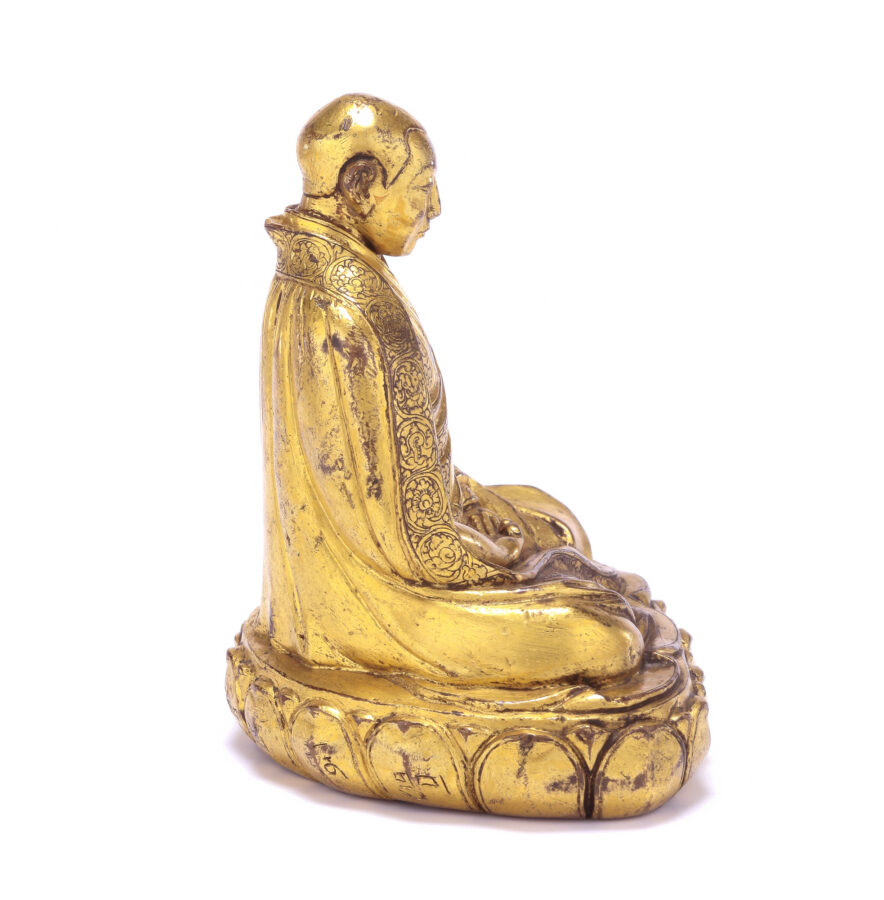
Tibet
15th century
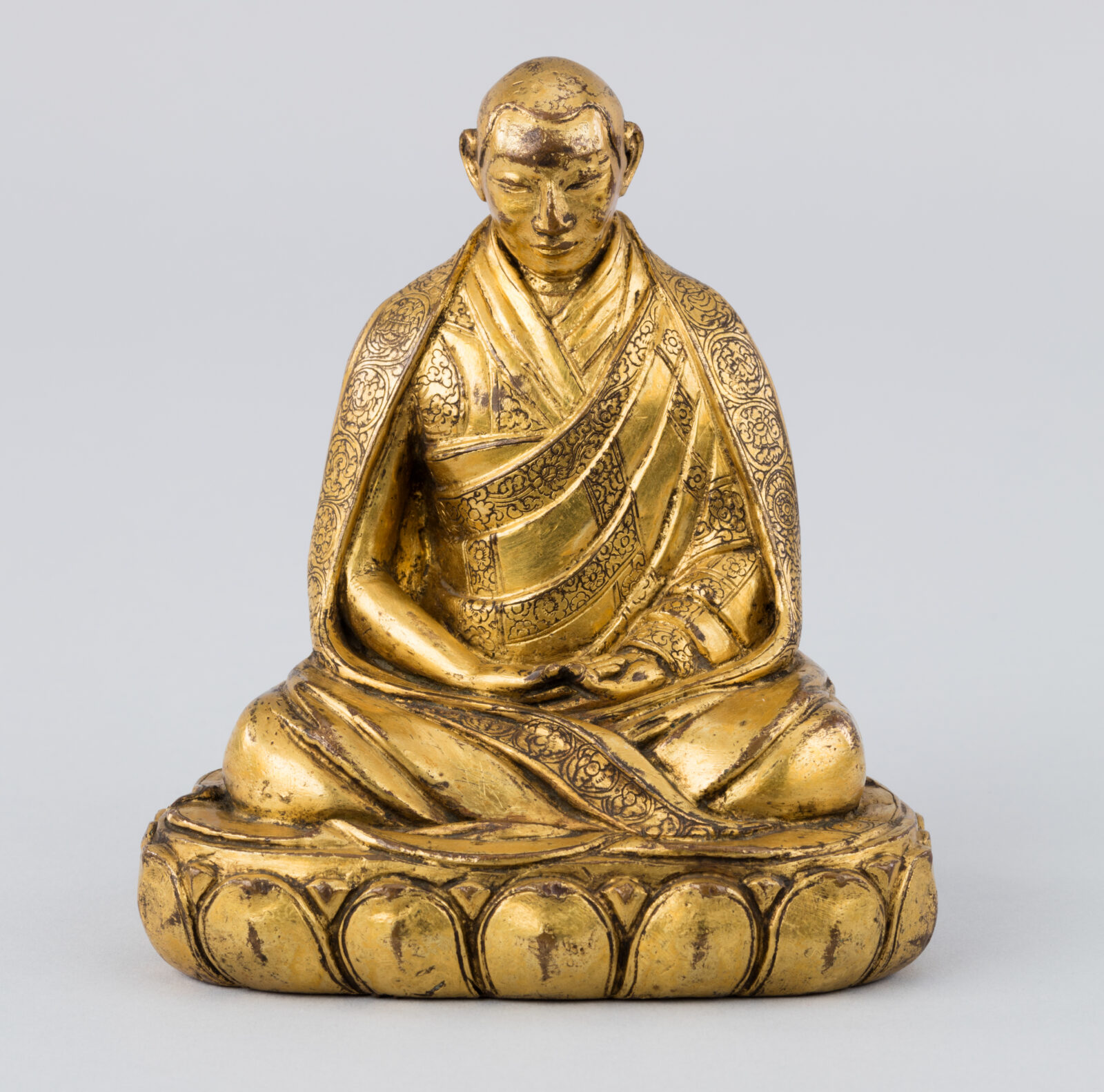
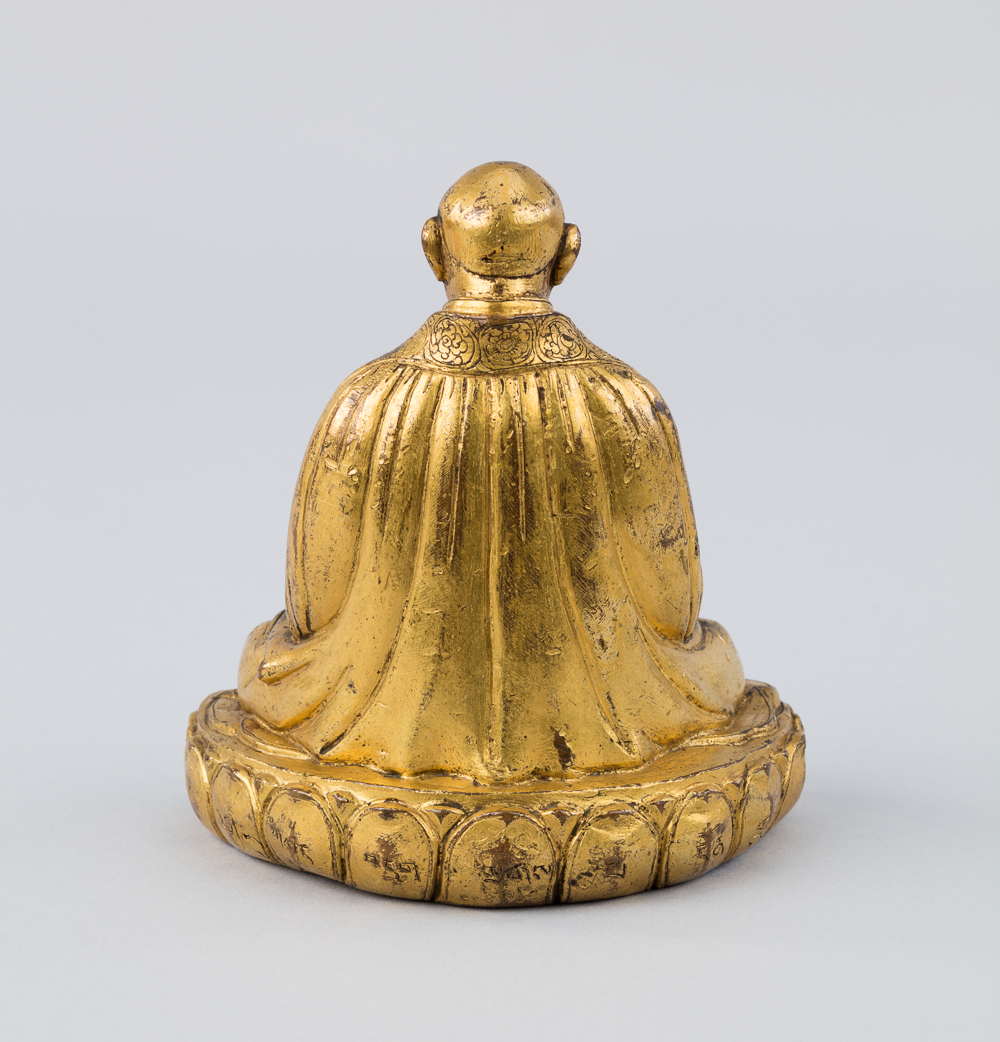
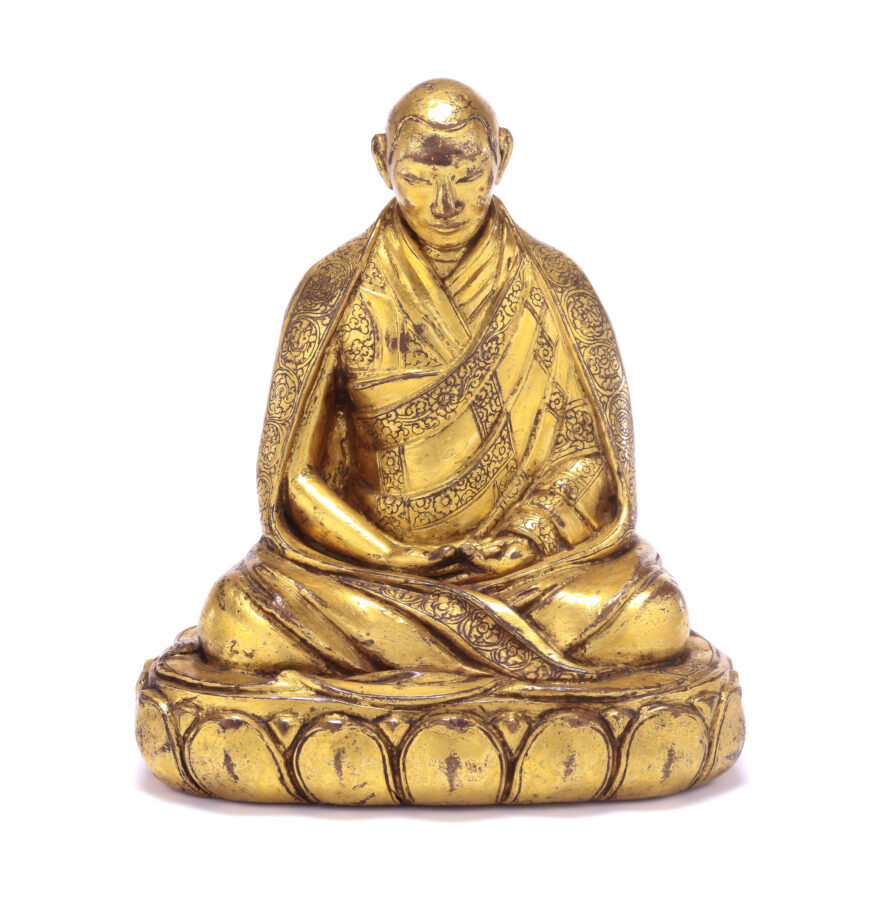
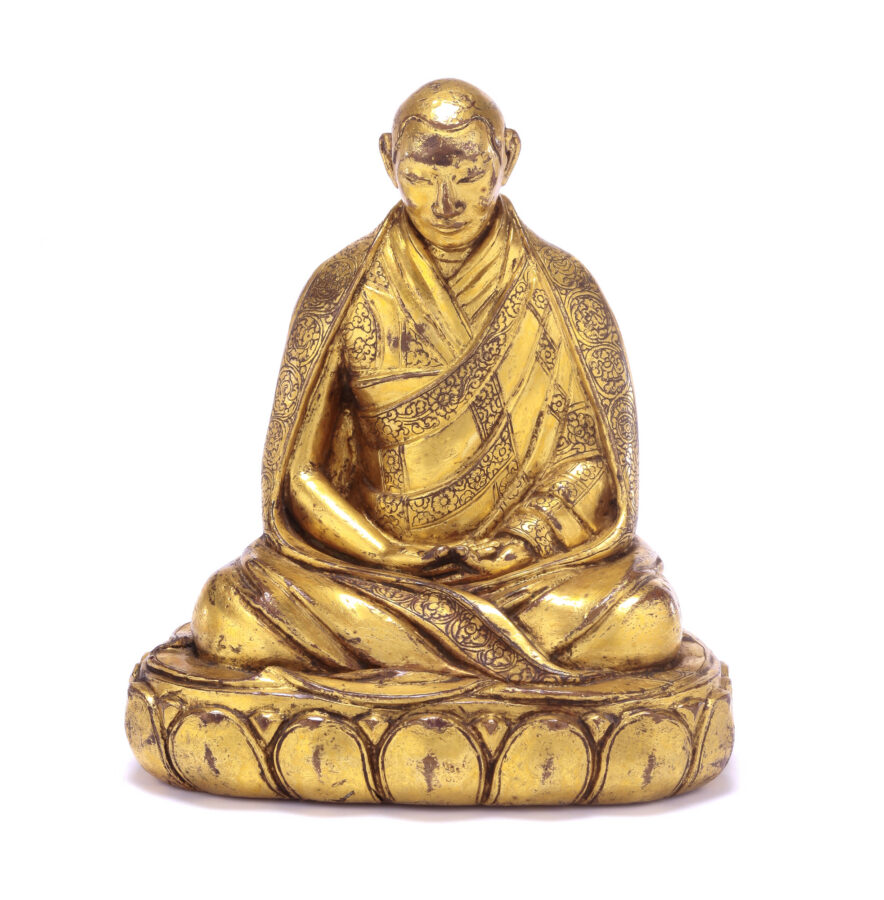
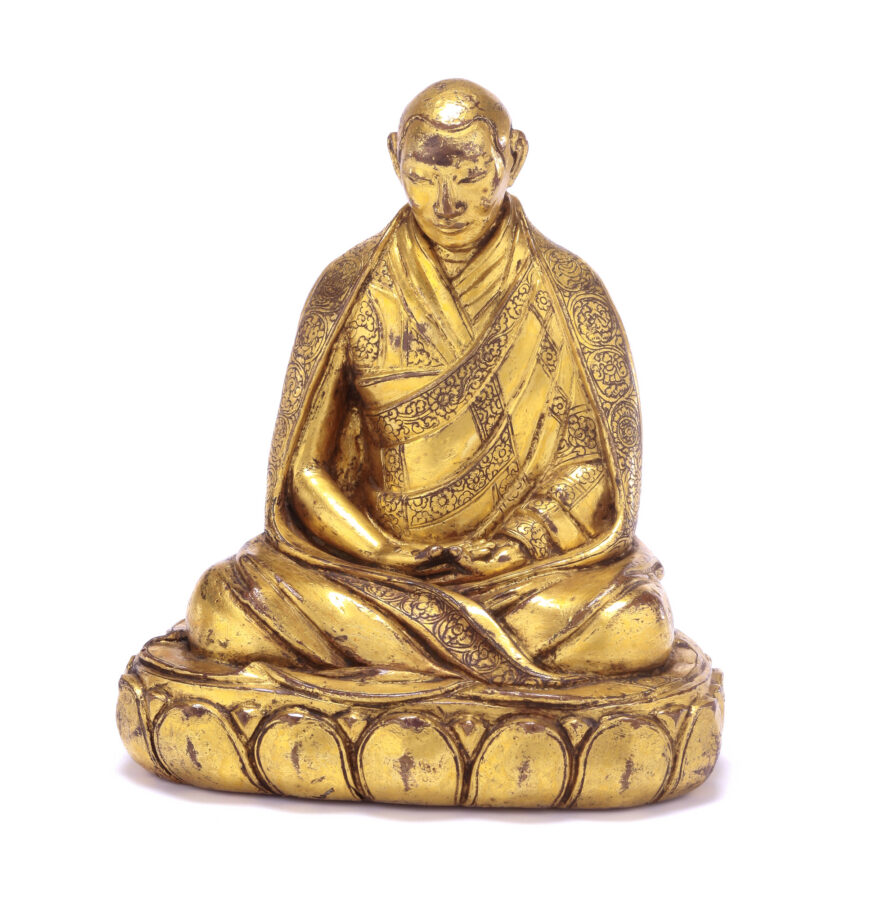
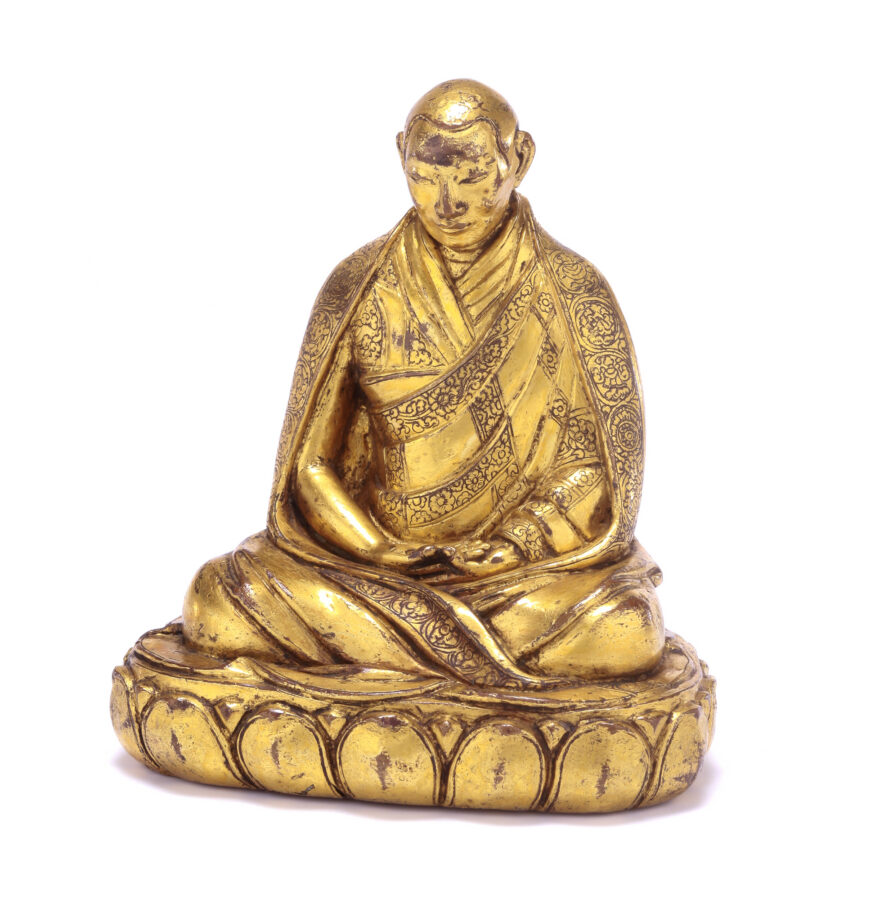
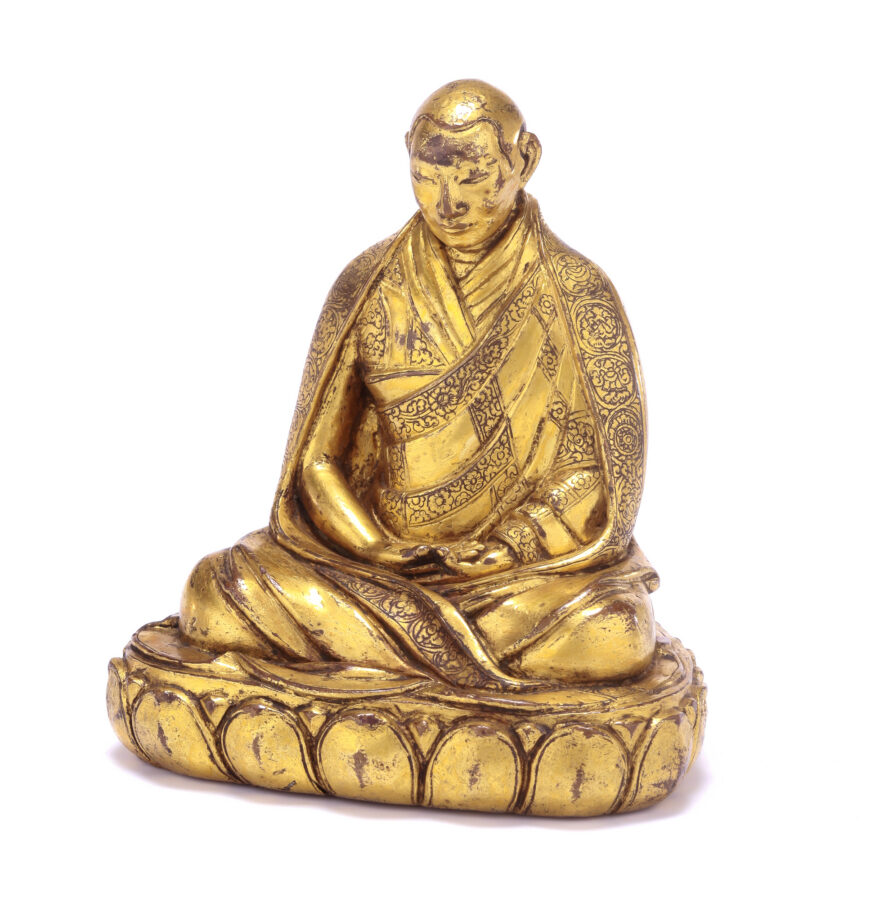
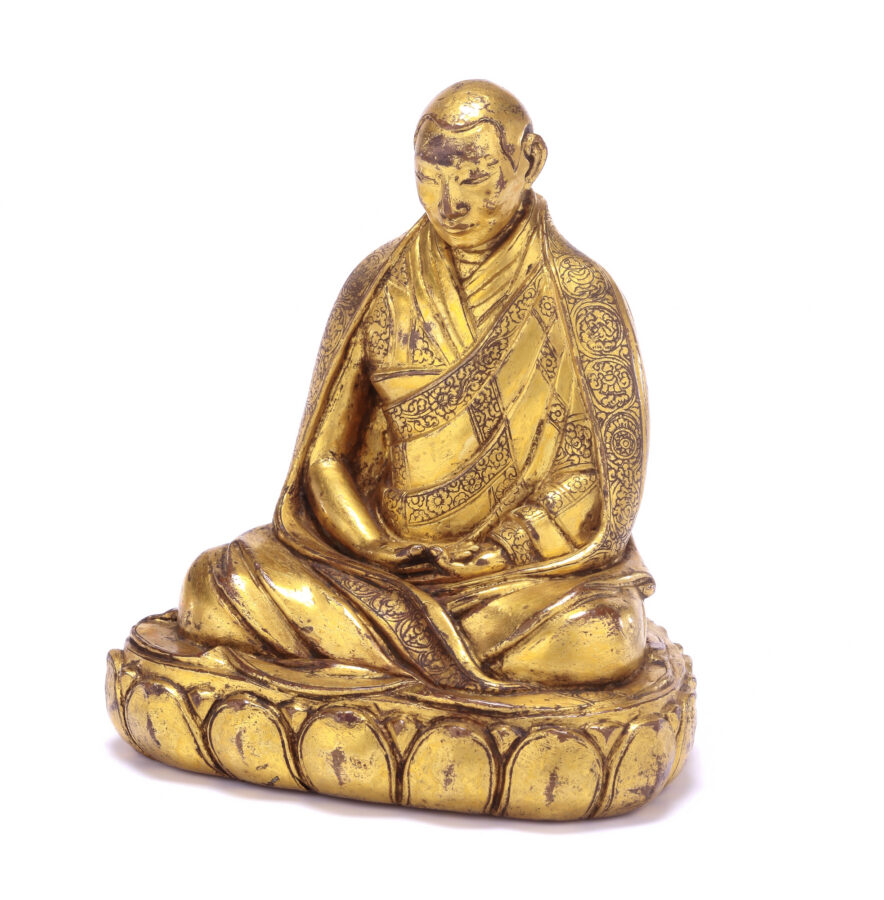
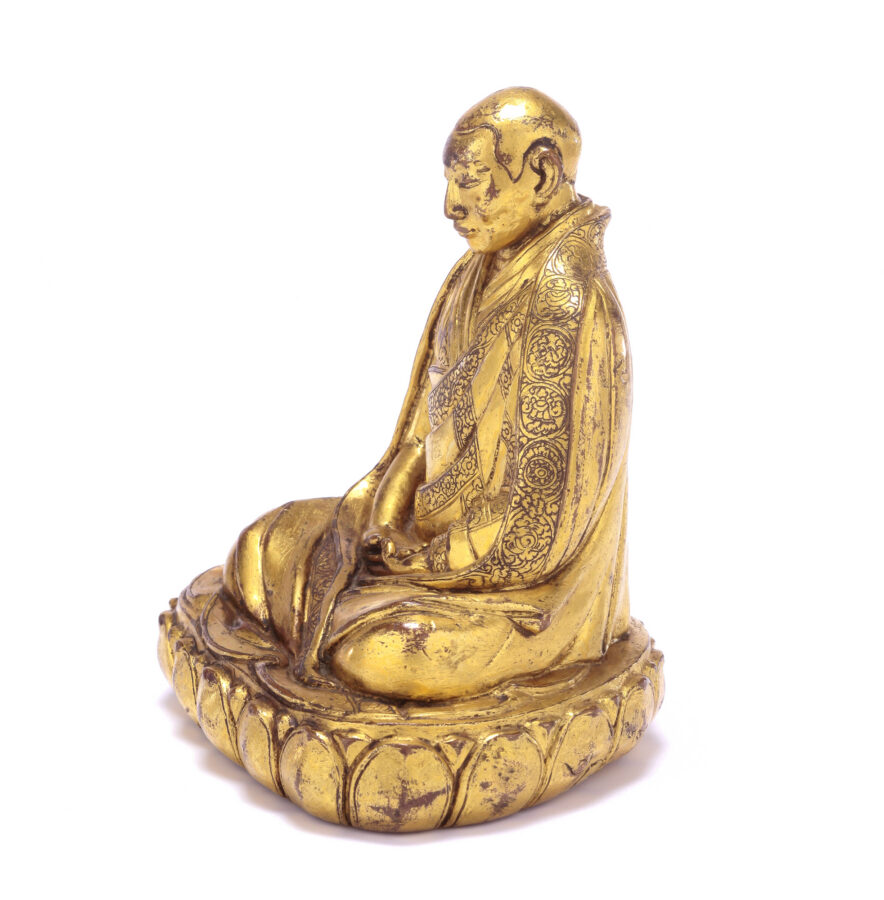
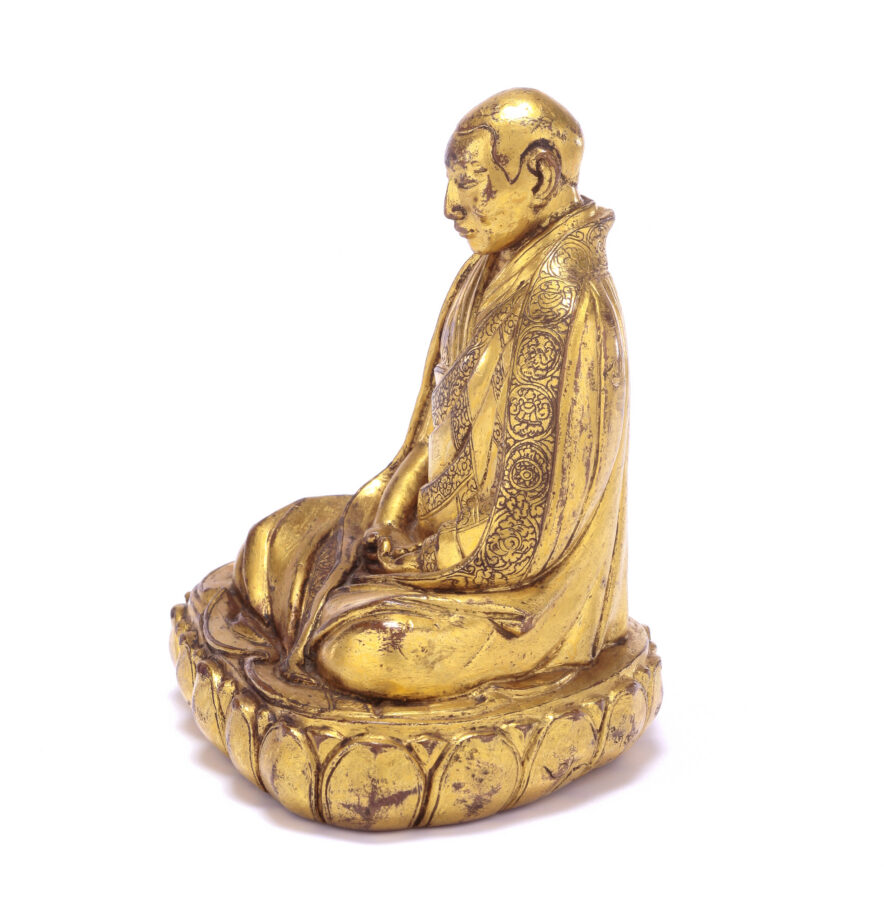
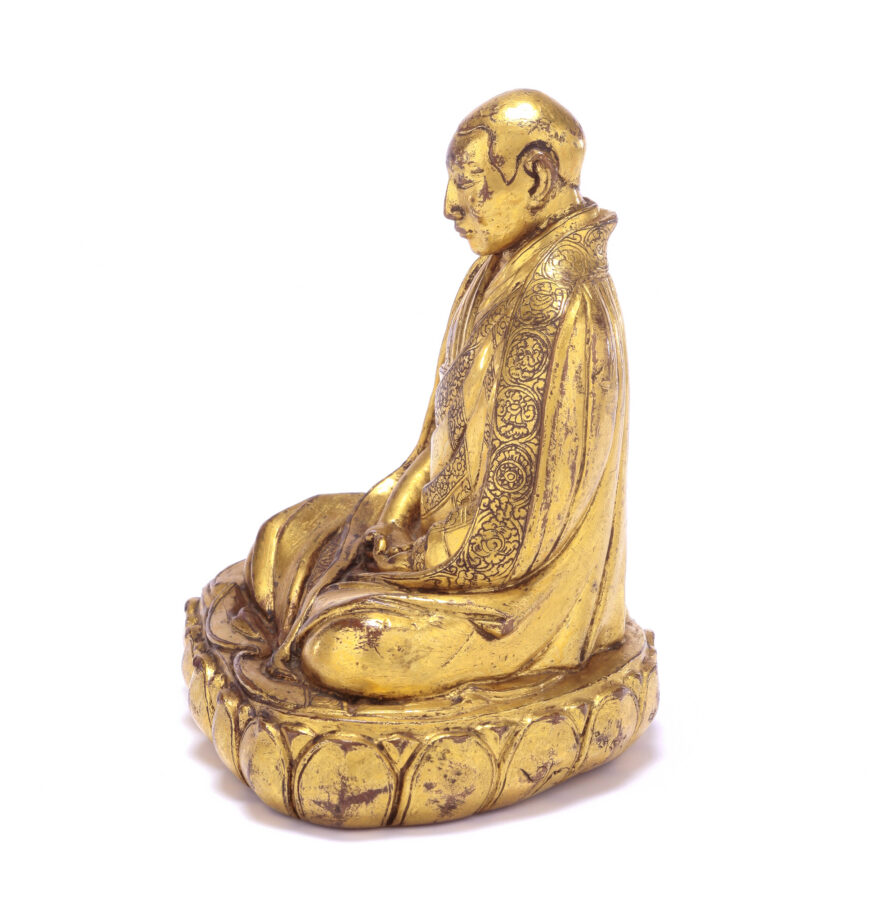
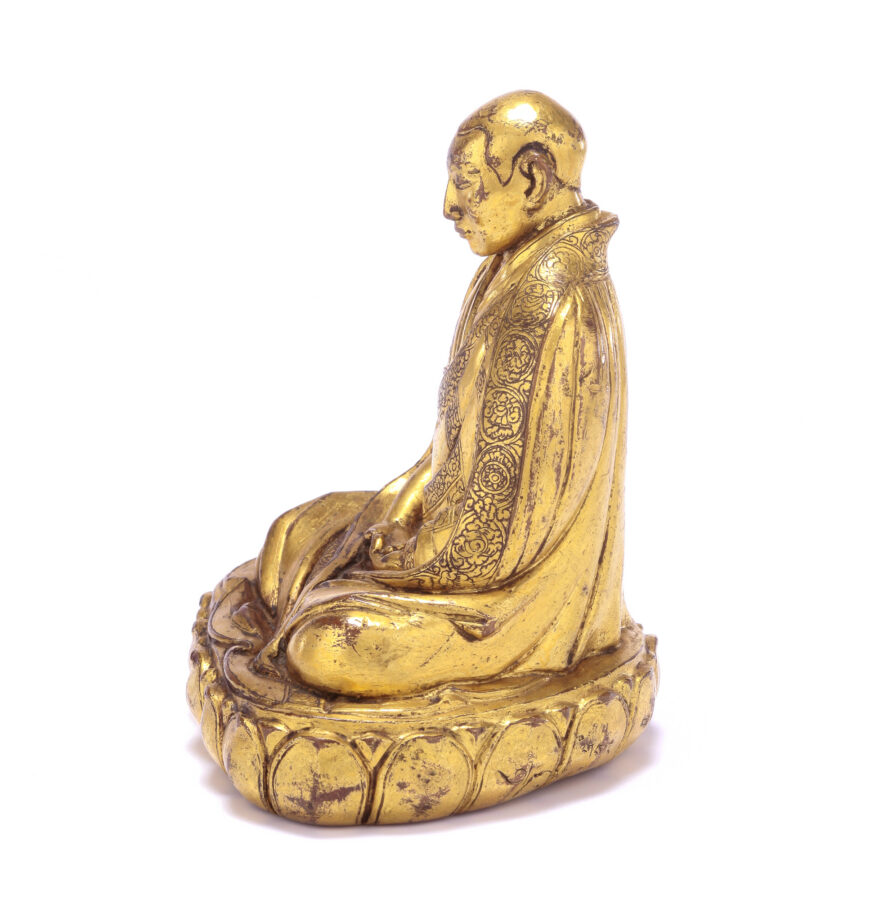
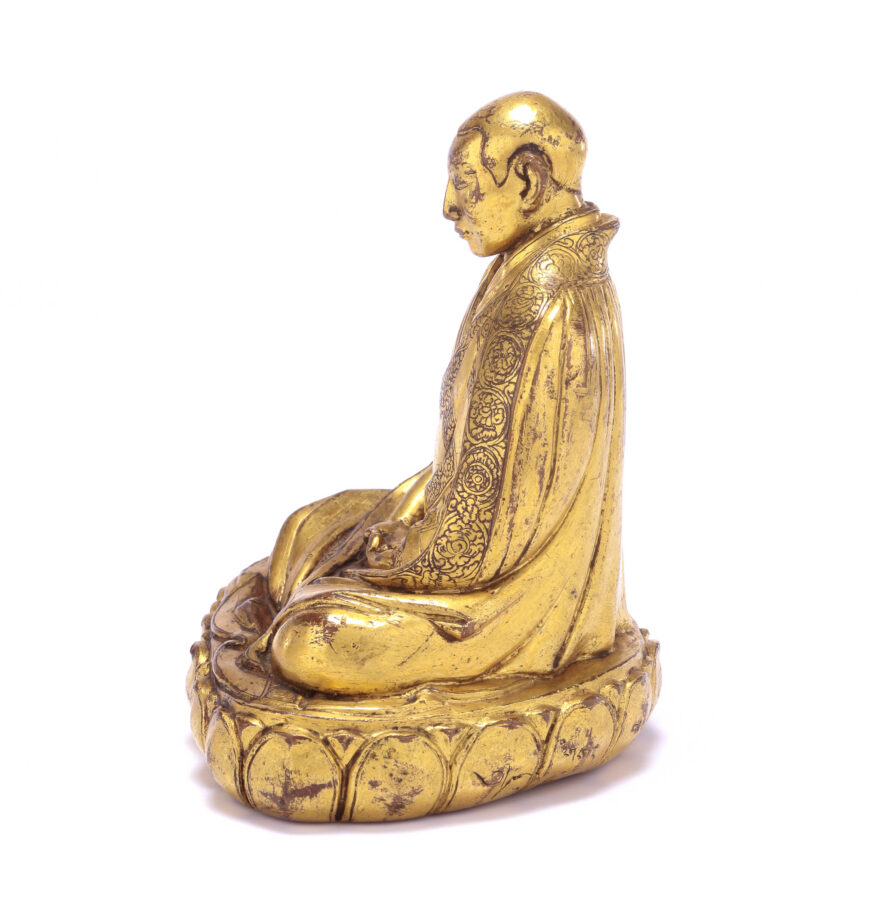
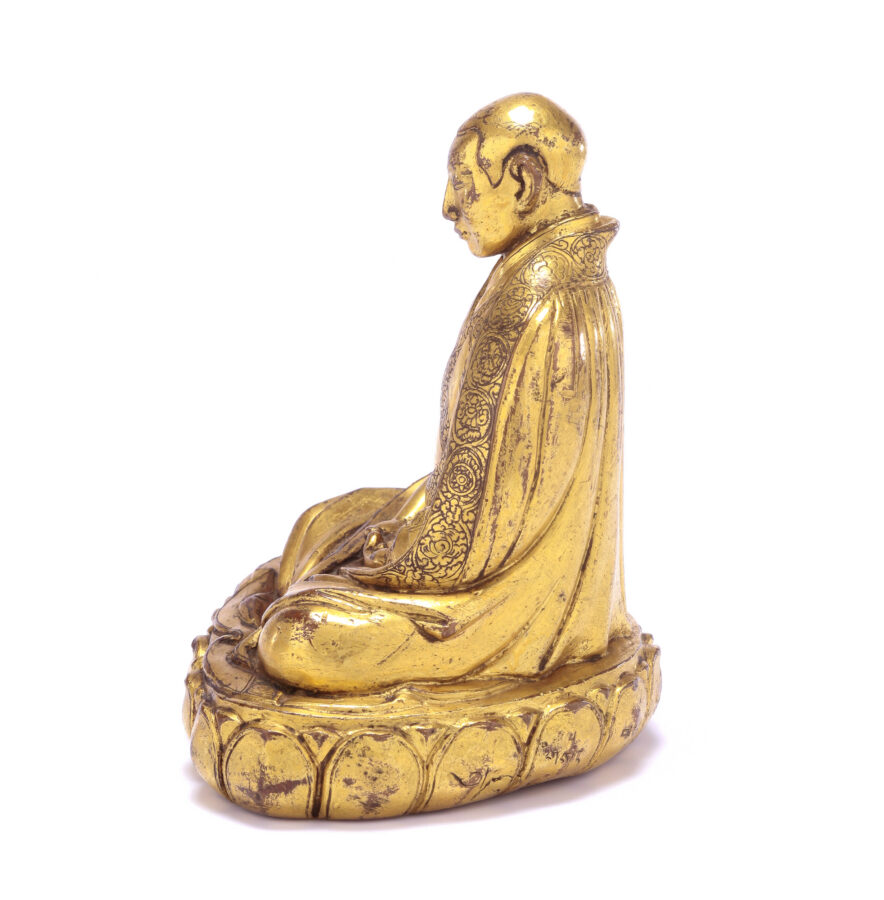
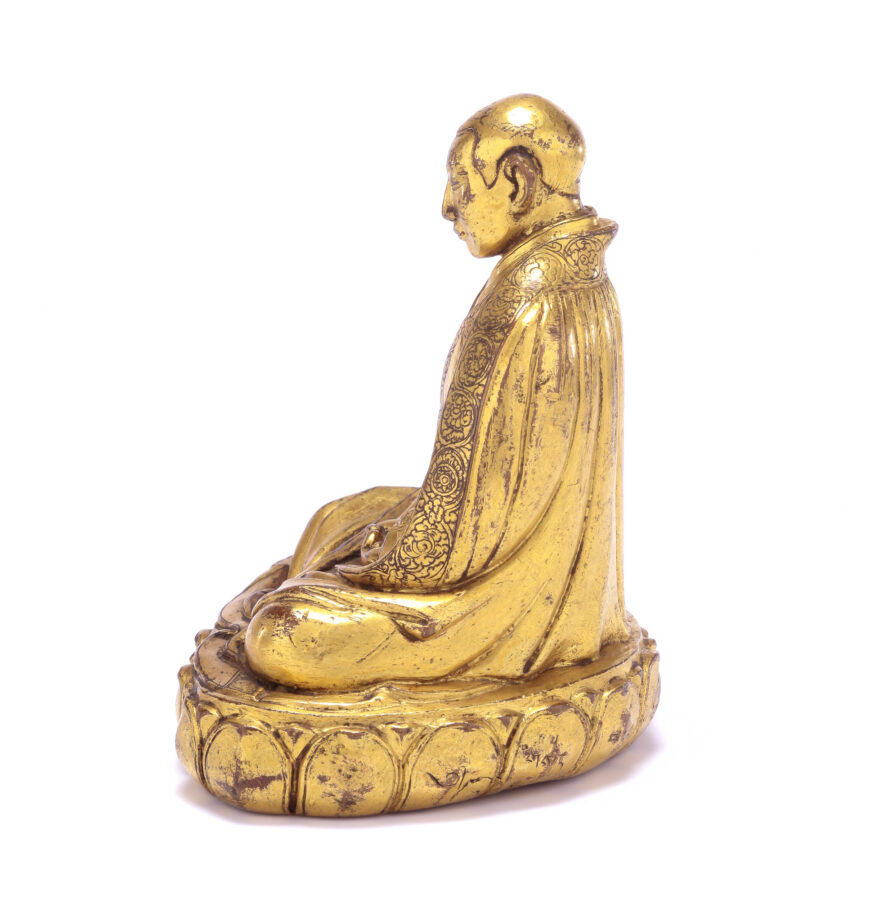
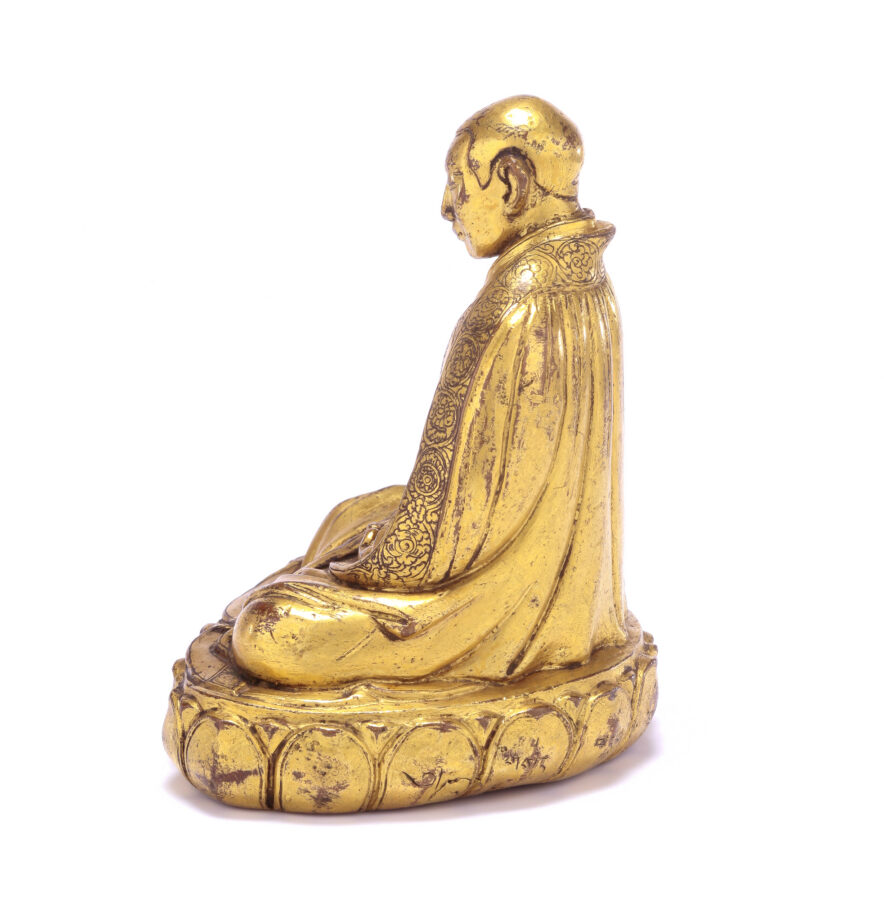
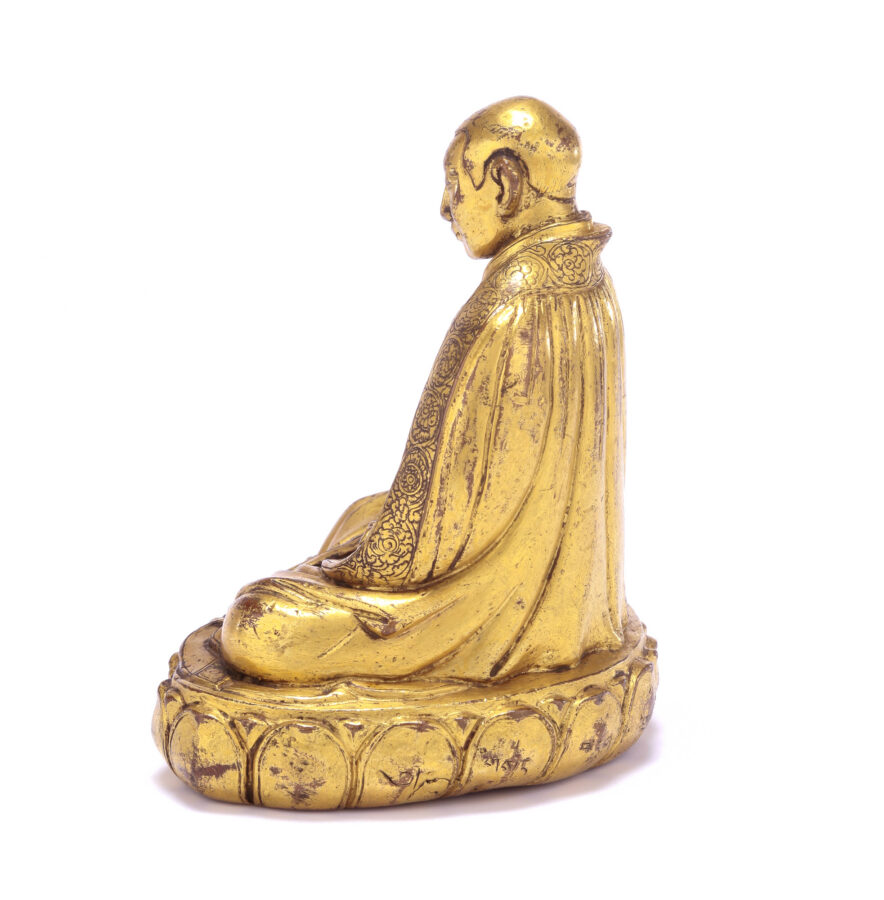
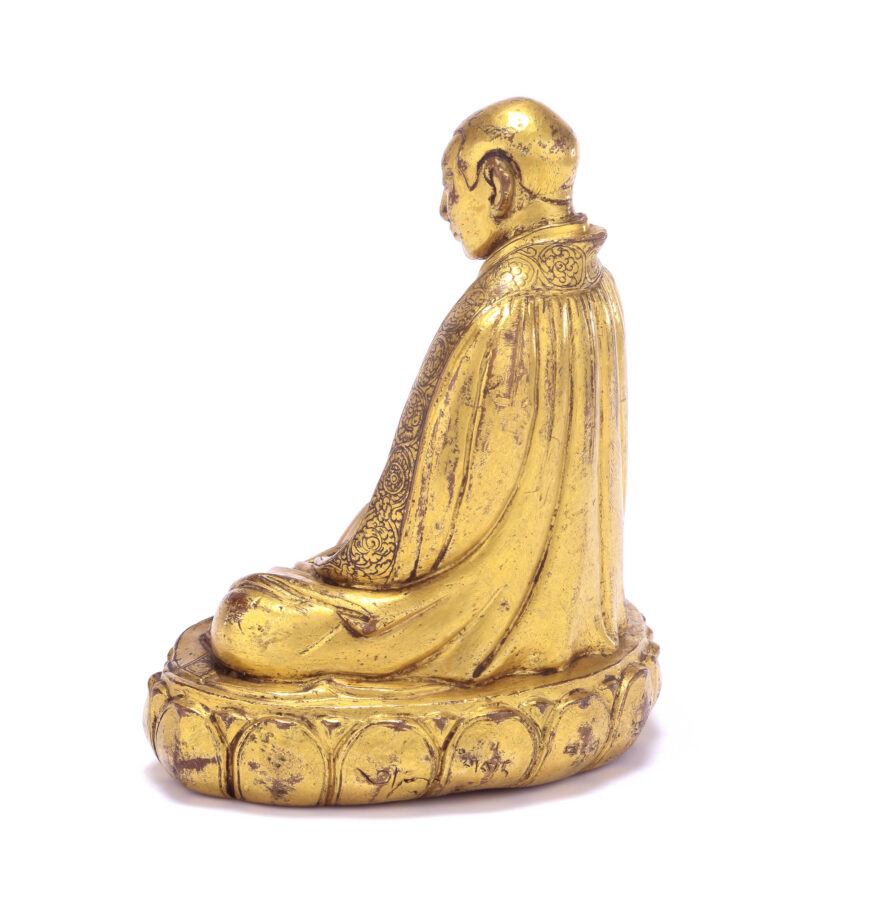
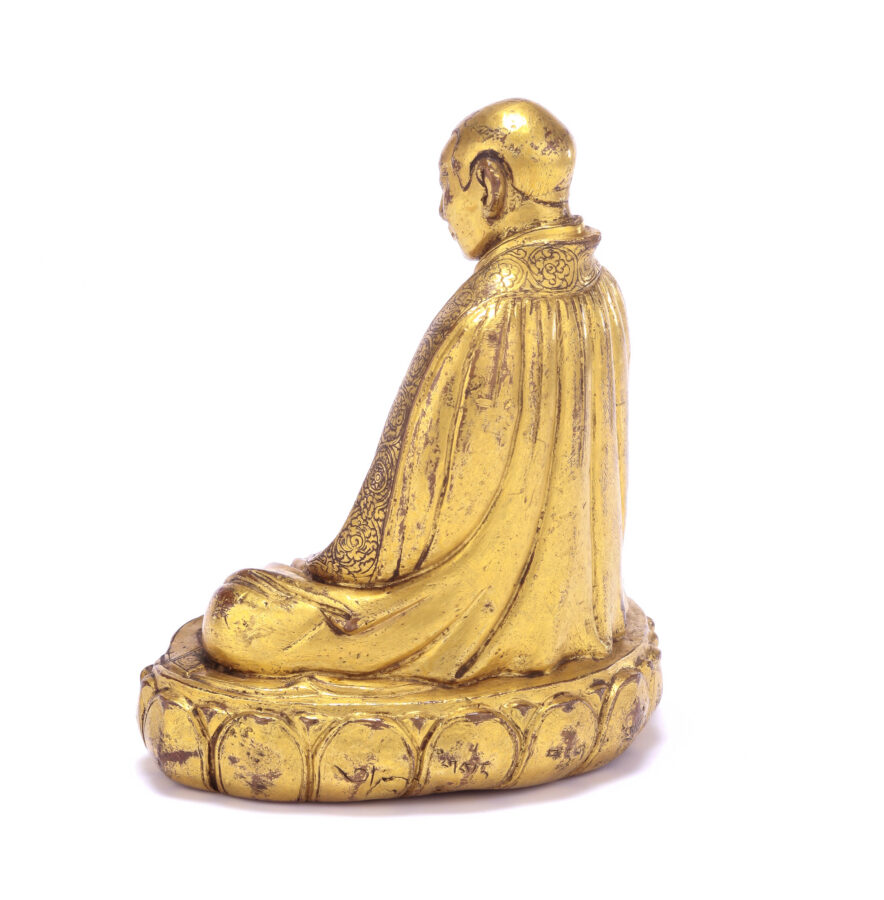
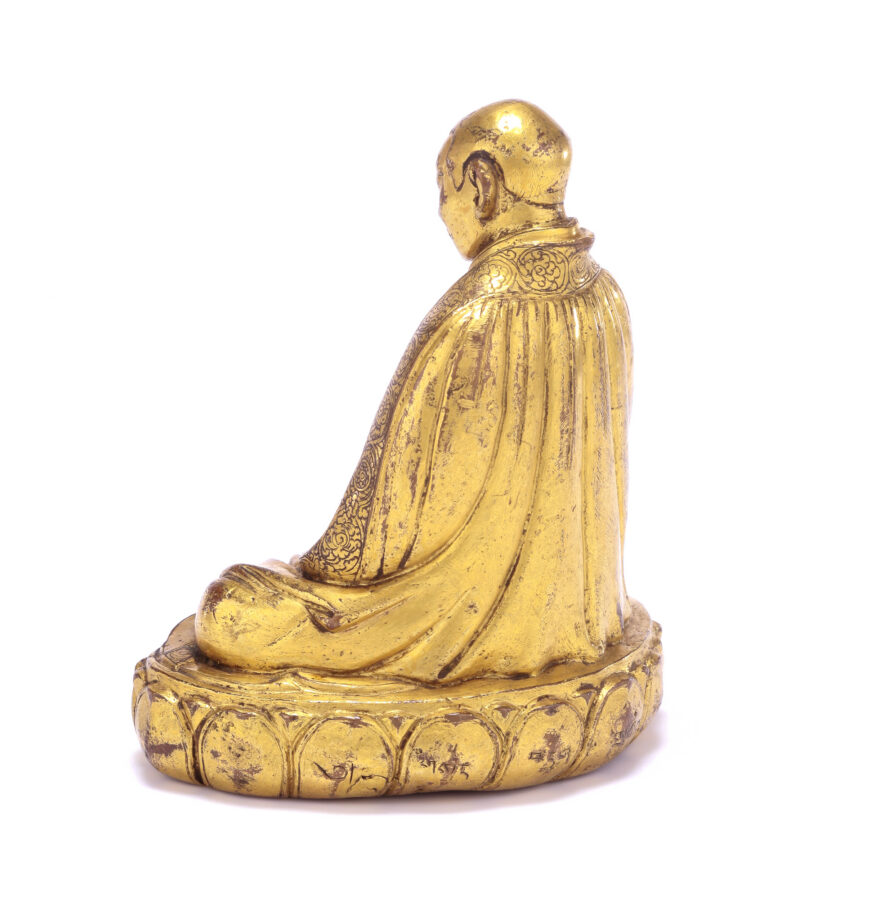
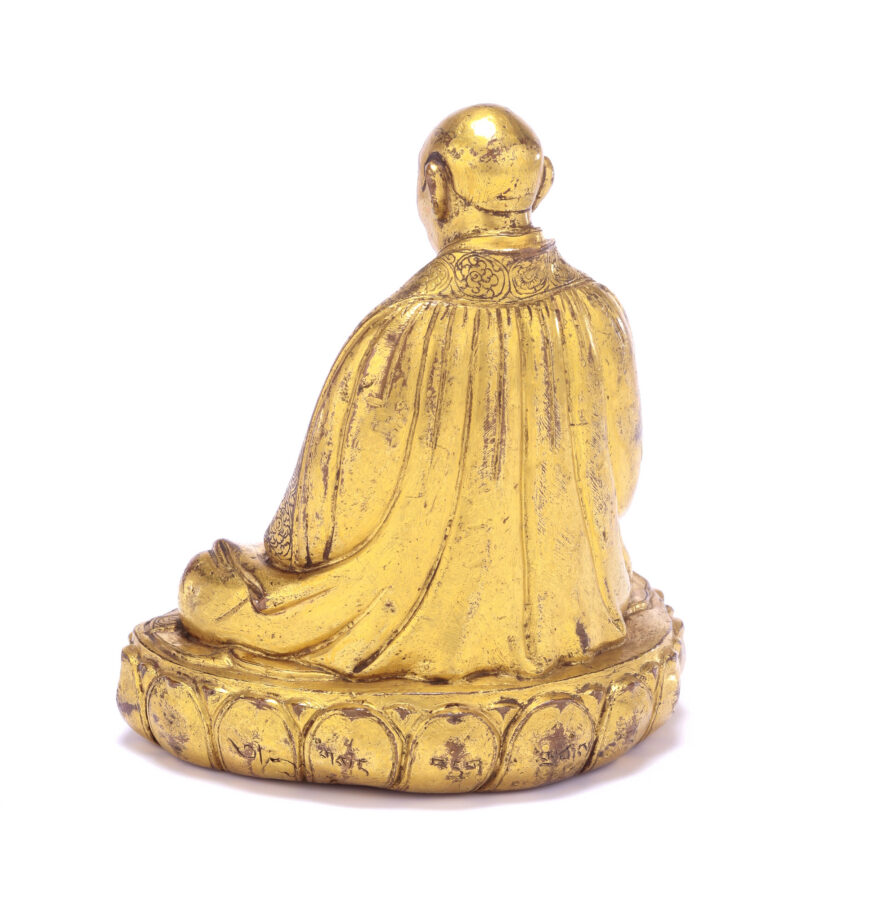
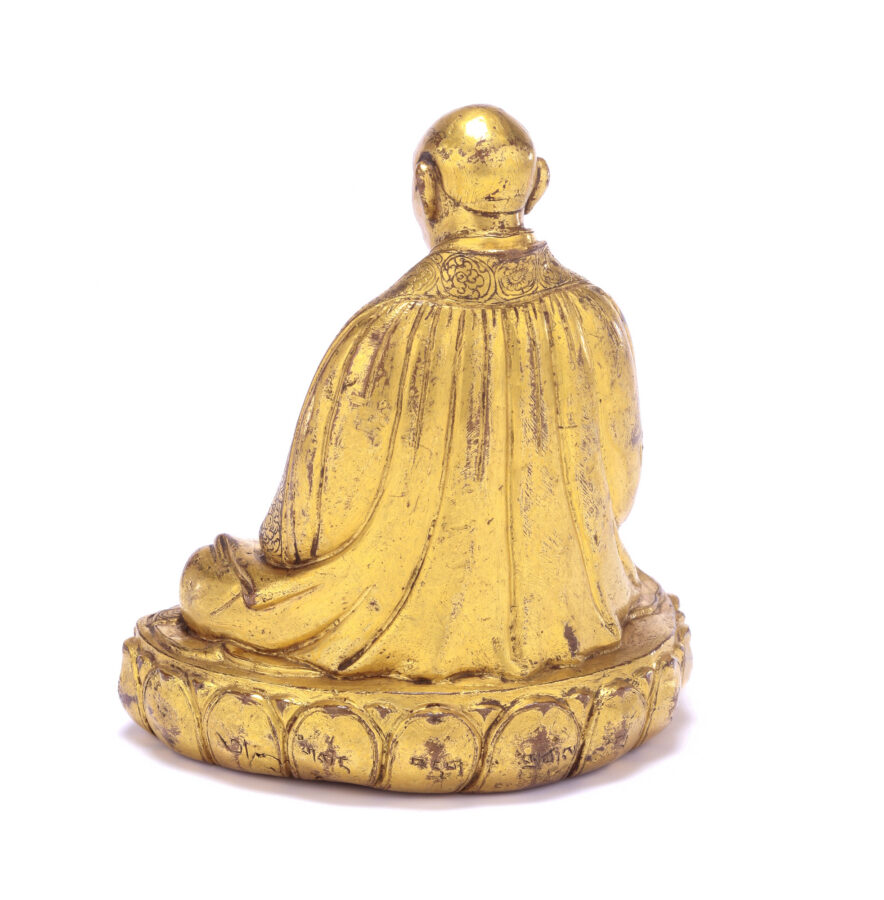
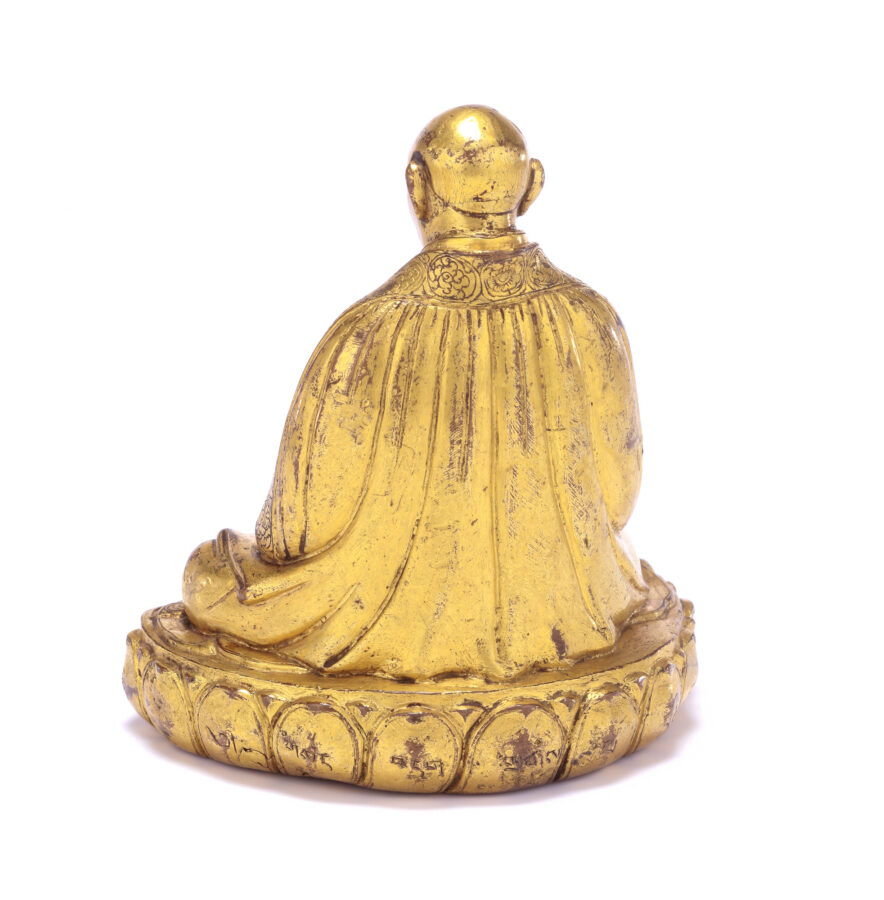
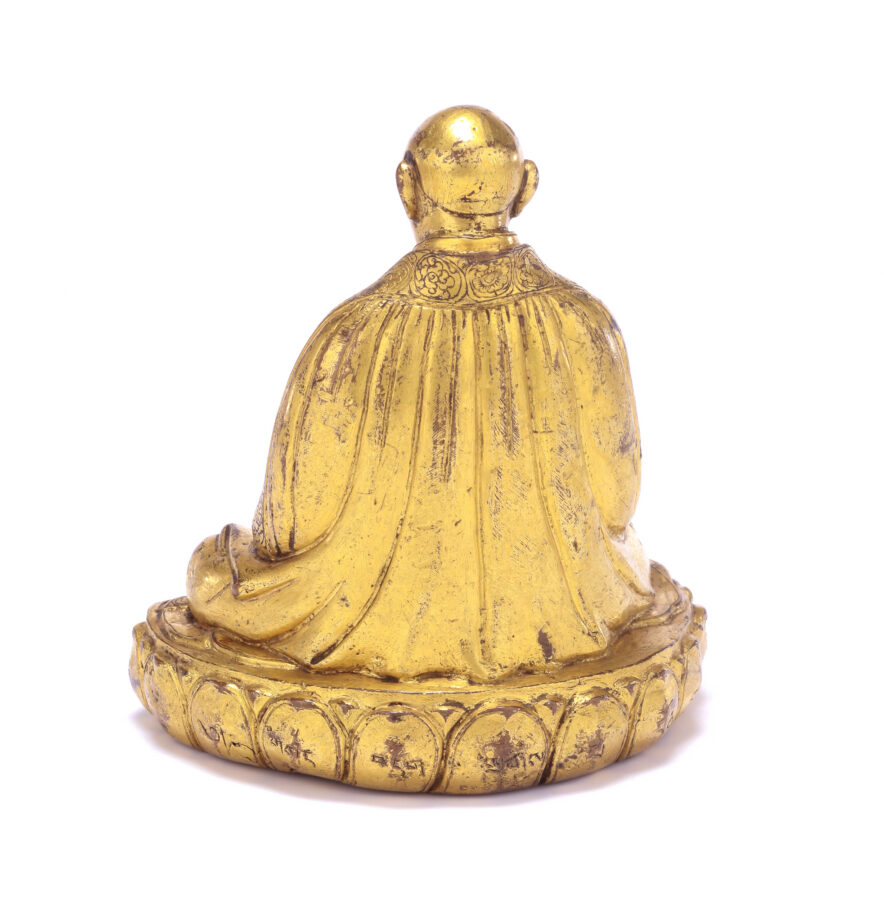
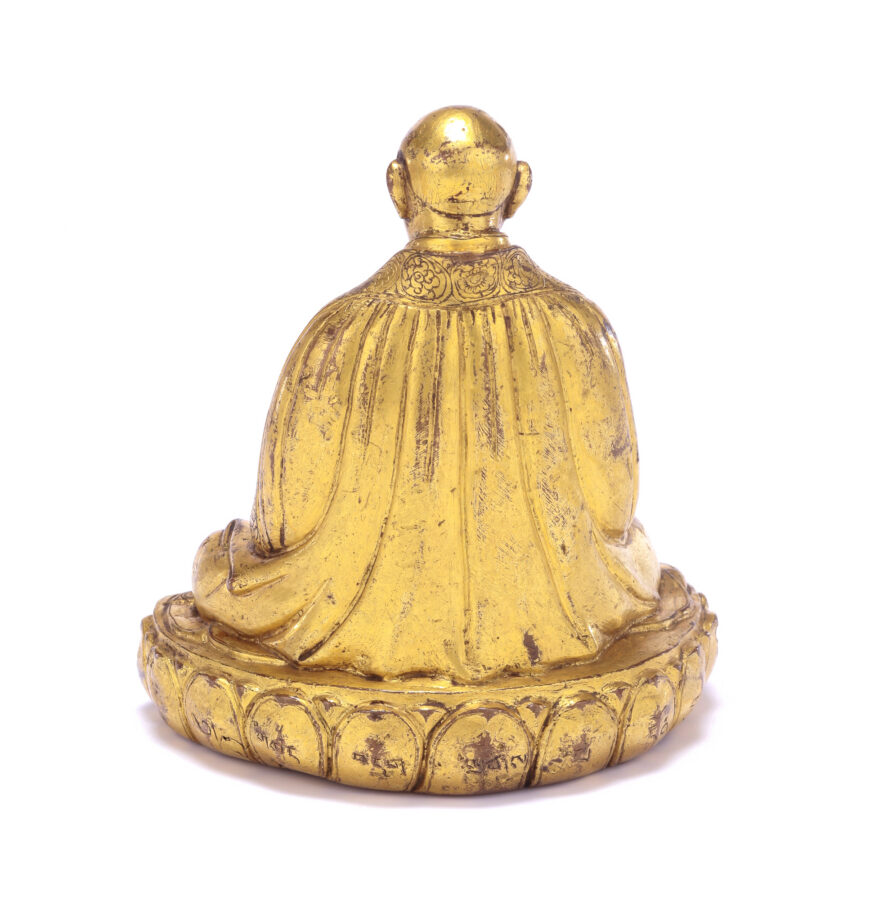
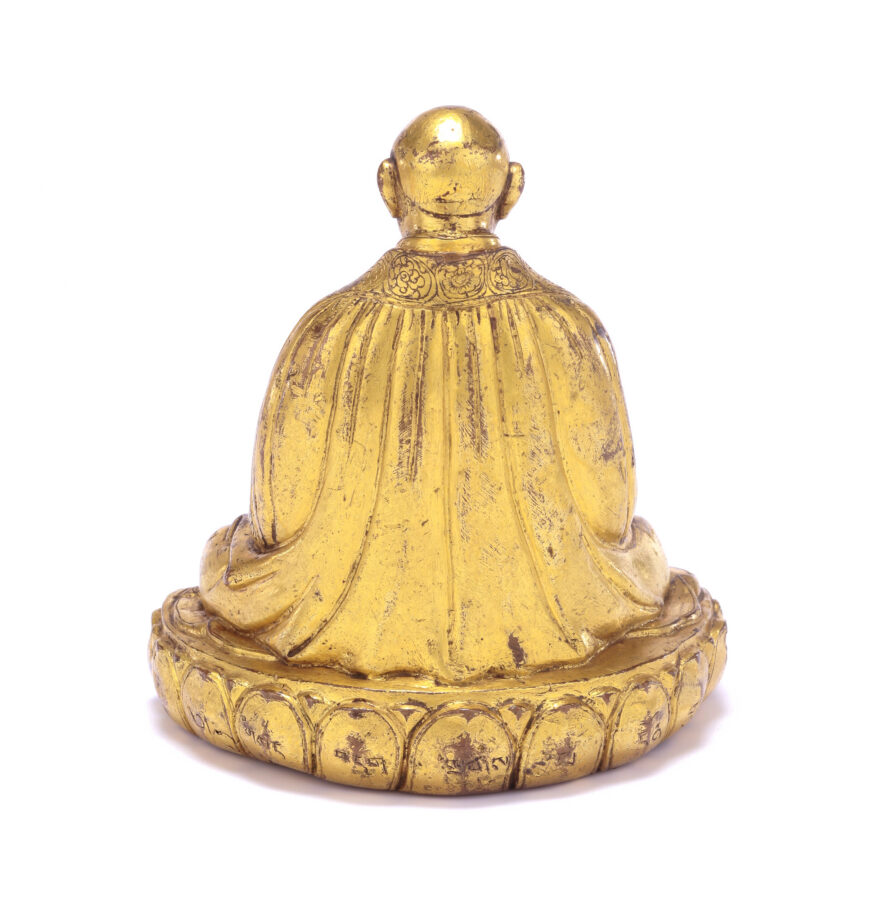
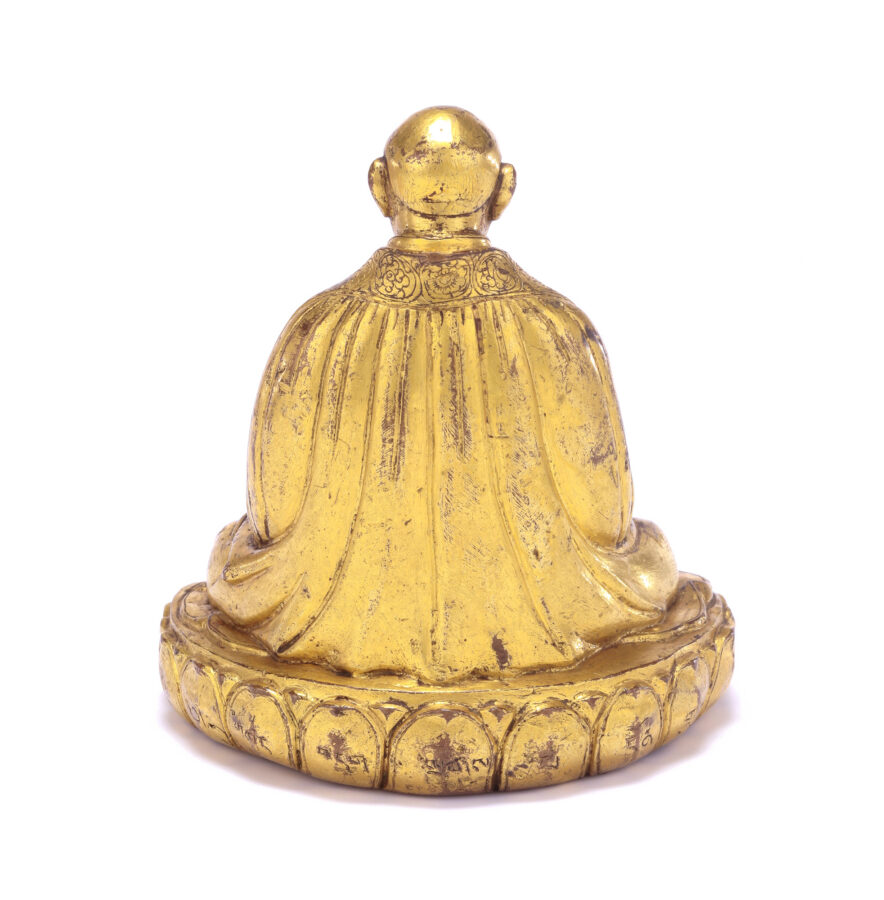
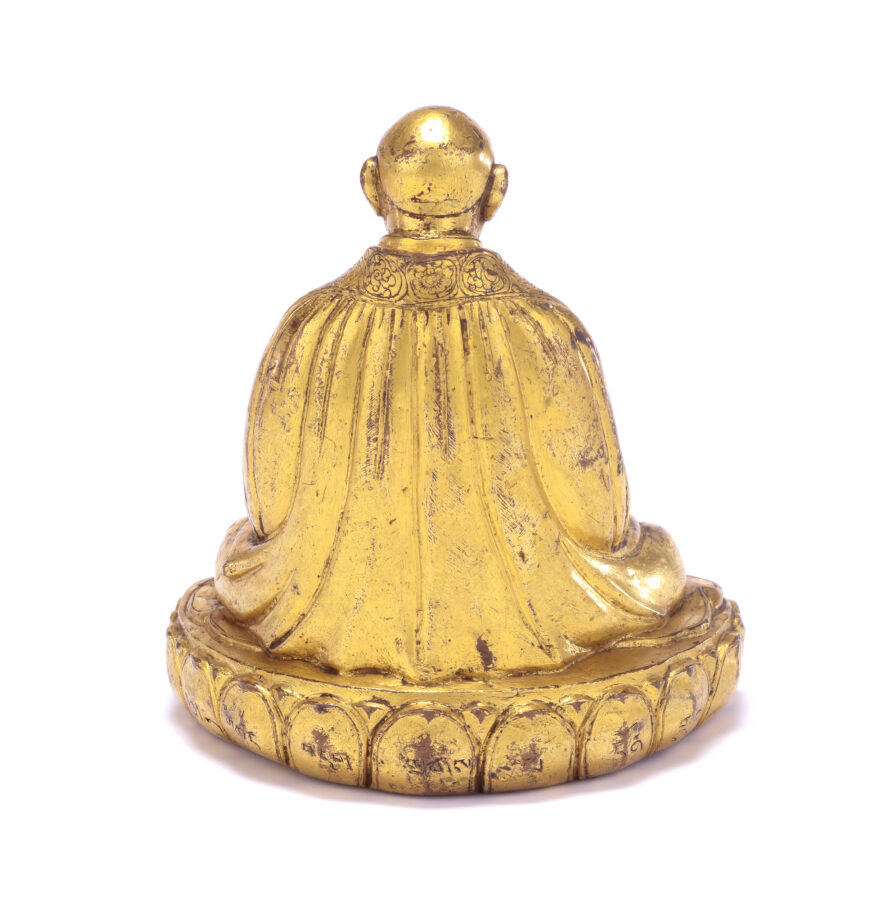
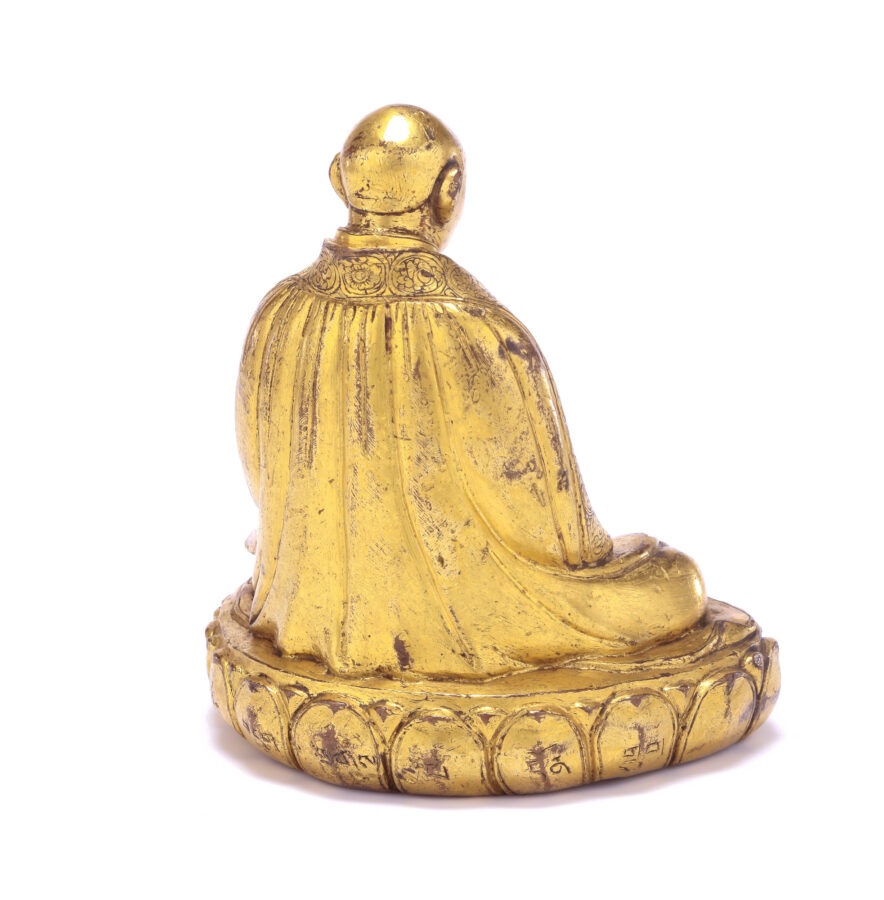
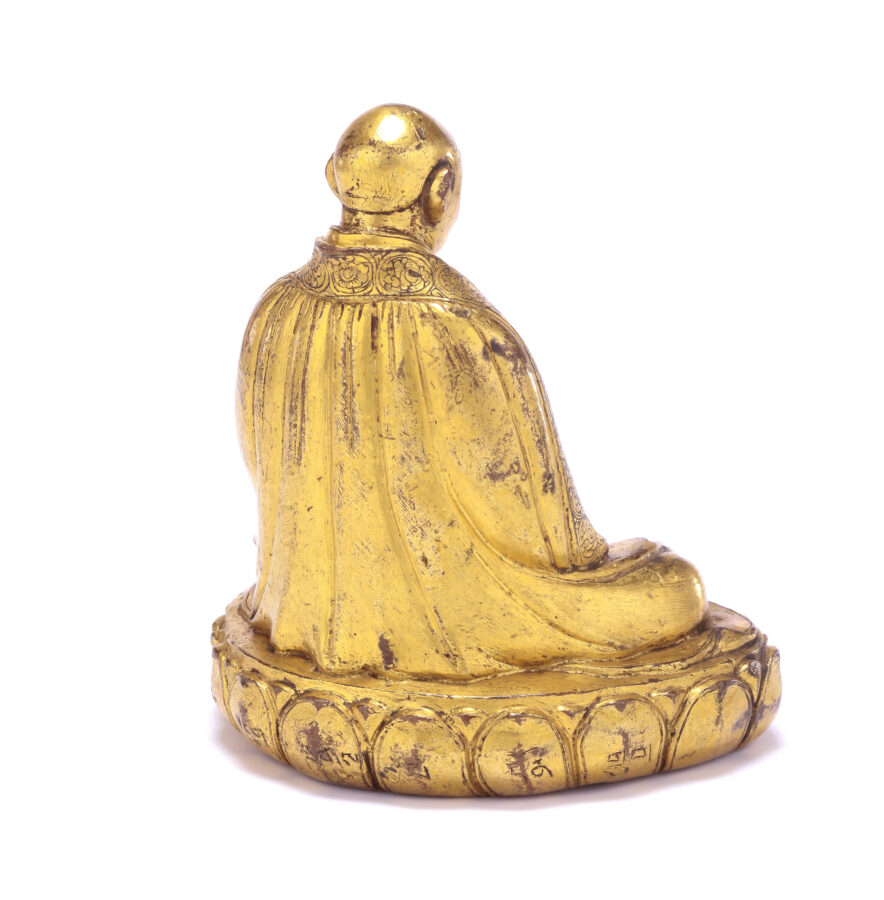
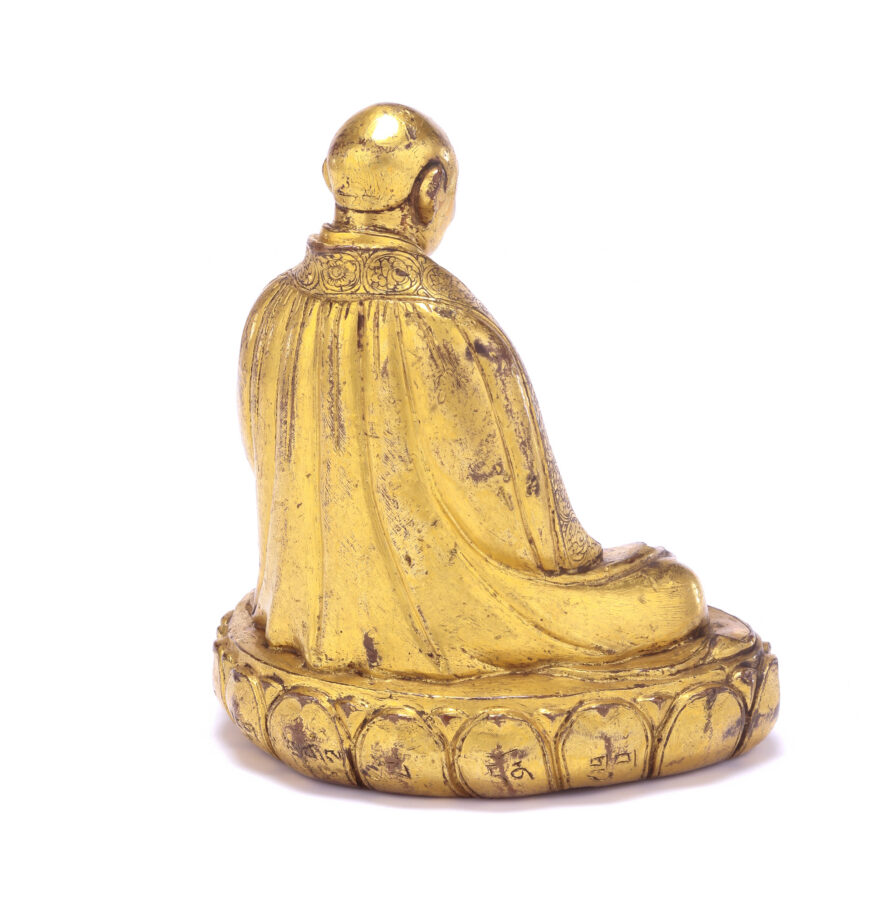
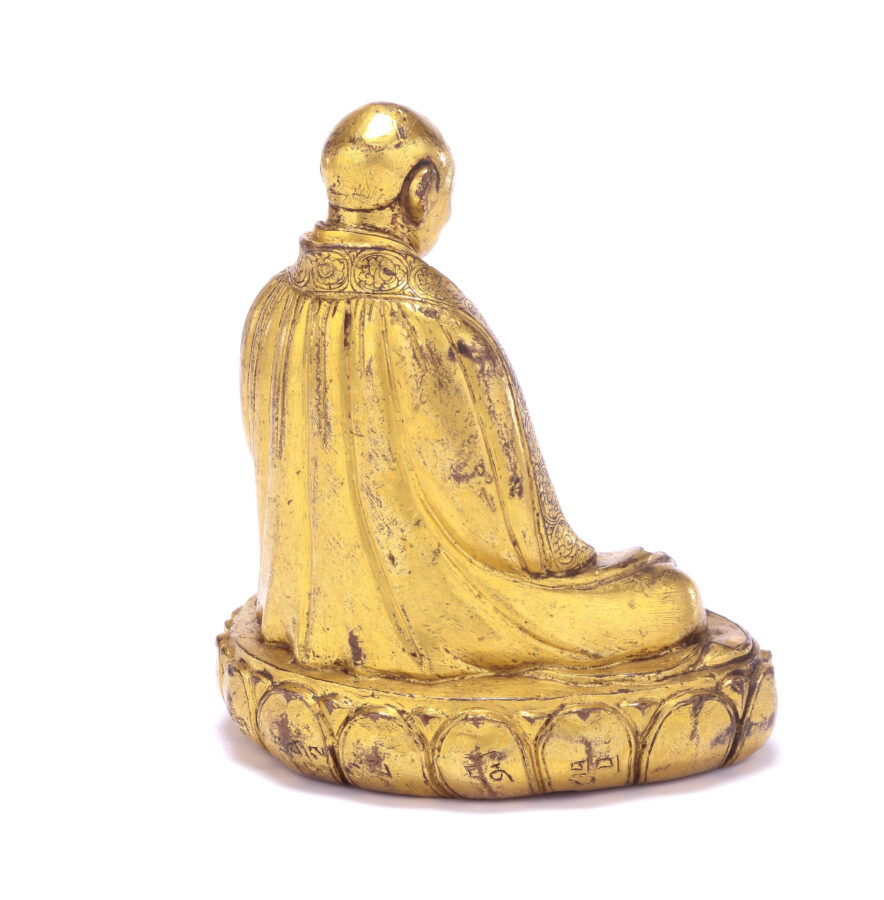
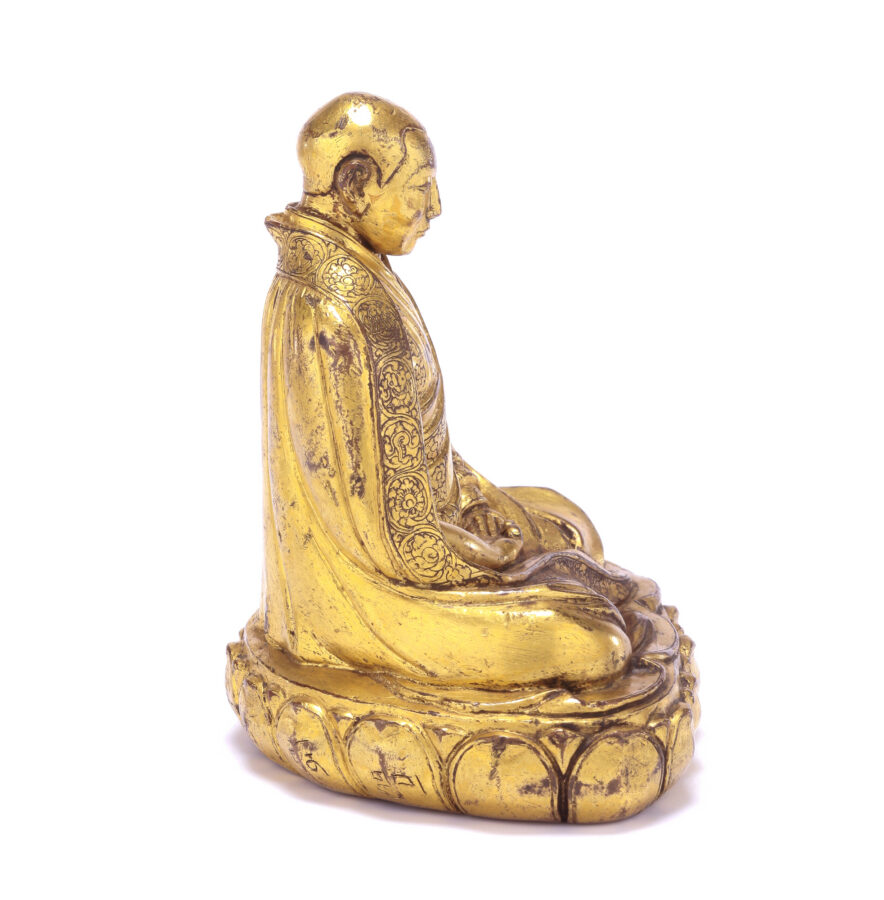
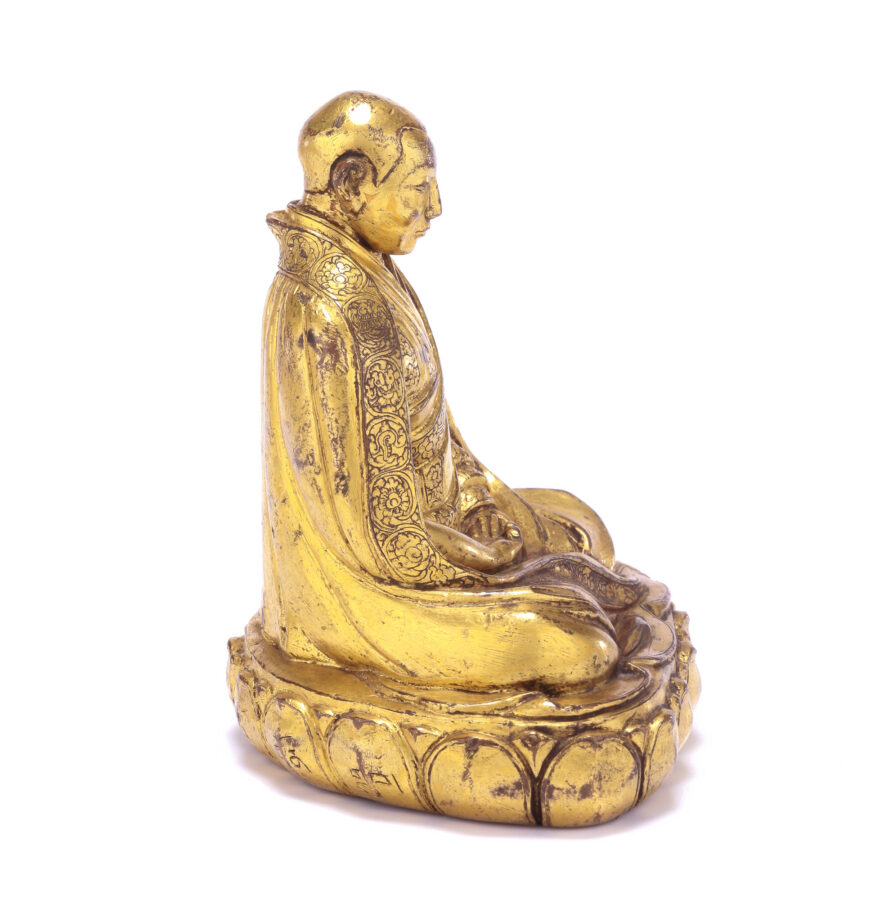
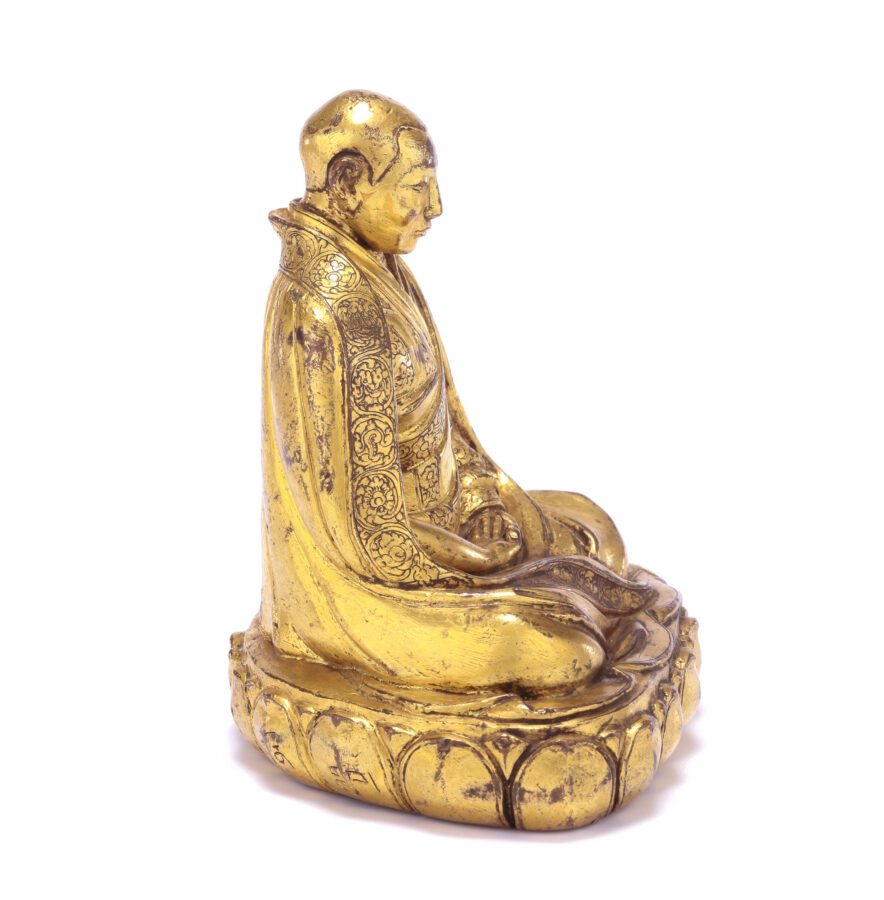
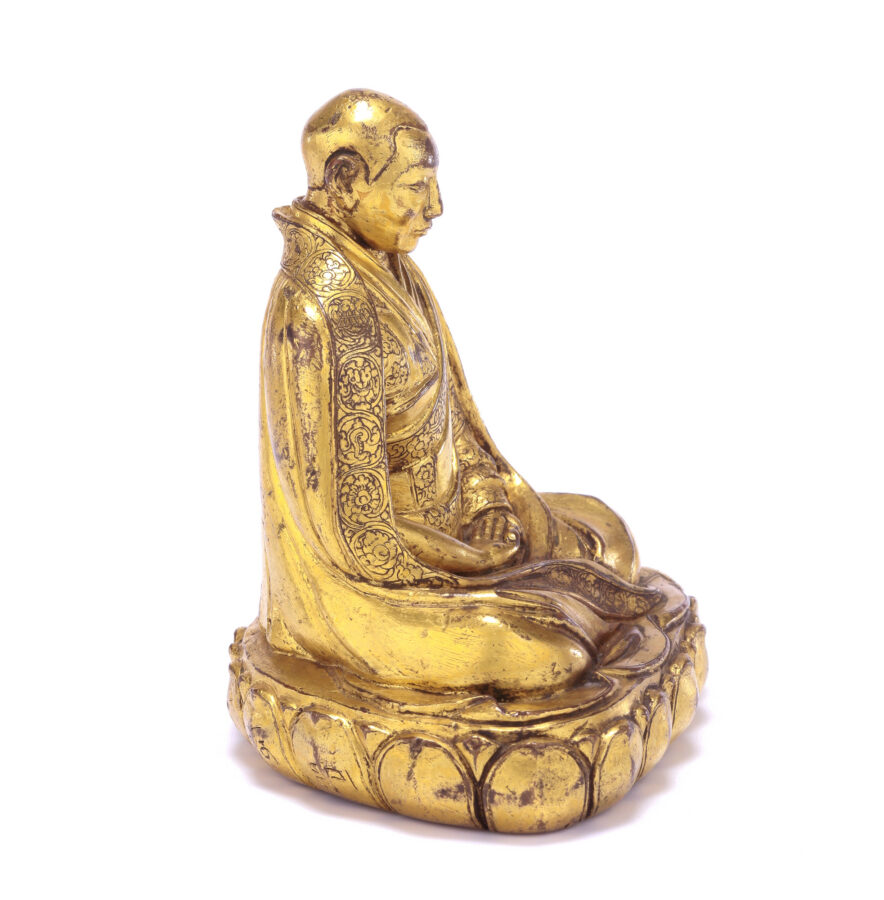
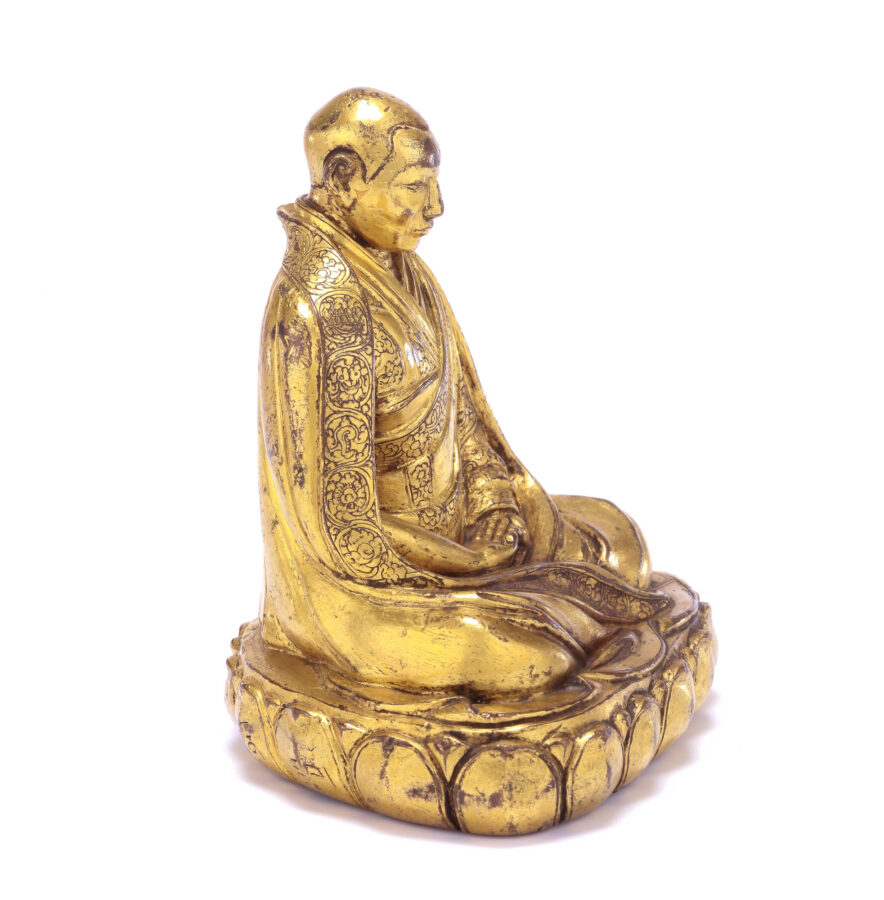
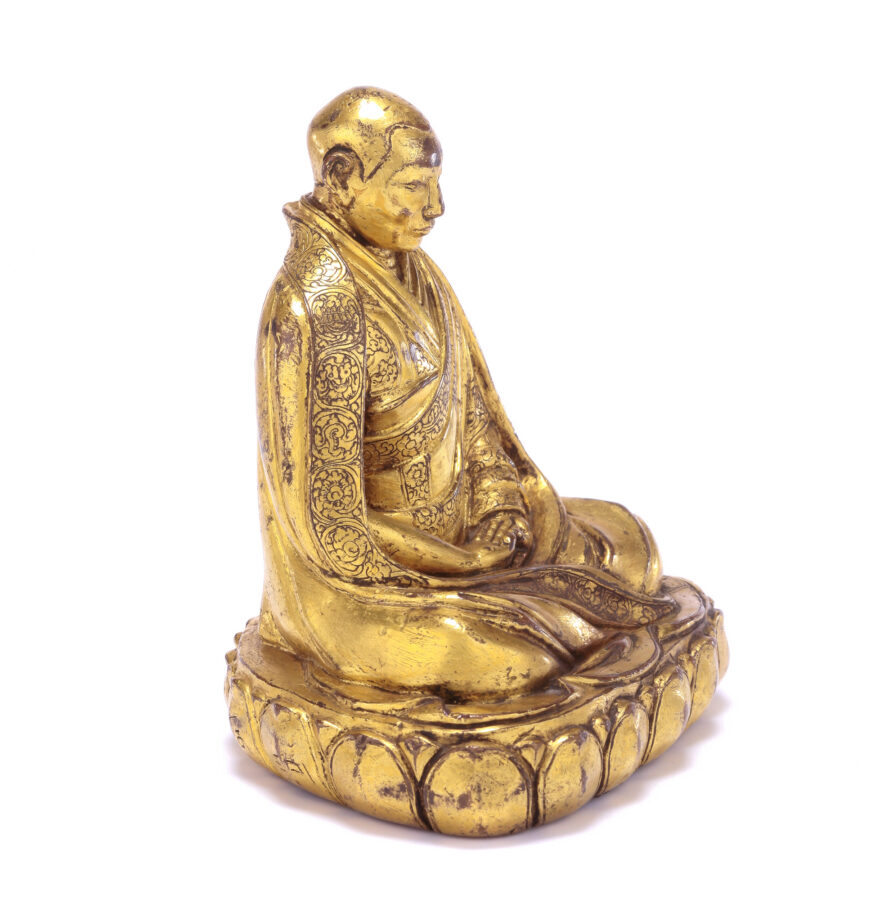
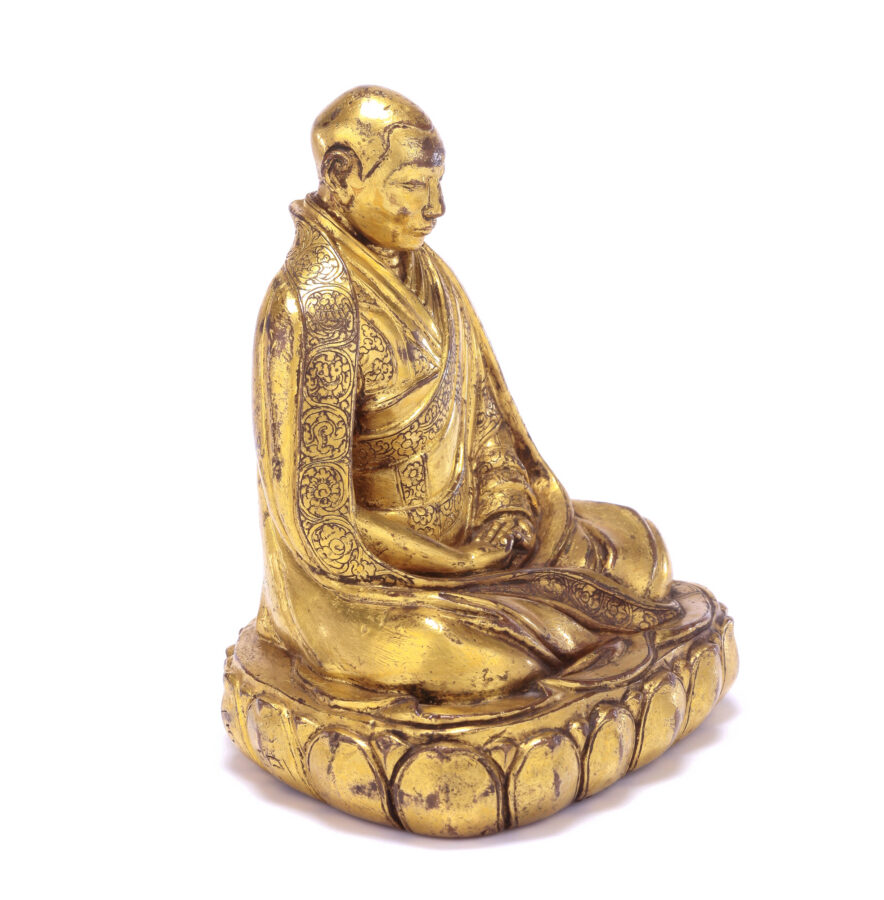
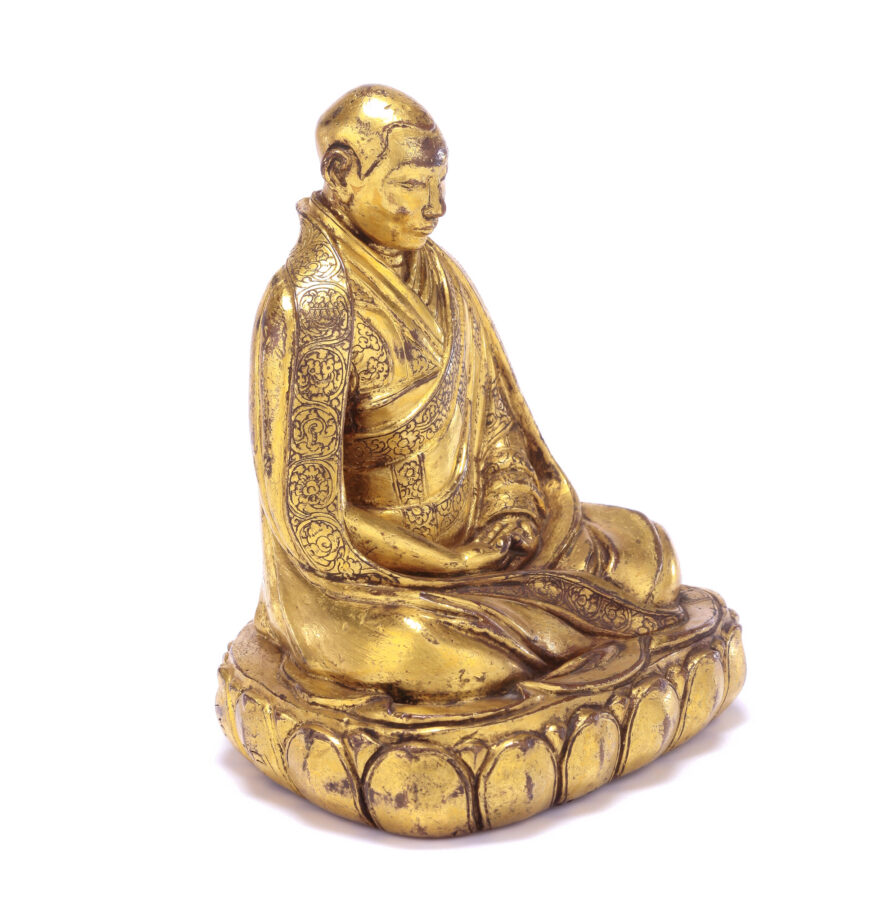
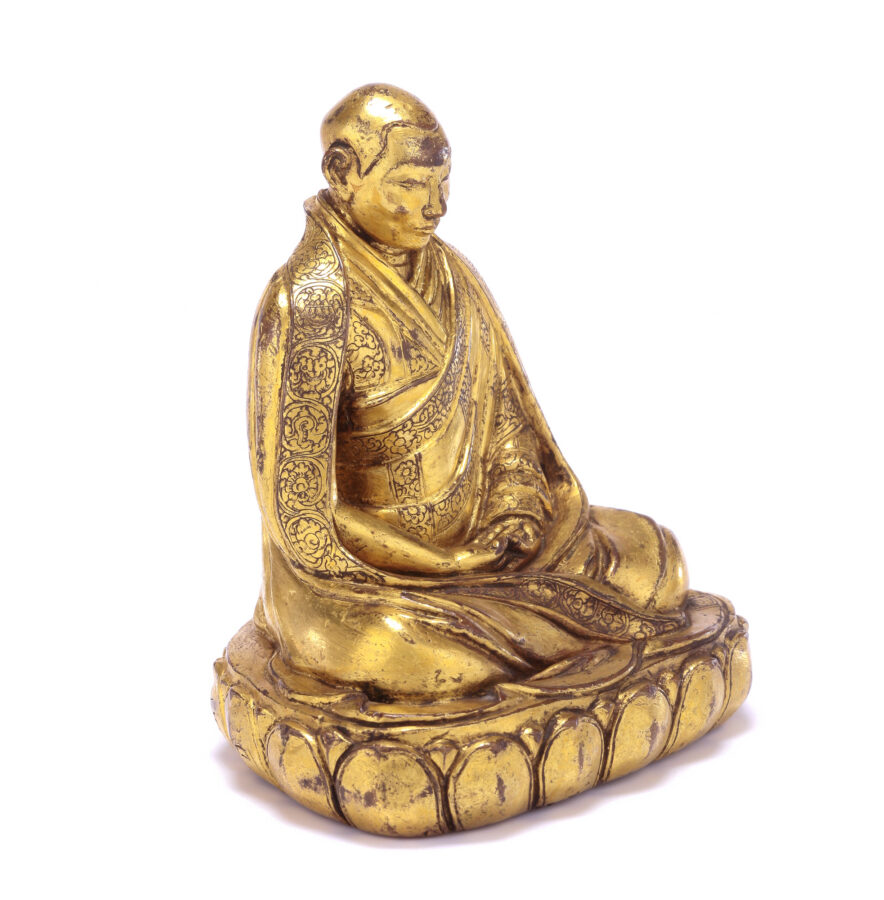
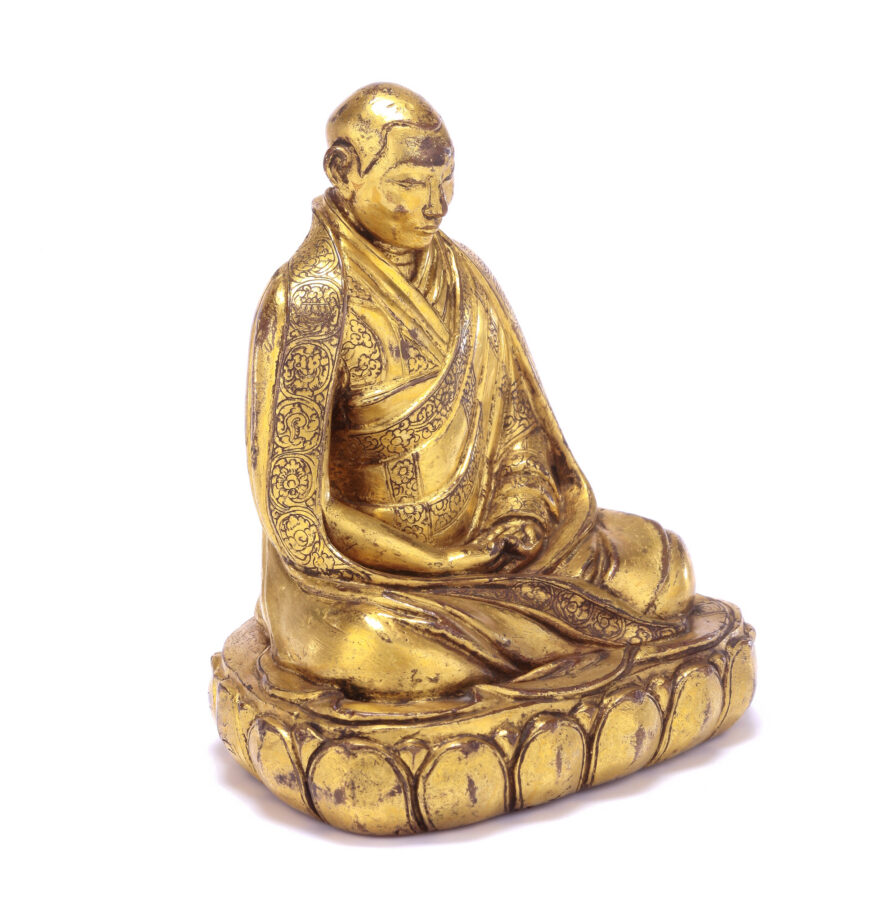
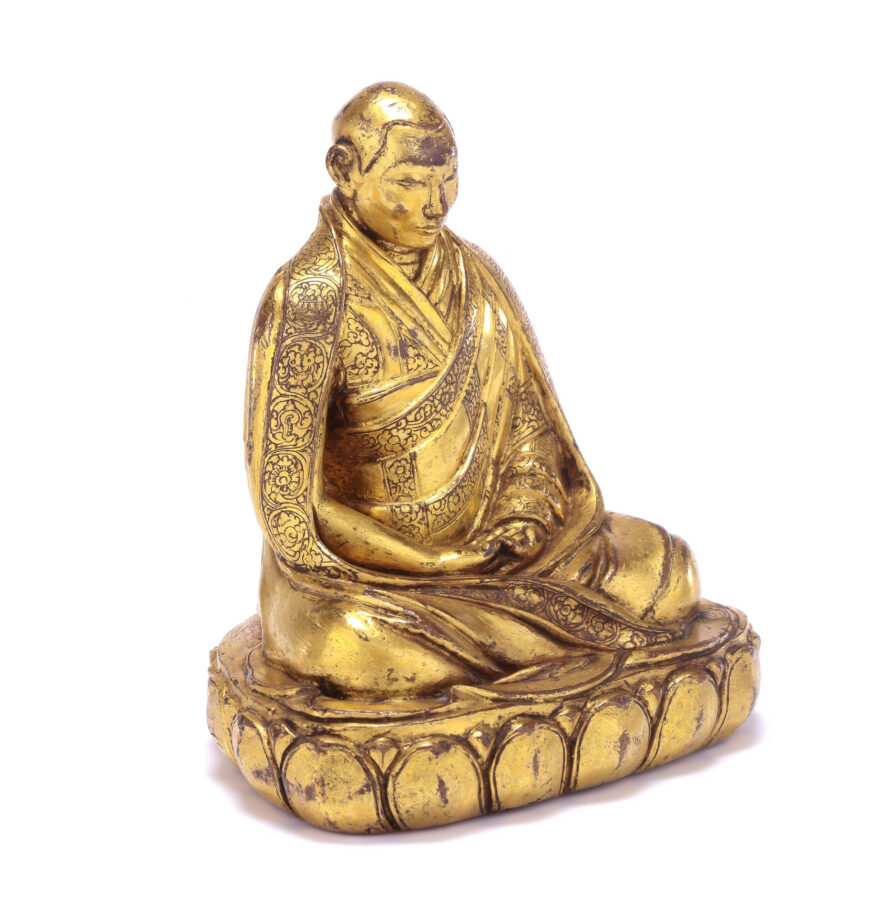
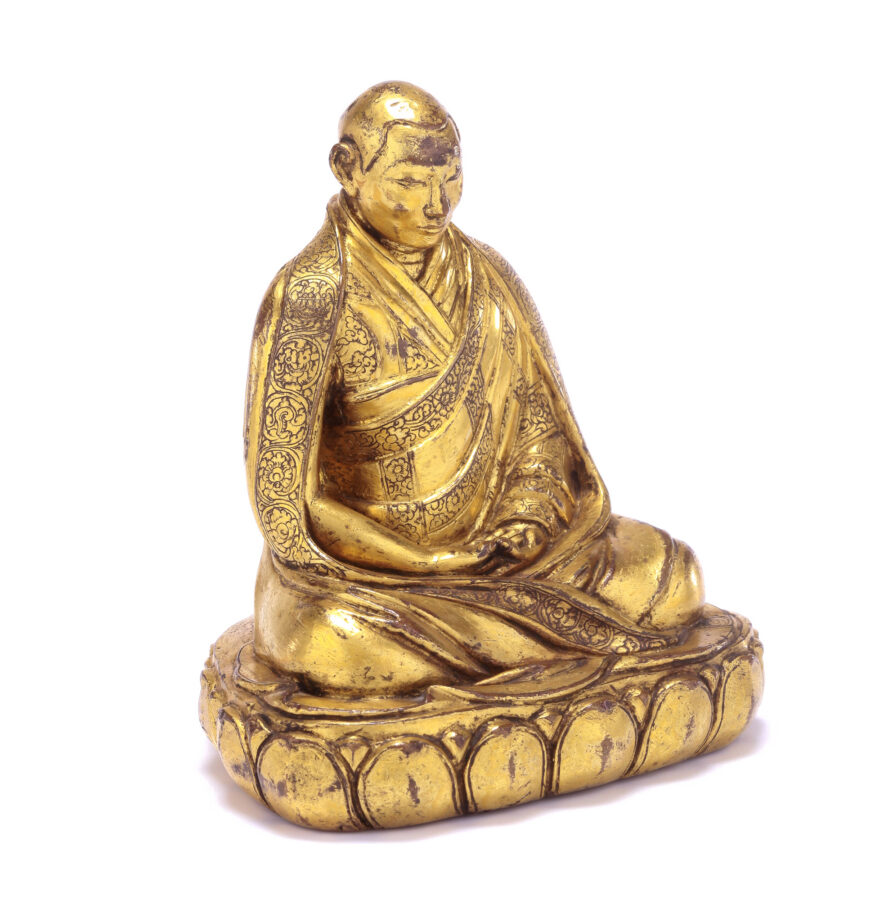
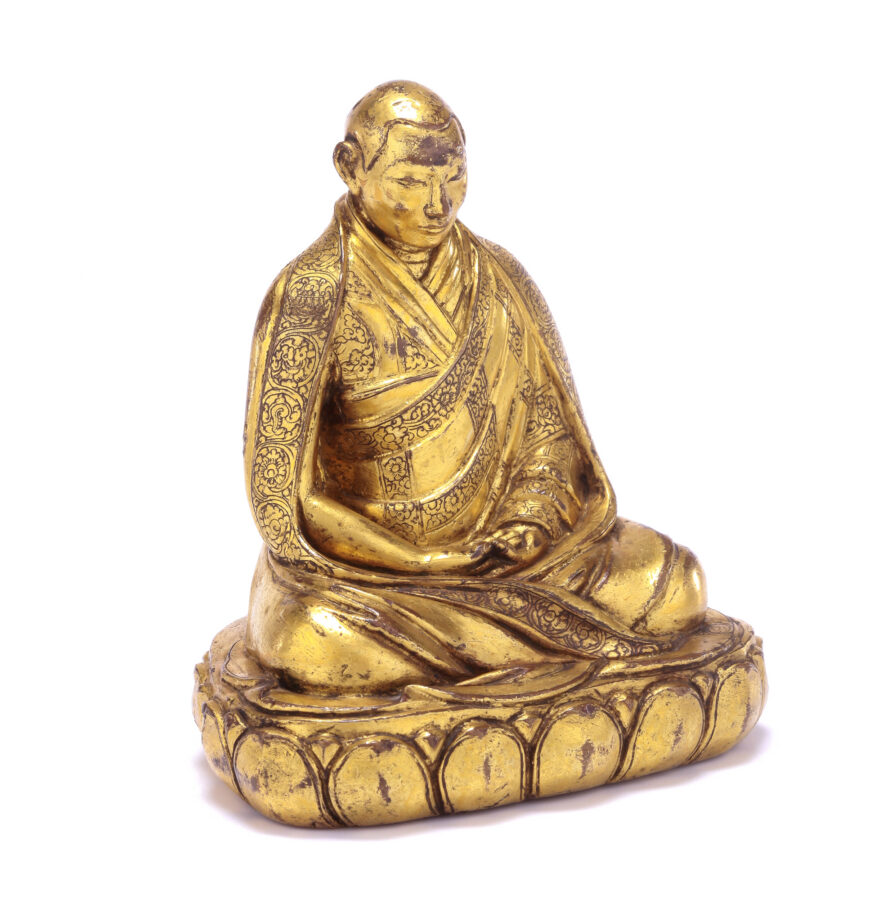
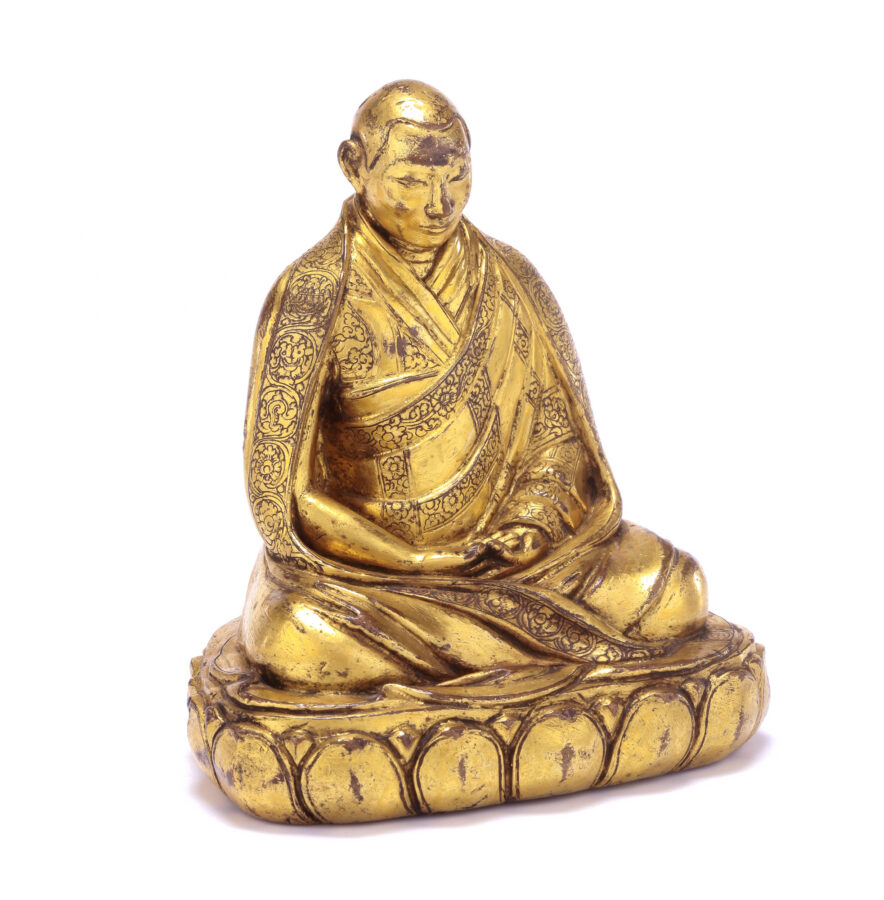
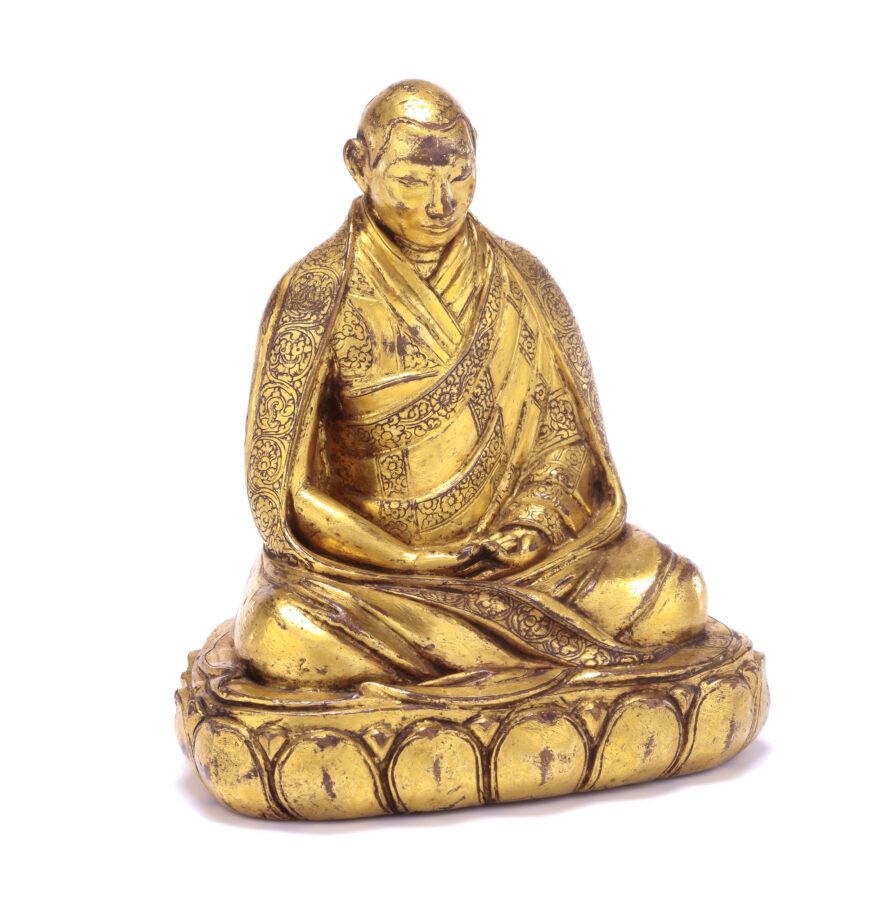
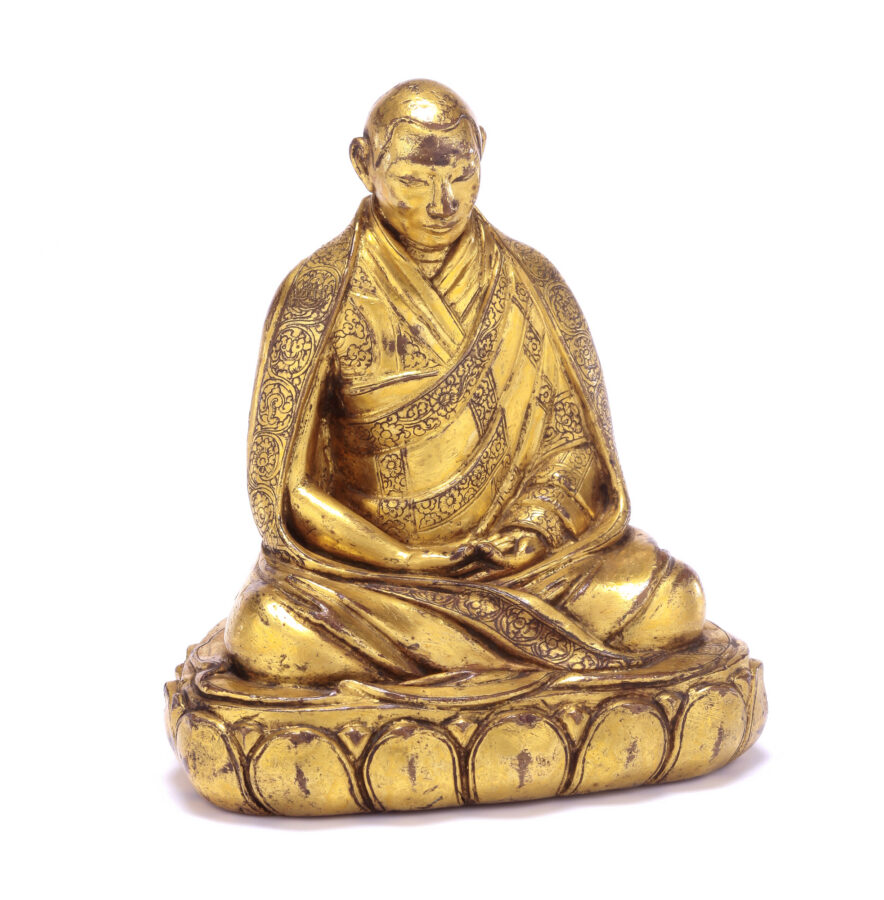
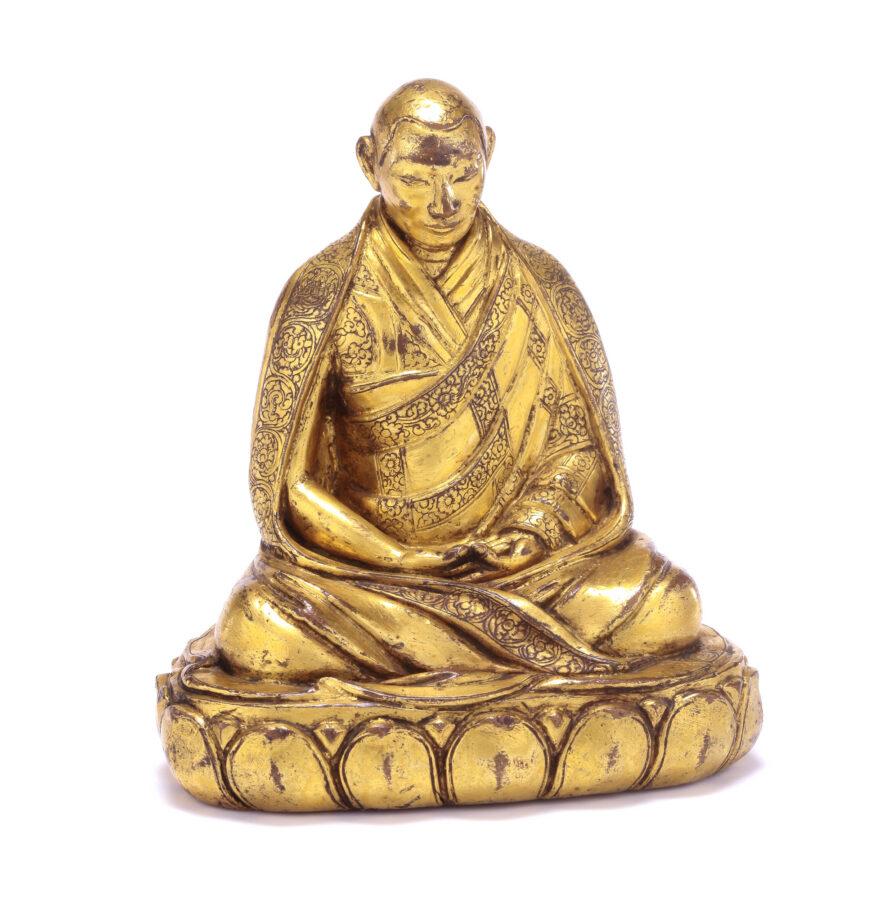
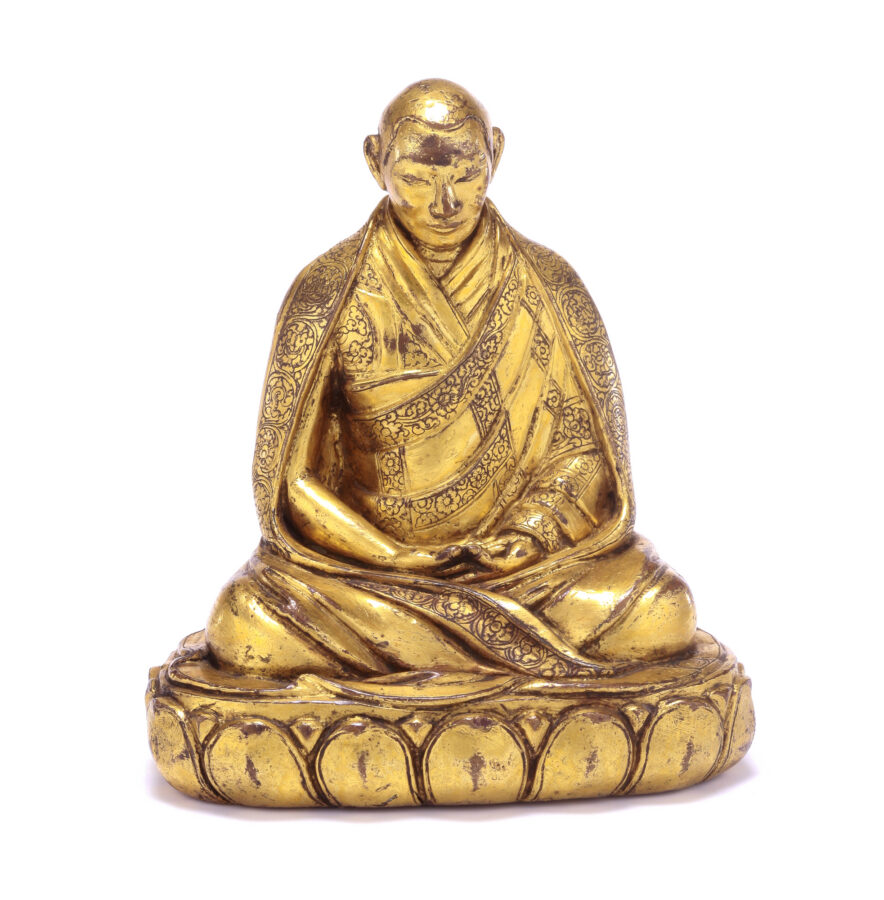
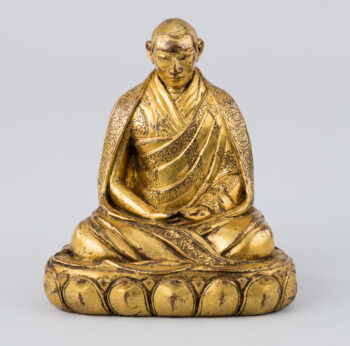
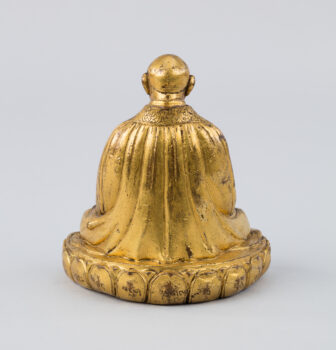
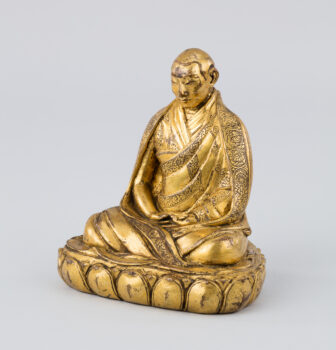
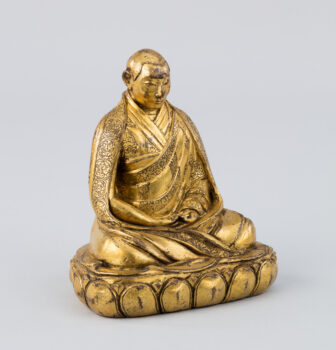
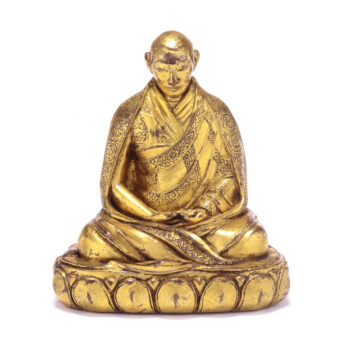
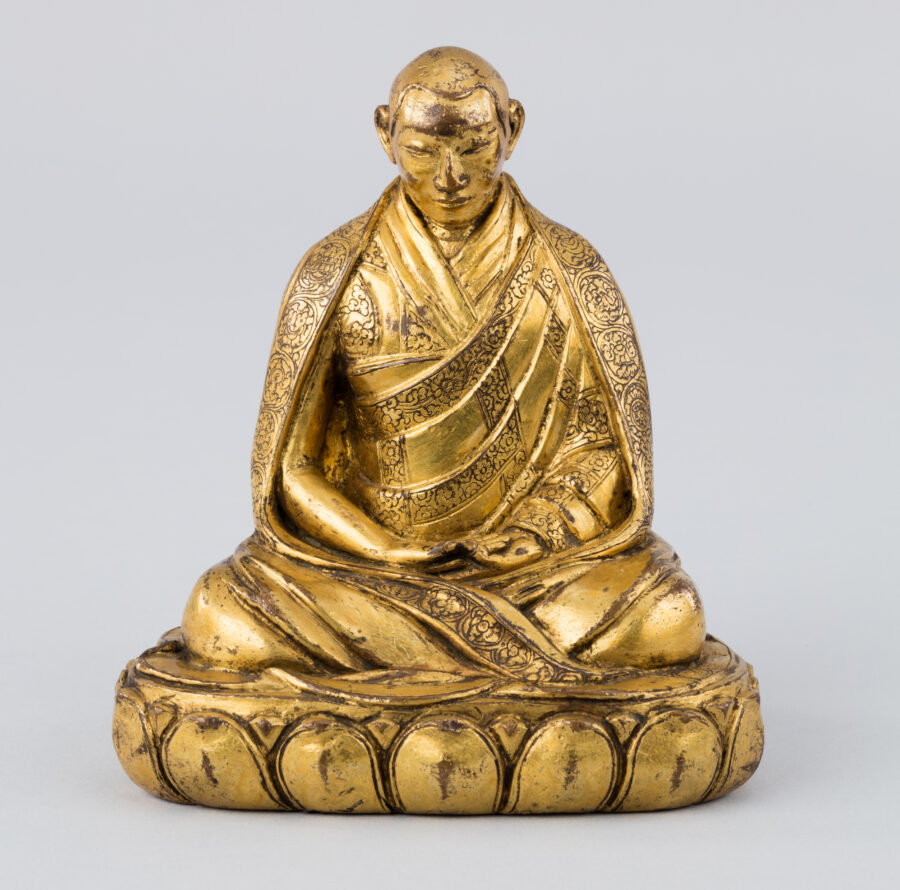
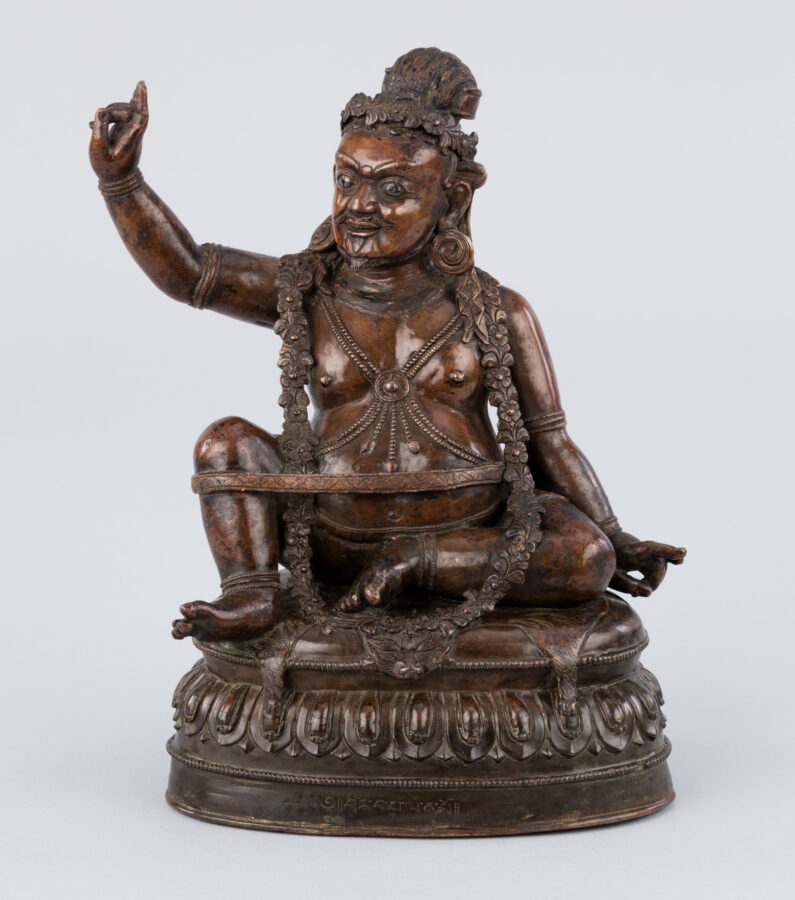
An inscription on the back of this portrait sculpture identifies the subject as Sangdak Drakpa Dondrub, who is the Fourth Gyeltsab, Drakpa Dondrub (1550–1617). “Sangdak,” meaning “master of secrets,” is an epithet of Vajrapani, reflecting that the Gyeltsabs are considered emanations of the bodhisattva Vajrapani.
The Gyeltsabs are one of the main incarnation lineages of the Karma Kagyu tradition of Tibetan Buddhism. They often serve as the regents of Tsurphu Monastery, the main seat of the Karmapas (the head of this tradition), during the interim periods between the passing of a Karmapa and the enthronement of the next, or when the Karmapa was otherwise absent. Typically, the Gyeltsab tulkus are depicted wearing an orange hat, their badge of office.
The Fourth Gyeltsab played a significant role in the formation of the artistic tradition of his Karma Kagyu school, the Karma Gardri or Garluk, meaning “Tradition of the Karmapa Encampment.” He, along with his teacher, the Fifth Zhamar (1526–1583), instructed the court painter Namkha Tashi to follow Indian Buddhist art, including sculpture, for the shape of the sacred figures, and to look to Chinese art for the coloring and shading.
This identification as the Fourth Gyeltsab is also consistent with the artistic style of this sculpture. The arts of the Karmapa’s court also included a lesser-known sculptural tradition, founded by the artist Karma Sidrel (d. 1591/92), and this object seems to follow in that tradition. It bears some of the tradition’s distinctive features, including an intense interest in the patterning of repeated lines in the layers of the robes, and a close observation of facial features, such as pronounced cheekbones and a large nose. Decorative incised patterns include the Eight Auspicious Symbols in rondels along the hem of his outer robe.
A contemplative practice in which a person uses concentration and visualization to achieve aims such as transforming the mind and generating feelings of compassion. Techniques include focusing on breathing or visualizing oneself as a deity.
The transmission of teachings from one generation to the next, from teacher to student, traced all the way back to the Buddha without interruption. A complete lineage is essential in Tantric Buddhist practices as it makes the blessings of the teaching more powerful.
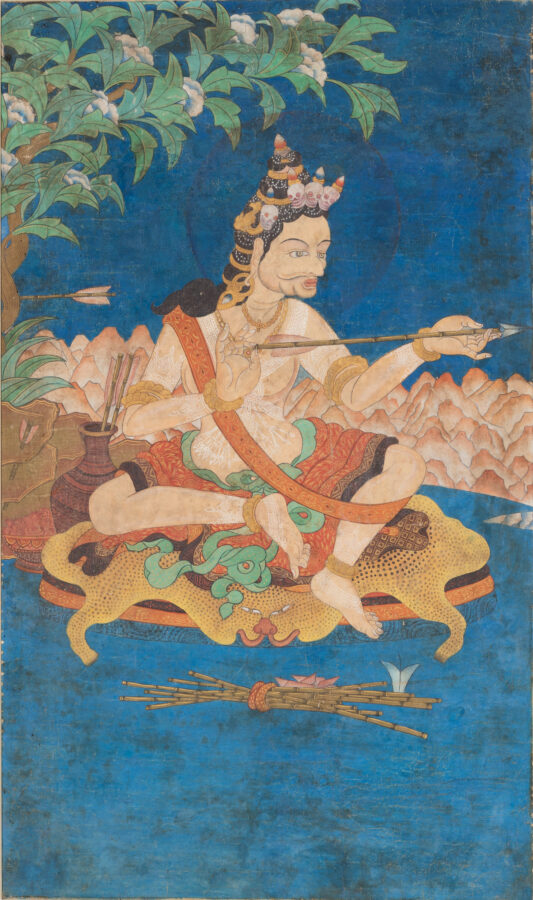
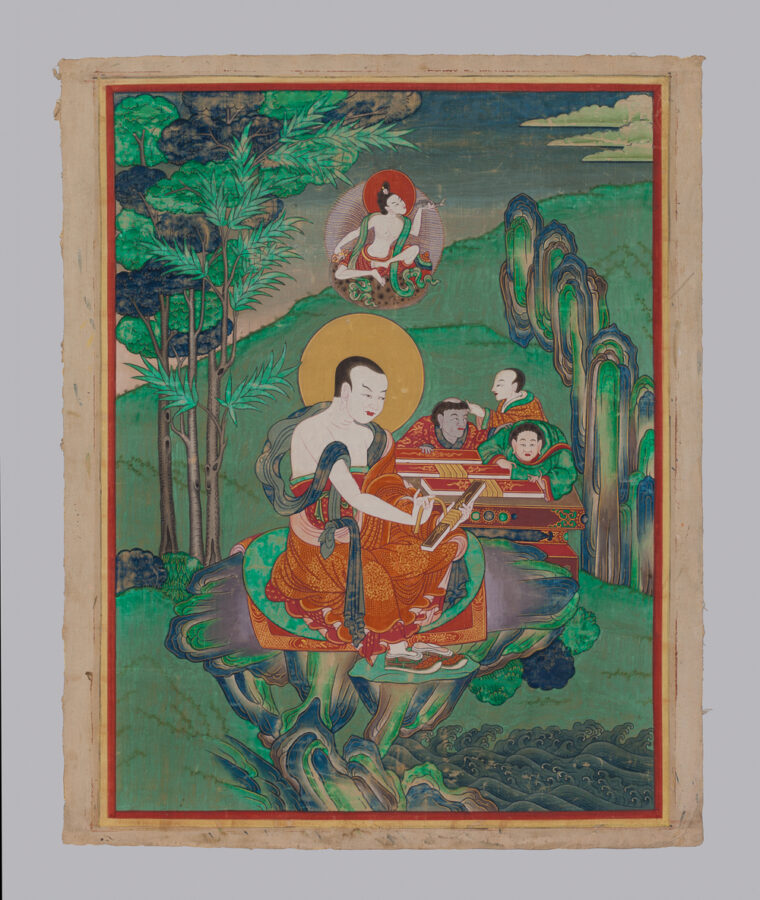
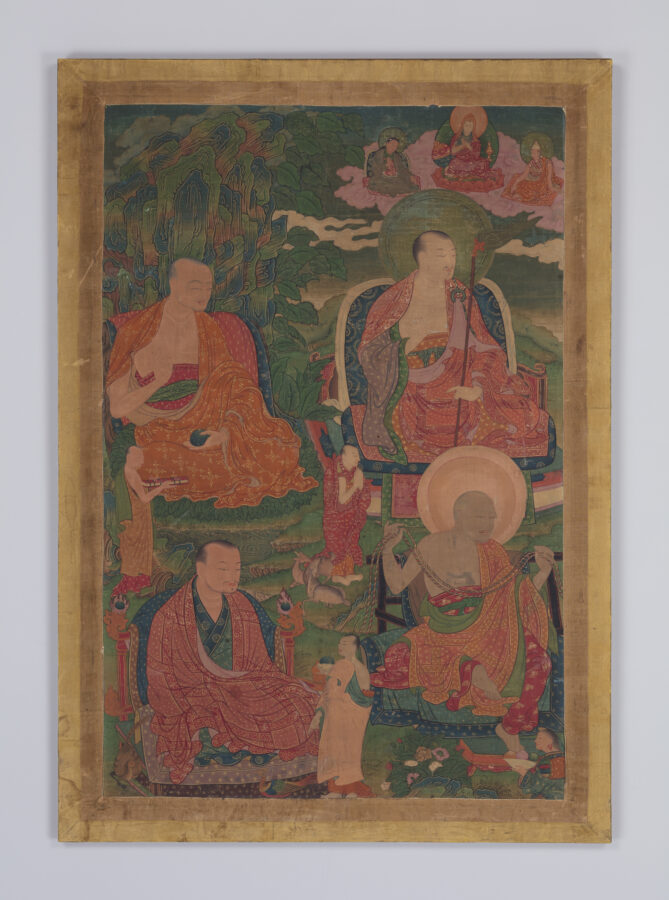
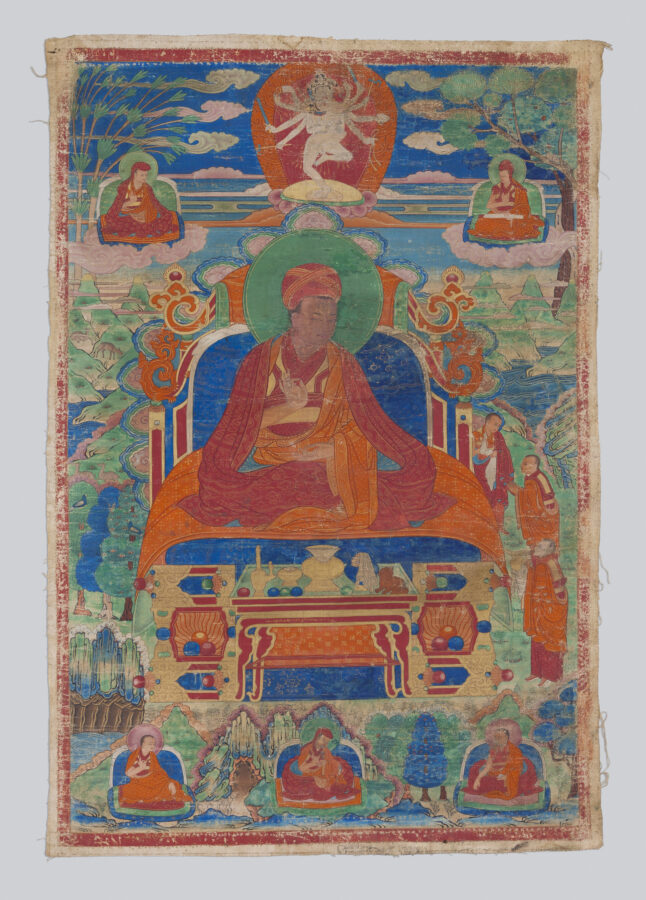
Himalayan art includes portraits of legendary and historical humans, including accomplished religious teachers (lamas), the Buddha’s original disciples (arhats), and spiritually accomplished tantric masters (mahasiddhas).
Today, Tibetans primarily inhabit the Tibetan Plateau, situated between the Himalayan mountain range and the Indian subcontinent to the west, Chinese cultural regions to the east, and Mongolian cultural regions to the northeast. During the 7th to 9th century, Tibetan rulers expanded their empire across Central Asia, and established Buddhism as the state religion.
Get the latest news and stories from the Rubin, plus occasional information on how to support our work.
