Tibet
19th century
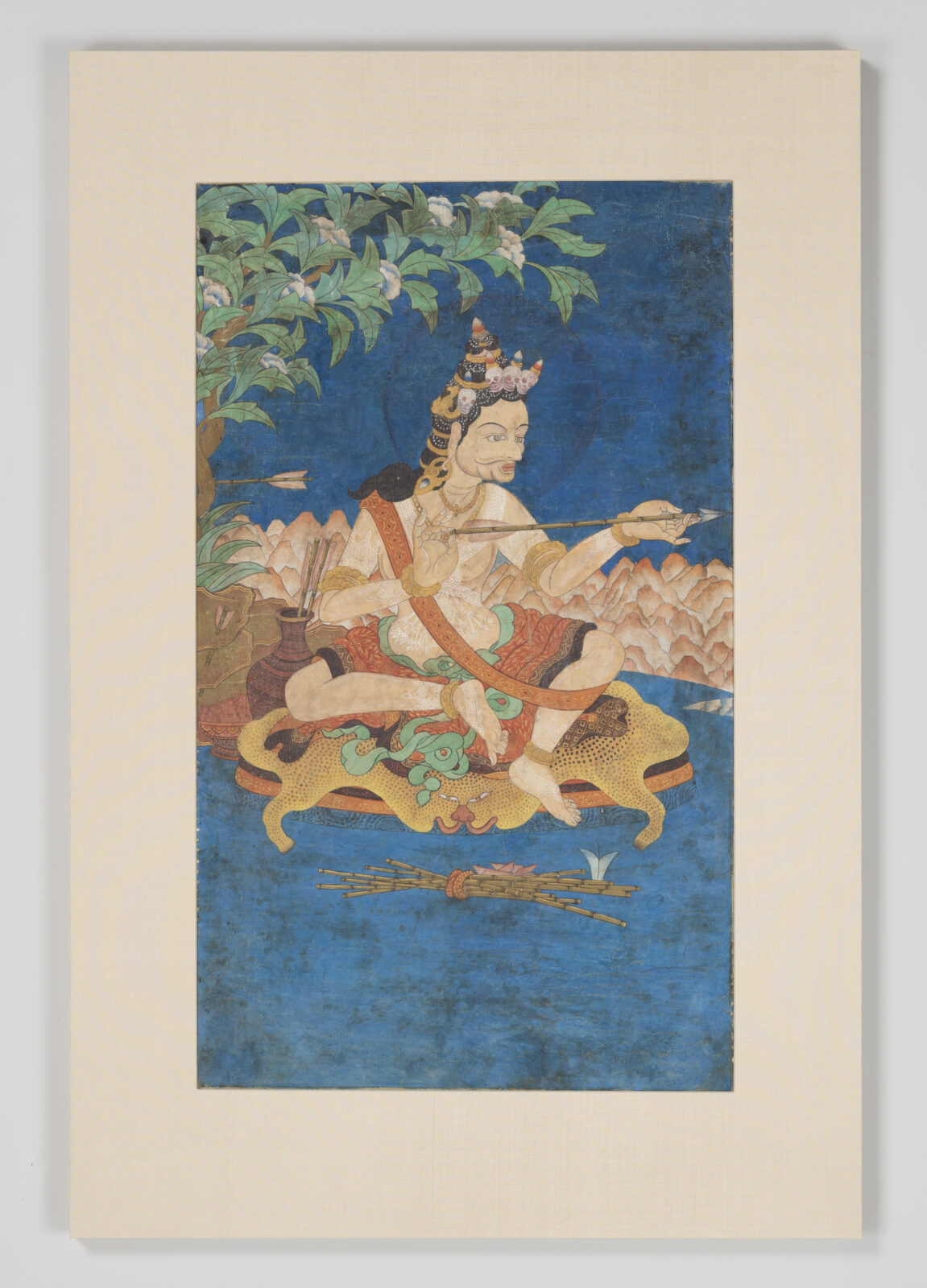
This relaxed posture is commonly associated with regal leisure.
Tibet
19th century
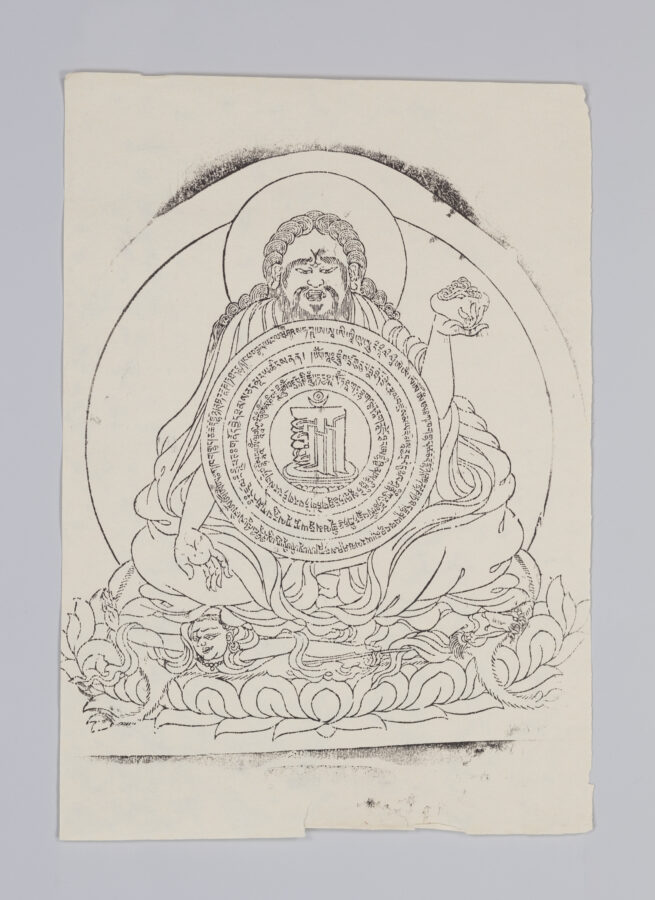
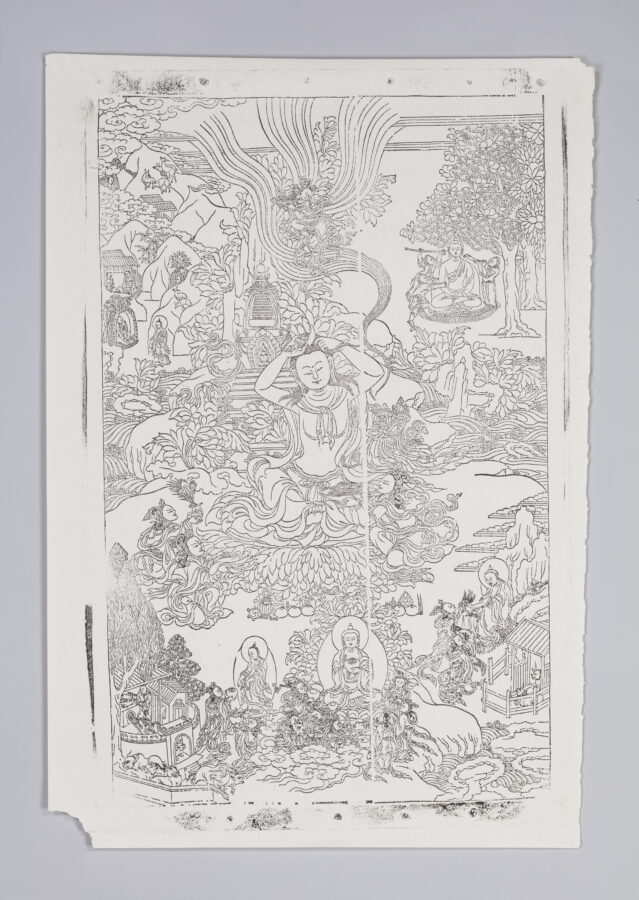
Legendary men and women who mastered esoteric religious practices of tantra are called mahasiddhas, or “great accomplished ones.” They are considered to be among the first teachers of Tantric Buddhist practices. These masters were usually of ordinary occupations, such as wandering monk, weaver, or farmer. Their diversity and unconventional behavior exemplify Tantric Buddhist practices, which offer many paths to realization and may seem transgressive compared to the traditional path of a monk or nun.
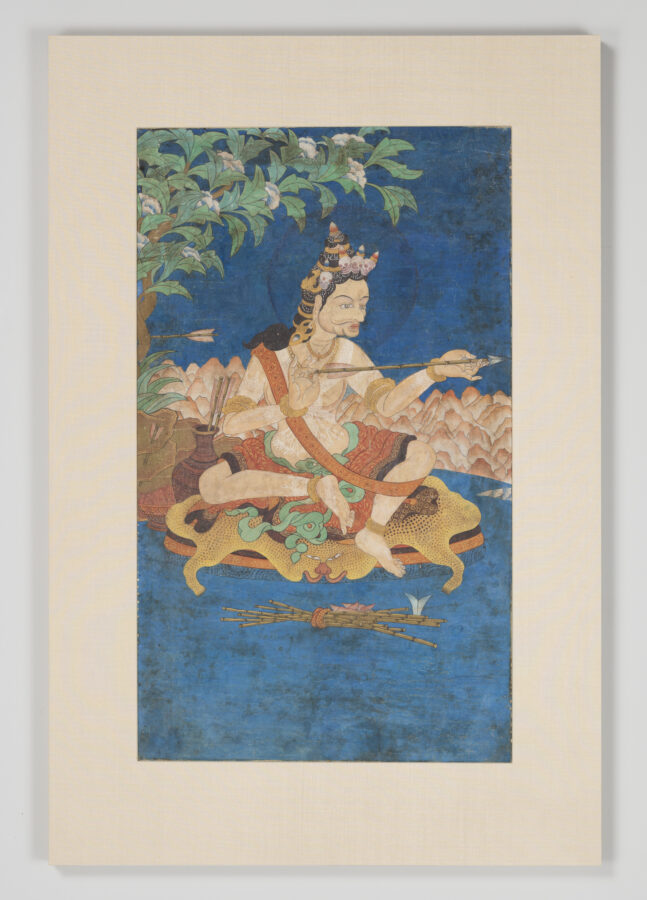
Here Saraha, the arrow maker, sits with a meditation strap across his leg, and he holds an arrow, his identifying attribute. He is depicted as a siddha, wearing a crown of skulls and bone ornaments of the charnel grounds. Although Saraha was born and raised as a Brahmin in eastern India, he was secretly a Buddhist living a double life, observing Brahmin law during the day and maintaining his Buddhist vows at night.

This relaxed posture is commonly associated with regal leisure.
A religious movement that originated in India around the fifth to seventh century with sacred writings and esoteric teachings and practices transmitted from teacher to student through initiation. These remain an important part of Hinduism and Buddhism today.
Teachings and precepts that offer practical and experiential guidance. In Buddhism instruction is primarily an oral tradition and is often targeted to the specific needs or disposition of a student or disciple.
A state of “waking up” from illusion and seeing the true nature of reality. Buddha Shakyamuni attained enlightenment while meditating under the bodhi tree. Buddhist teaching explains that the accumulation of merit and wisdom are essential for achieving enlightenment, also known as awakening.
A vehicle for the preservation and transmission of knowledge. The Buddha’s teachings were originally passed down through oral transmission and storytelling, and stories of the Buddha’s past lives are considered an important source of inspiration and guidance.
A state of “waking up” from illusion and seeing the true nature of reality. Buddha Shakyamuni attained awakening while meditating under the bodhi tree. Buddhist teaching explains that the accumulation of merit and wisdom are essential for achieving awakening, also known as enlightenment.
The transmission of teachings from one generation to the next, from teacher to student, traced all the way back to the Buddha without interruption. A complete lineage is essential in Tantric Buddhist practices as it makes the blessings of the teaching more powerful.
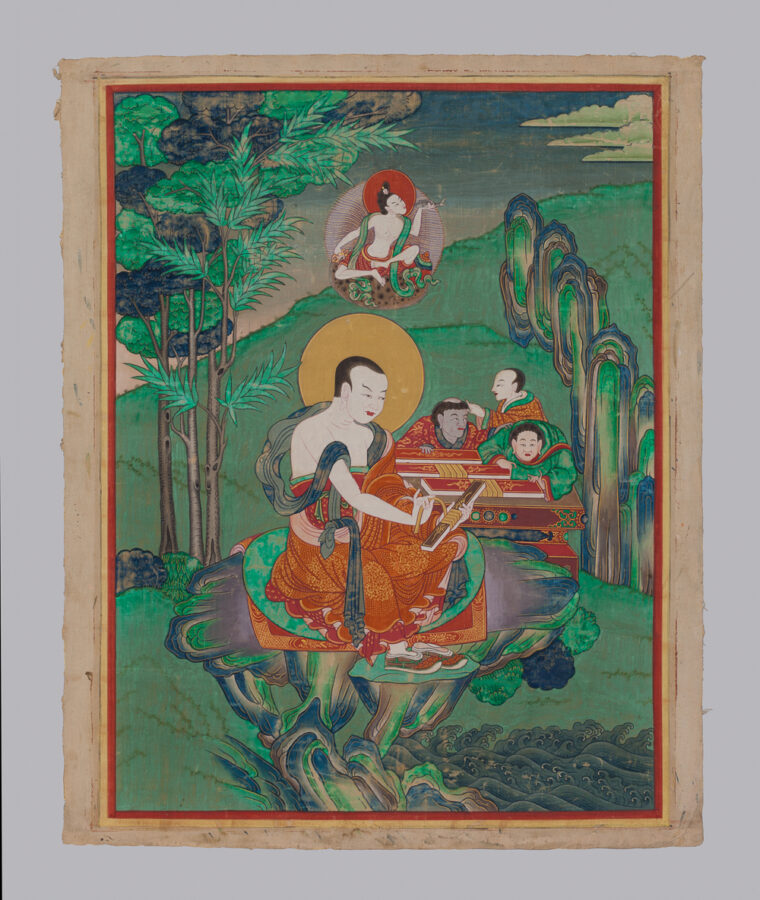
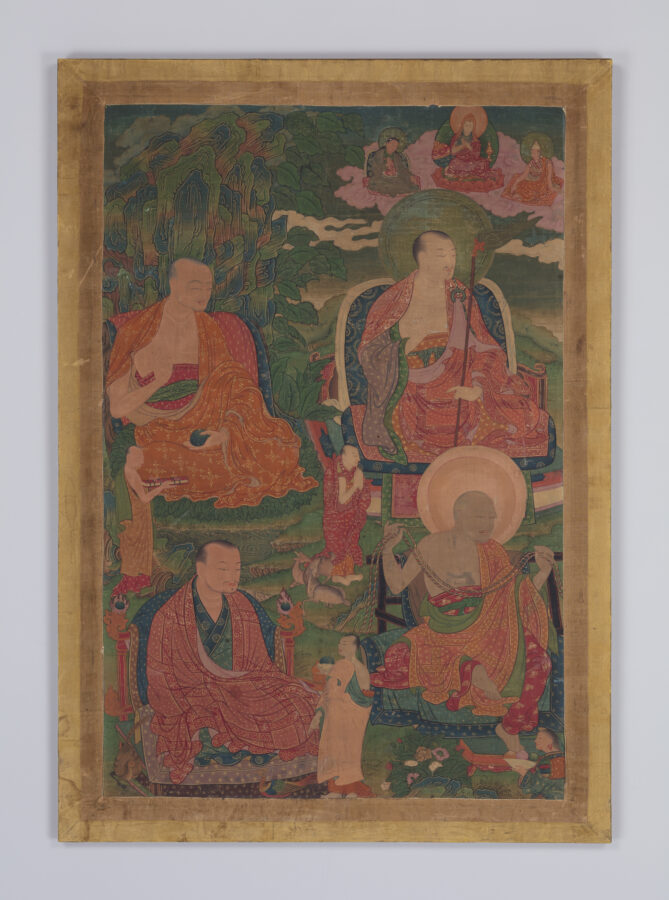
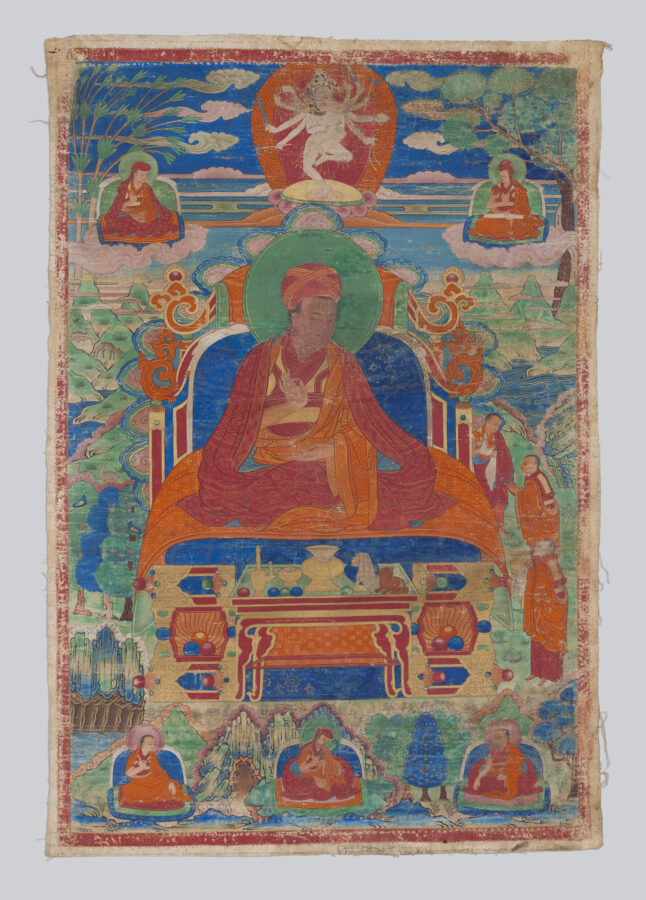
Himalayan art includes portraits of legendary and historical humans, including accomplished religious teachers (lamas), the Buddha’s original disciples (arhats), and spiritually accomplished tantric masters (mahasiddhas).
Today, Tibetans primarily inhabit the Tibetan Plateau, situated between the Himalayan mountain range and the Indian subcontinent to the west, Chinese cultural regions to the east, and Mongolian cultural regions to the northeast. During the 7th to 9th century, Tibetan rulers expanded their empire across Central Asia, and established Buddhism as the state religion.

Get the latest news and stories from the Rubin, plus occasional information on how to support our work.