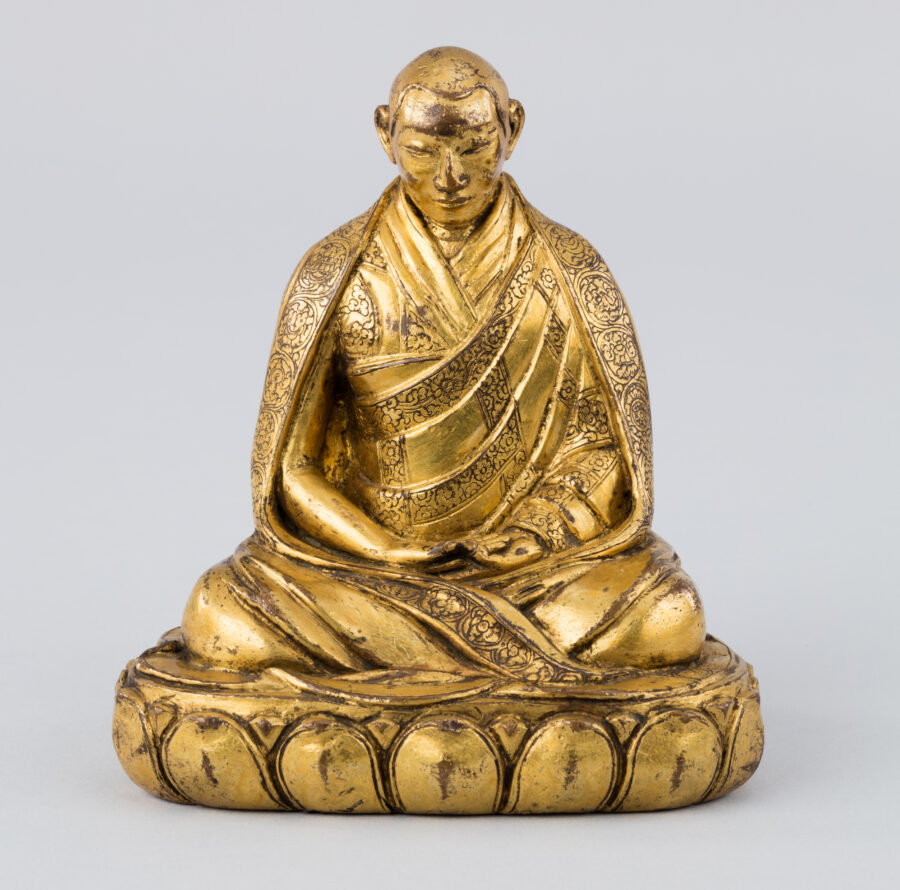
Central Tibet
16th century


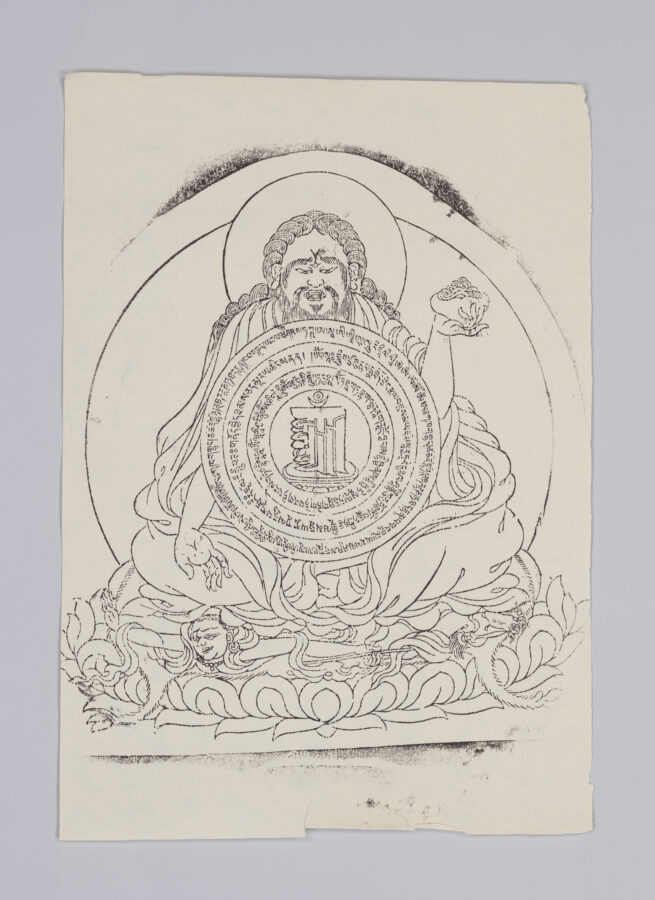
The right hand is extended in a giving gesture.
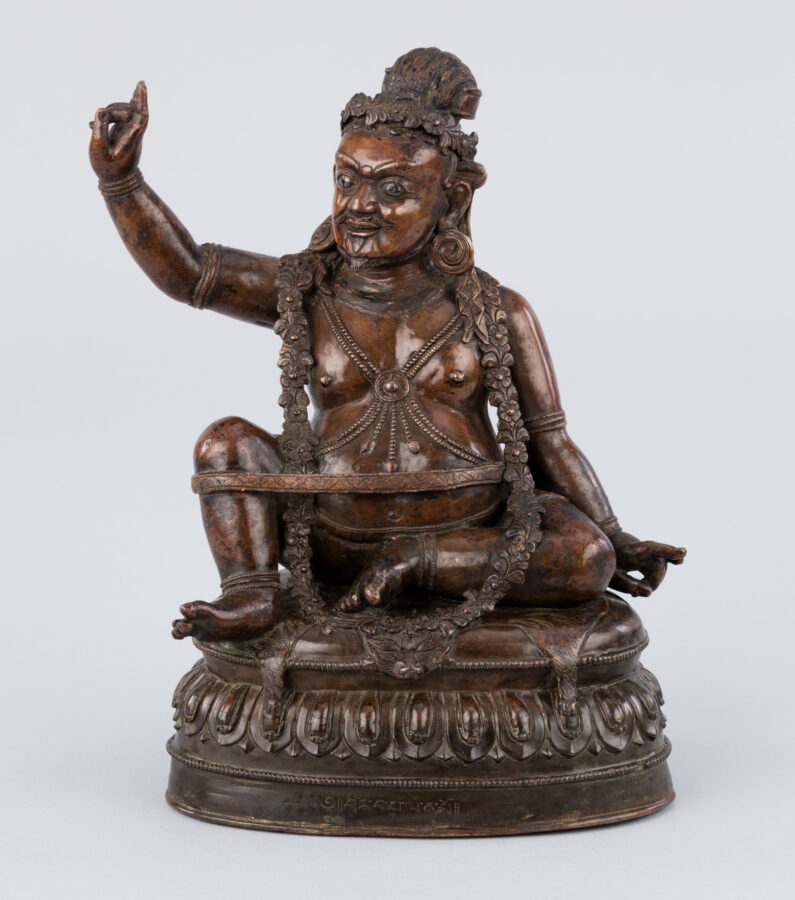
Central Tibet
16th century


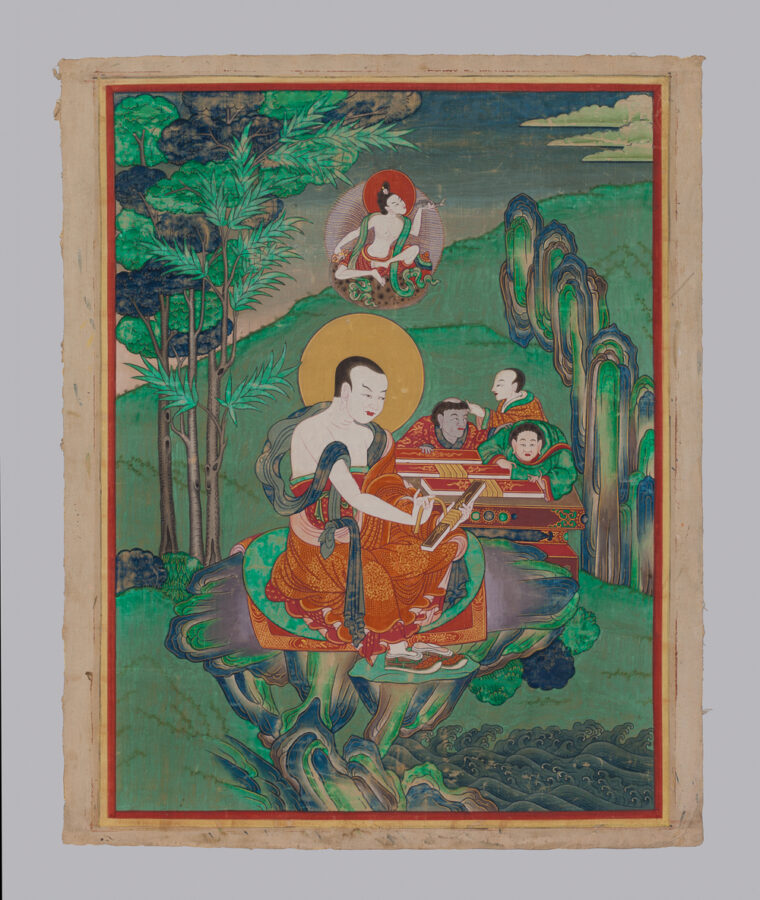
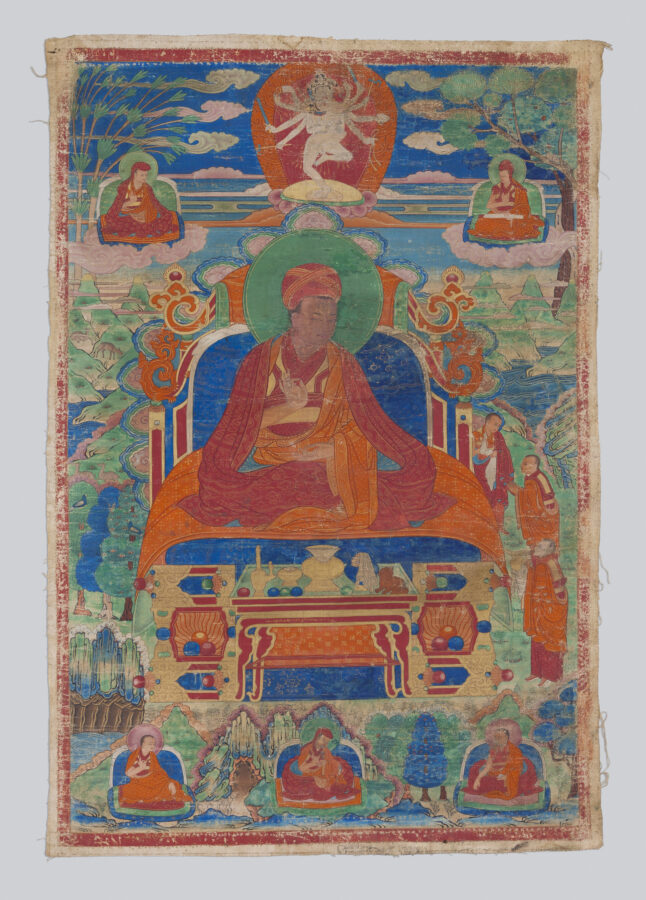
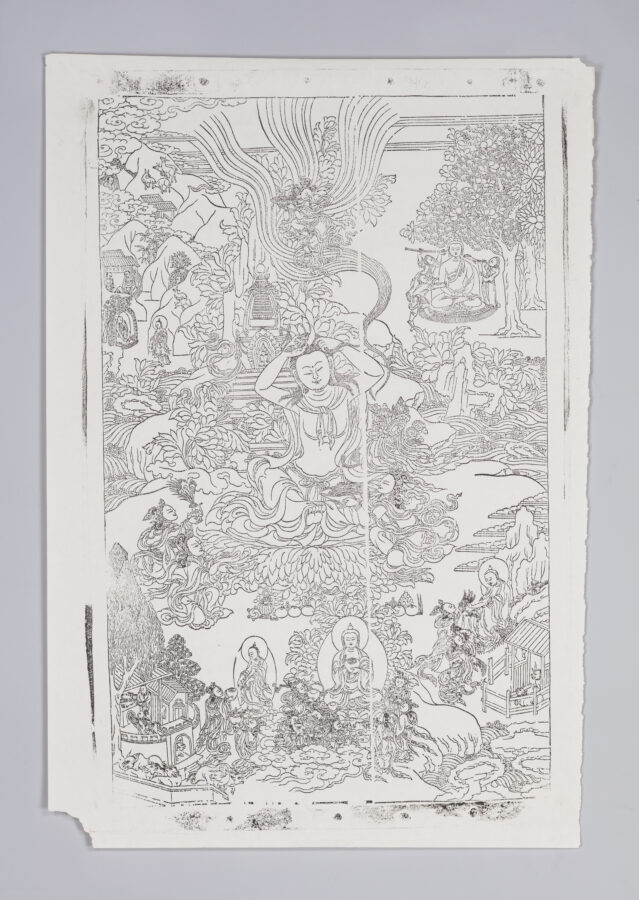
This is an early example of a Karma Kagyu painting in the Menri style before the order developed their own Karma Gardri “Encampment” style in the late 16th century, as seen in a painting of the Ninth Karmapa. It probably dates to the early 16th century and depicts the Fourth Zhamar Chodrak Yeshe, the second highest incarnate lama in the Karma Kagyu order, with a series of episodes from his young adulthood. It was originally part of a painting series that portrayed his entire life story, and might have been the second painting of the entire set. Of particular interest are the many scenes showing the monastic tent encampment in which he traveled, the kind of traveling court that gave the Encampment style its name.
The Fourth Zhamar sits at the center of the composition on an ornamental chair in half profile. Here landscape is not designed to create a unified space, as soon become common in Tibetan painting. Rather it is organized in six horizontal bands to divide narrative scenes. The scenes start in the upper-left corner and move left to right in each band, with seven narrow red bands of inscriptions in gold above and below, many of which are now badly abraded and illegible. Scenes include texts he composed, his travels including to the eastern borderlands and Mongolian regions, his visions, and teachings he gave and received. Comparing the scenes to the Zhamar’s available biographies, they seem to accord with the Zhamar’s life from when he was 22 (1474), when he traveled to areas of the far eastern borderland.
On the back a simple stupa appears in outline without inscriptions.

The right hand is extended in a giving gesture.
The passing down of authentic Buddhist teachings from a teacher to a disciple or student, often in the form of a text in a ritualistic context.
The transmission of teachings from one generation to the next, from teacher to student, traced all the way back to the Buddha without interruption. A complete lineage is essential in Tantric Buddhist practices as it makes the blessings of the teaching more powerful.
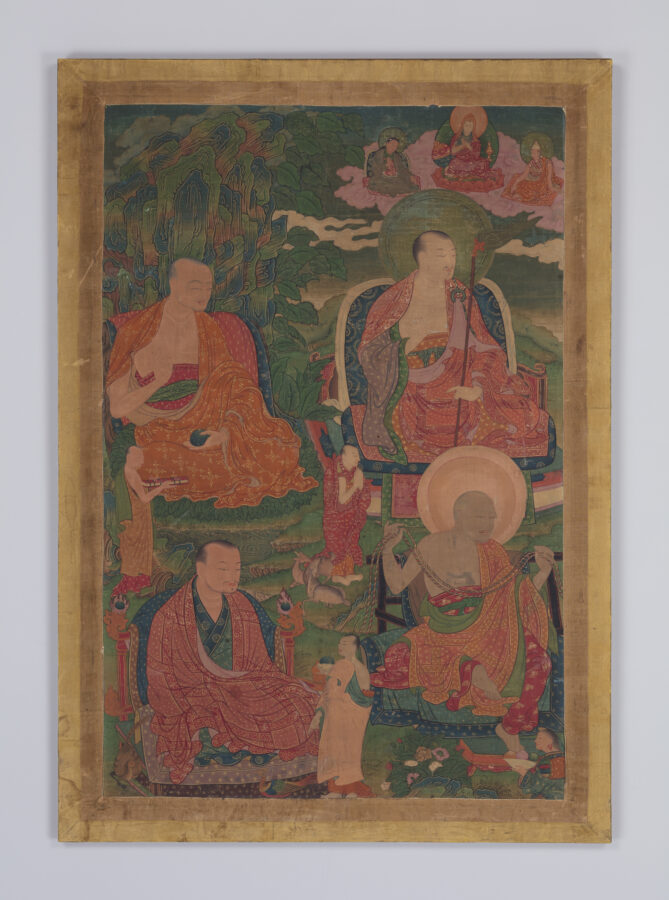
Himalayan art includes portraits of legendary and historical humans, including accomplished religious teachers (lamas), the Buddha’s original disciples (arhats), and spiritually accomplished tantric masters (mahasiddhas).
Today, Tibetans primarily inhabit the Tibetan Plateau, situated between the Himalayan mountain range and the Indian subcontinent to the west, Chinese cultural regions to the east, and Mongolian cultural regions to the northeast. During the 7th to 9th century, Tibetan rulers expanded their empire across Central Asia, and established Buddhism as the state religion.

Get the latest news and stories from the Rubin, plus occasional information on how to support our work.