Tibet
16th-17th century
Tibet
16th-17th century
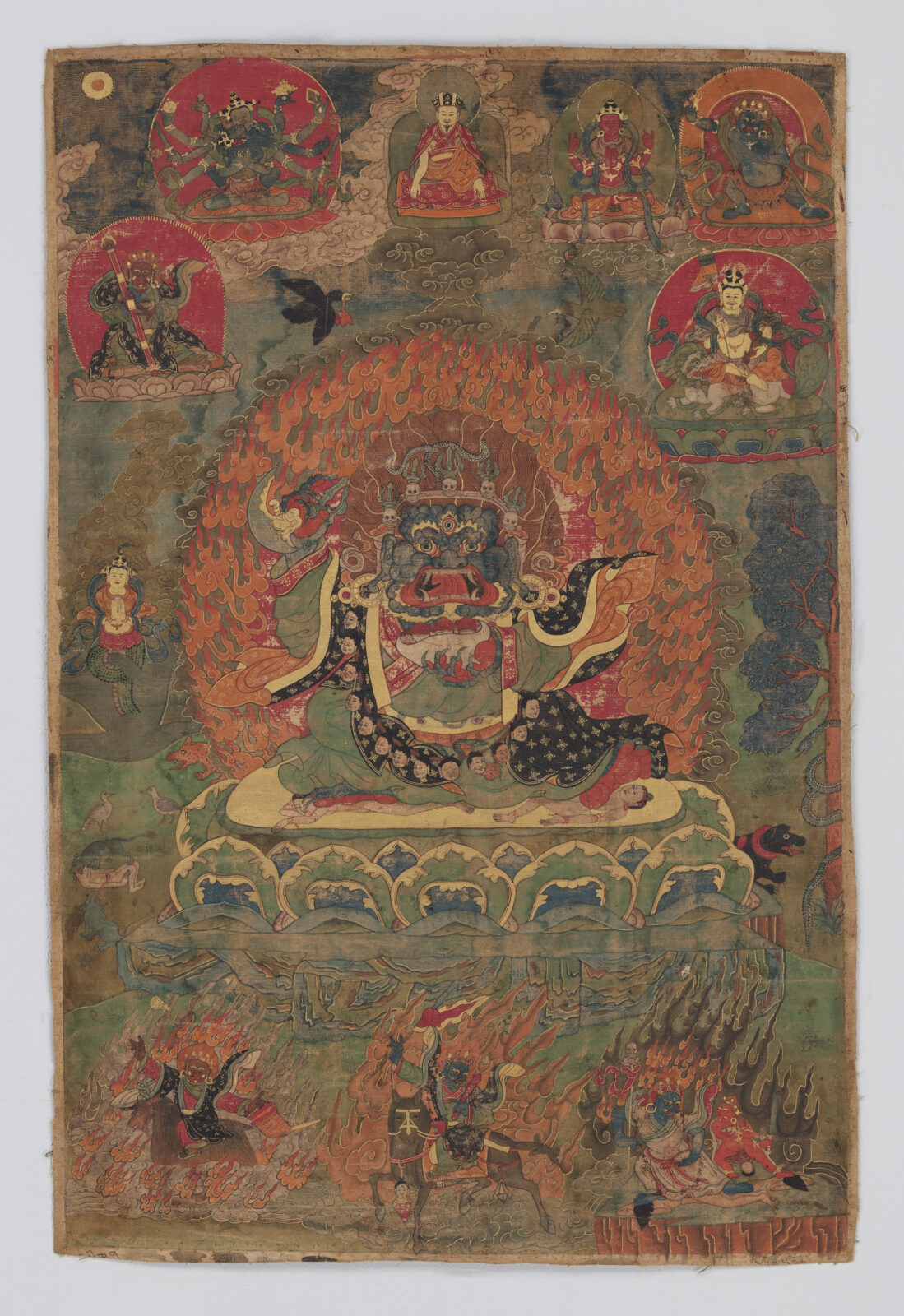
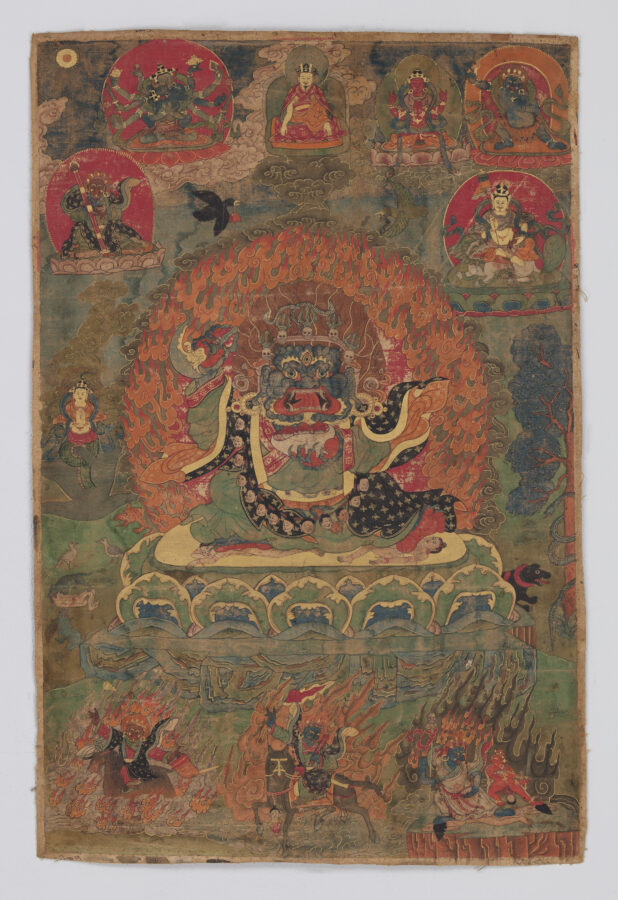
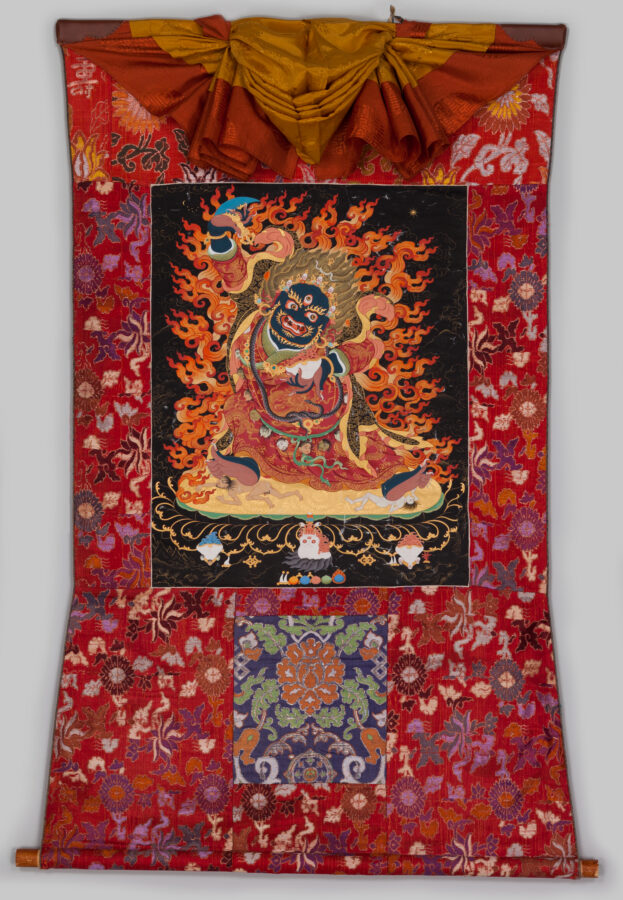
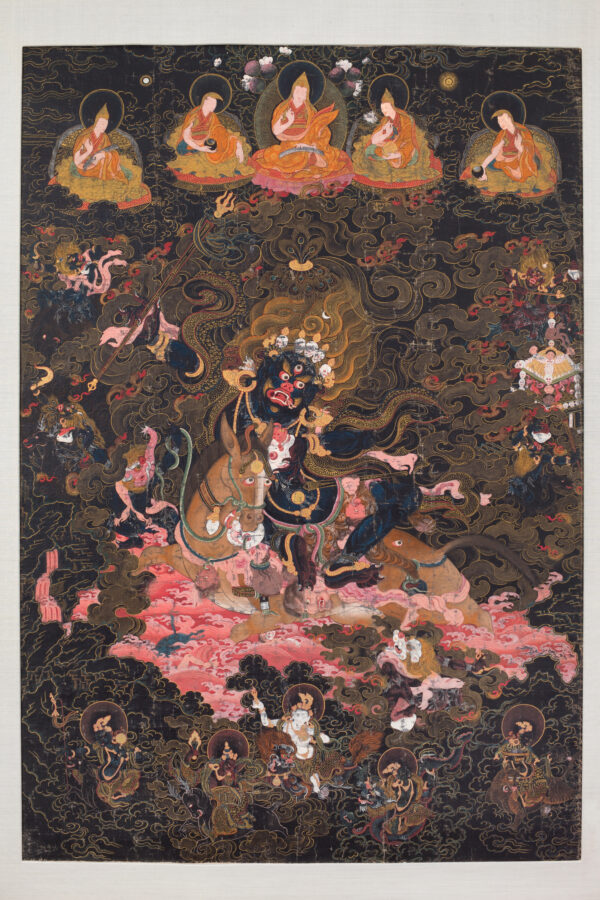
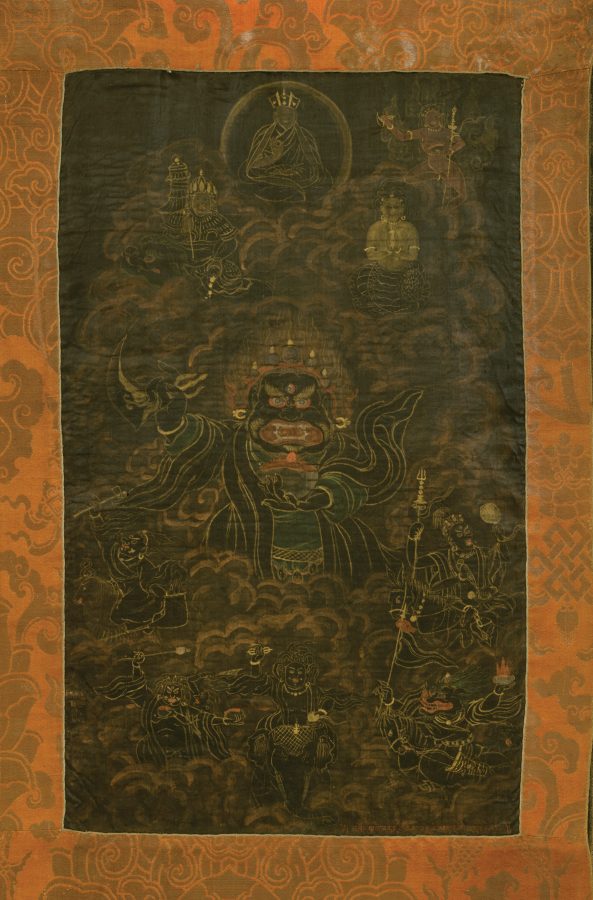
Mahakala is one of the eight great wrathful protectors of the Buddhist teachings, a remover of obstacles, both internal and external. He has many forms, and is generally depicted as an extremely fierce deity, dark blue or black in color. Like many forms of Mahakala, in this thangka he wields a flying knife and skull cup, and is adorned with wrathful ornaments of a crown of five skulls and a garland of severed heads. In this form, recognizable by his distinctive iconographic attribute, a large black cloak, he is the special protector of the Black Hat Karmapa lamas and their Karma Kagyu tradition of Tibetan Buddhism. This is an especially terrifying form of the protector with a squat body and large head, called a “Cloud-faced” Black Cloak Mahakala– recognizable by the unusual rounded bulges that form his face.
Black Cloak Mahakala initially arose from the Nyingma tradition of Revealed Treasures (terma) in Tibet and was introduced to the Karma Kagyu tradition by the Second Karmapa, Karma Pakshi (1204-1283), depicted at top center as the root teacher associated with these teachings. He is recognizable by his distinctive black hat, his badge of office, as well as his goatee and hands extended across his knees.
Top center right: rgyal ba rgya mtsho རྒྱལ་བ་རྒྱ་མཚོ།
Top right: phyag rdor ཕྱག་རོར།
Upper left: legs ldan ལེགས་ལྡན།
Upper right: rnam sras རྣམ་སྲས།
Central figure: (abraded)
Bottom left: dam can དམ་ཅན།
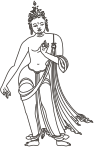
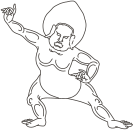
This posture features a triple- bend of the body at the knee, hip, and waist.

A skull cup is an attribute of tantric deities and is usually paired with a curved knife. It can symbolize a mind filled with the bliss of realizing the true nature of reality.

This weapon is an attribute of tantric deities and is usually paired with a skull cup. When held by female deities it symbolizes wisdom’s destruction of all obstacles to enlightenment. When held by male deities it represents the method aspect of enlightenment.
An energy wielded with intention, skill, and compassion to offer protection and remove obstacles. In Buddhism, it is considered different than negative emotions like anger or rage.
The idea that everything is temporary, constantly changing, and moving through stages of development, decay, and dissolution. Impermanence is a reminder to avoid strong attachments and focus on the present moment.
A religious movement that originated in India around the fifth to seventh century with sacred writings and esoteric teachings and practices transmitted from teacher to student through initiation. These remain an important part of Hinduism and Buddhism today.
In Buddhism time is perceived as relative, dynamic, and conceptual. This outlook highlights important principles of interdependence within Buddhist philosophy.
A kind of energy that can be used, individually and collectively, to effect change.
The end of this life marked by the cessation of bodily functions followed by decay. According to Buddhism, after death consciousness transitions to an intermediate state known as the bardo before embarking on another life.
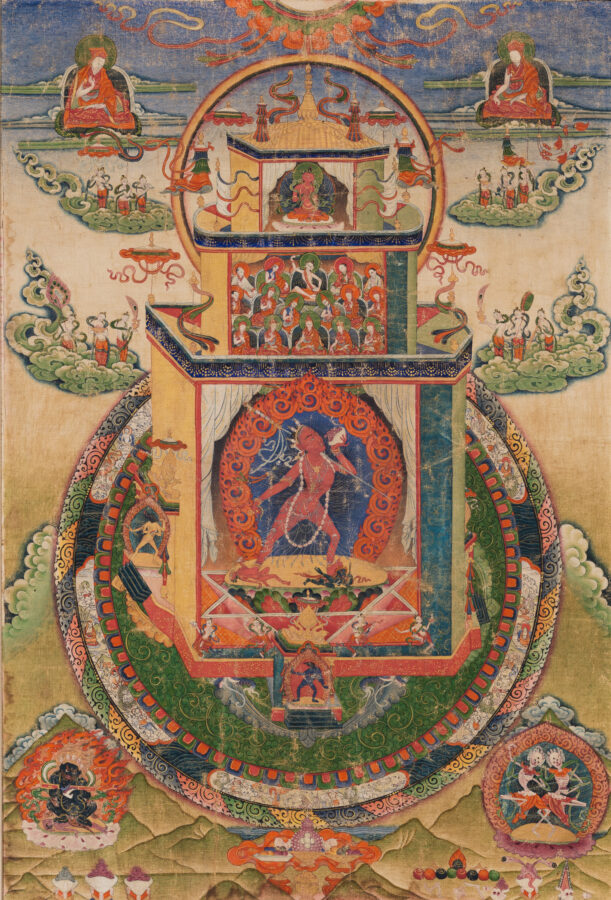
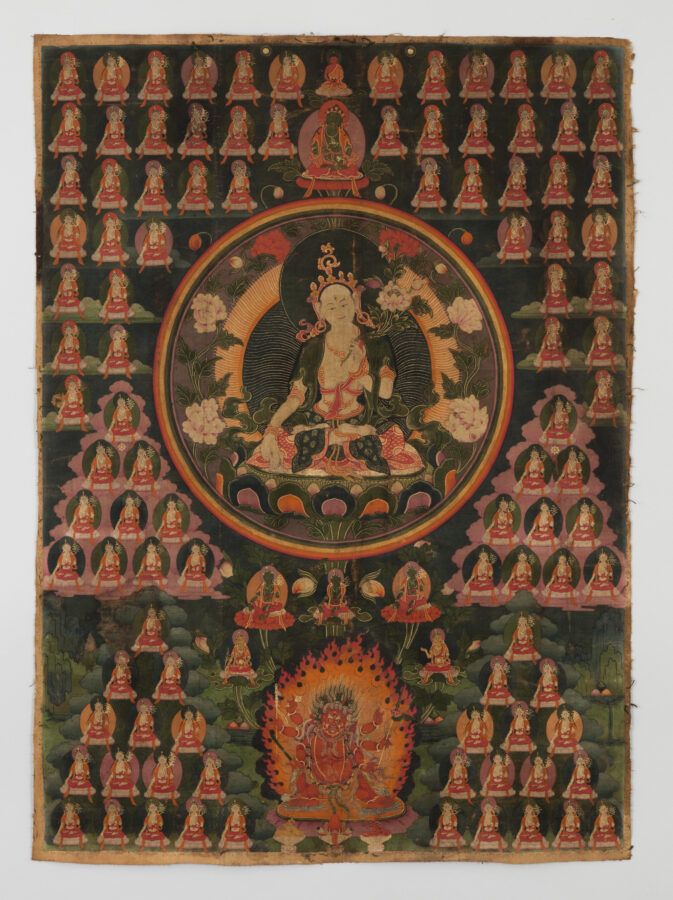
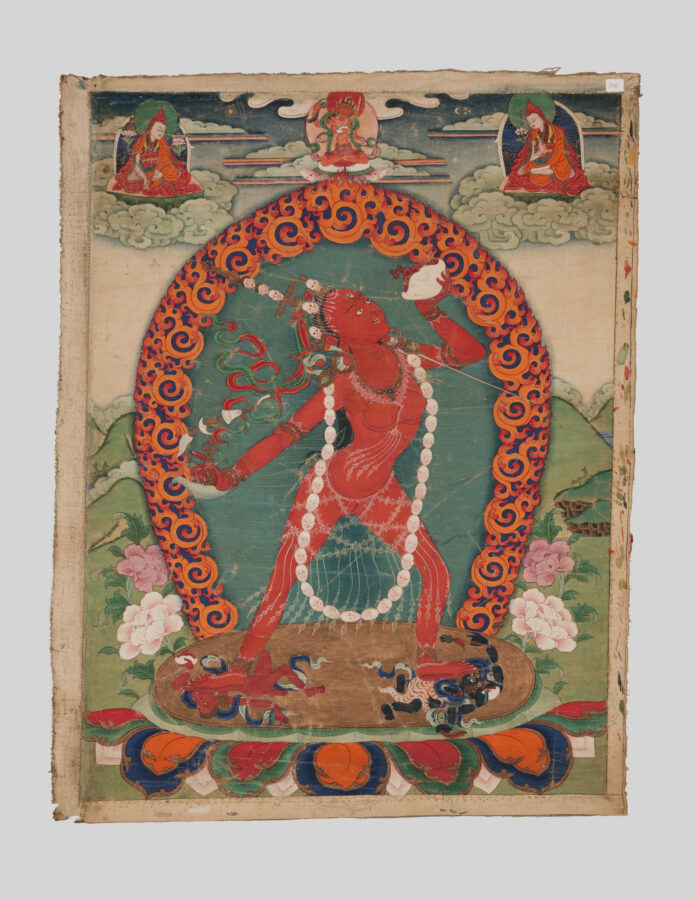
Tantric deities personify various enlightened qualities and are the focus of esoteric religious practices (tantras) that aim to swiftly and radically transform one’s understanding of reality.
Protectors of Buddhist teachings who destroy obstacles that impede the path to enlightenment. The more frightening and gruesome their appearance, the greater their power.
Today, Tibetans primarily inhabit the Tibetan Plateau, situated between the Himalayan mountain range and the Indian subcontinent to the west, Chinese cultural regions to the east, and Mongolian cultural regions to the northeast. During the 7th to 9th century, Tibetan rulers expanded their empire across Central Asia, and established Buddhism as the state religion.

Get the latest news and stories from the Rubin, plus occasional information on how to support our work.